 Digital Vikingz
 / Agency not driving results
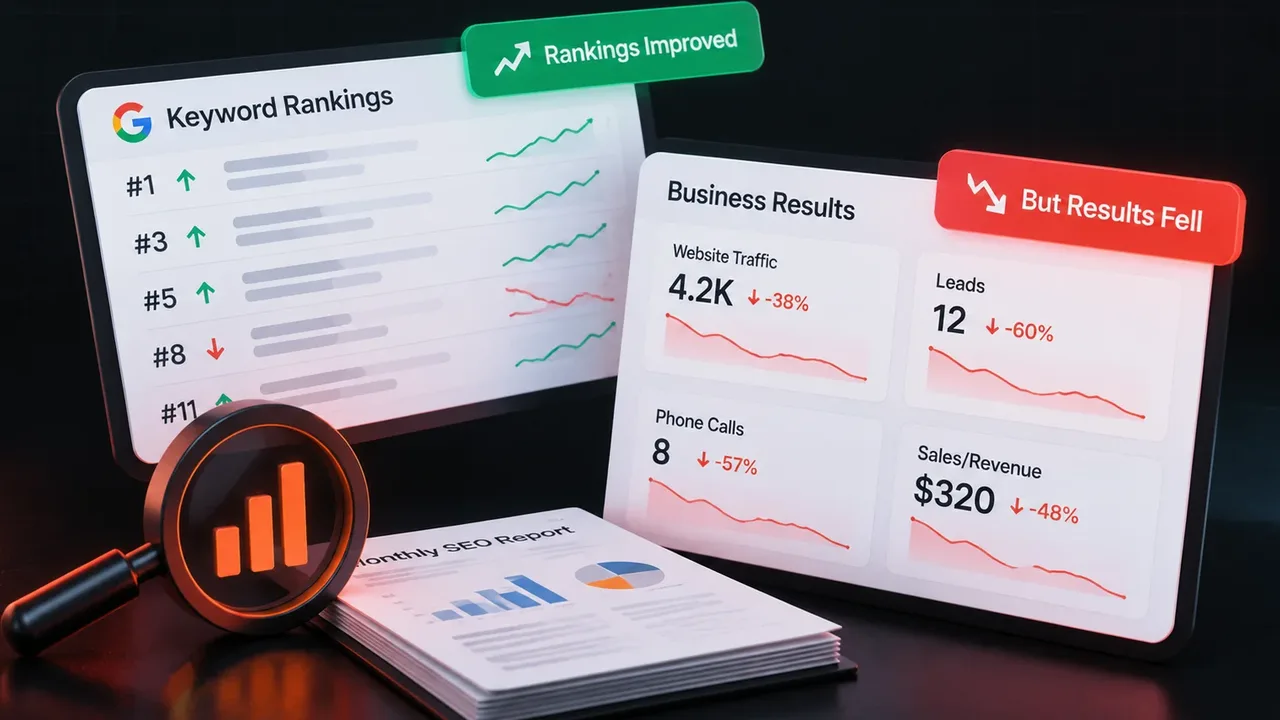
Your Current Agency Reports Rankings, Not Results
An SEO agency that reports rankings but not leads is measuring its own activity, not your business. A year of fees that returns positions, backlink counts and article counts has bought activity. The Semantic SEO Audit is an independent written read of what was built, what it produces in Google Search Console and what to fix next.
How do you know the SEO engagement is not working?
Four signs in the reports and on the site show the SEO engagement is not working.
- The report shows positions for a keyword list, never clicks per page or leads per cluster.
- Content ships to a monthly count, and no document says which page exists for which query.
- The same service carries three names across the site, because no vocabulary document exists.
- Traffic fell at a core update, and the provider's answer was more content.
A site that rises and falls with core updates is renting positions, and these four signs are the structure that rents them.
What does an independent audit tell you?
An independent audit tells you in writing what the site is today and what each fix costs.
We crawl every indexable page, have a person read each core page and run each core query live to record the page types that rank. The site then passes six checks: entity coverage, predicate consistency, semantic dilution, centerpiece and block order, AI citation readiness and competitive entity gaps.
The issue map ranks every fix by cost and states what is wrong, why it costs rankings or citations and what the fix involves. You can hand the map to your current provider, your own team or us.
What does a semantic SEO engagement report instead?
A semantic SEO engagement reports leads by cluster, with rankings in the appendix.
Search Console is read per page template, and query count per template is the leading indicator, ahead of clicks. Every form records its source page when a CRM exists, so the report shows leads and opportunities per cluster. The quarterly report names the cluster that paid for the program.
The topical map, the site architecture and the vocabulary document belong to the business and stay when the engagement ends.
How does switching providers work without losing what was built?
Switching providers starts with the audit, so nothing that still earns traffic is thrown away.
Pages that pass the page test stay, often as the merge target for weaker siblings. URLs that earn clicks keep their address. Links from the previous provider stay where the linking page shares the topic. The vocabulary is fixed before any rewrite, and rewrites run in roadmap order, in batches small enough to read in Search Console.
Any migration changes one thing at a time, redirects every old URL and keeps every image URL.
Who is this page for?
The page serves businesses whose SEO provider reports rankings but cannot show leads.
The audit shows what the spend produced.
The audit shows whether either document exists.
A business that wants the same activity report from a new provider. We report leads by cluster, with positions in the appendix.
Questions about changing SEO providers
Do you review my current provider's work?
Is the audit a sales document?
Do I cancel my current provider before the audit?
What if my provider says they already do semantic SEO?
Can my own team run the fixes?
Do you guarantee rankings?
Are we locked into a contract?
Who decides the strategy if we move to you?
Services that fix it
The audit names the cause. The services below carry out the fix.
Get an independent read of what you paid for
On a 30-minute call we open your Search Console beside your provider's last report and show where the two disagree.