Pipeline Attribution SEO: Content Tied to Leads and Revenue

Pipeline Attribution SEO maps the buyer's query path from first search to signed contract. The service builds the bottom-funnel pages that path needs. The report shows which pages produced leads and revenue, not which pages ranked.
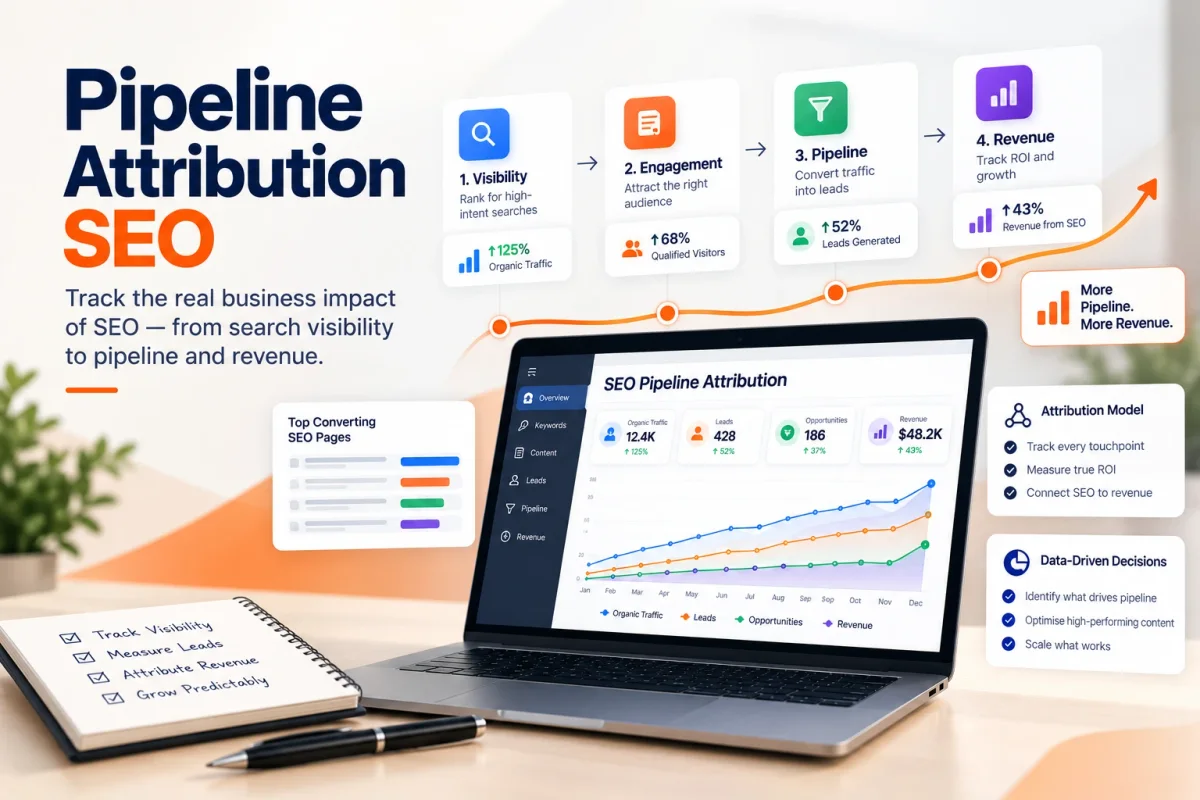
Pipeline Attribution, a Digital Vikingz semantic SEO service

Which buyer query path stages does Pipeline Attribution SEO cover?

Five stages. The core section of the map holds the last three.
Problem

Query pattern
How to [symptom], why does [problem] happen
Page type
Guide with a diagnosis component
What is measured
Sessions, next-page rate

Category

Query pattern
[solution type] for [segment], best [solution type]
Page type
Ranked entity list with visible criteria
What is measured
Sessions, clicks to vendor pages

Comparison

Query pattern
[A] vs [B], [X] alternatives
Page type
Comparison table with typed values, pros and cons per entity
What is measured
Leads from the page

Vendor

Query pattern
[brand] pricing, [brand] reviews, [brand] integrations
Page type
Pricing page with a working estimator; review page with method
What is measured
Leads, demo requests

Decision

Query pattern
[brand] demo, [brand] trial, [brand] vs [competitor] pricing
Page type
Demo or trial page with the form as the main component
What is measured
Opportunities created, closed revenue
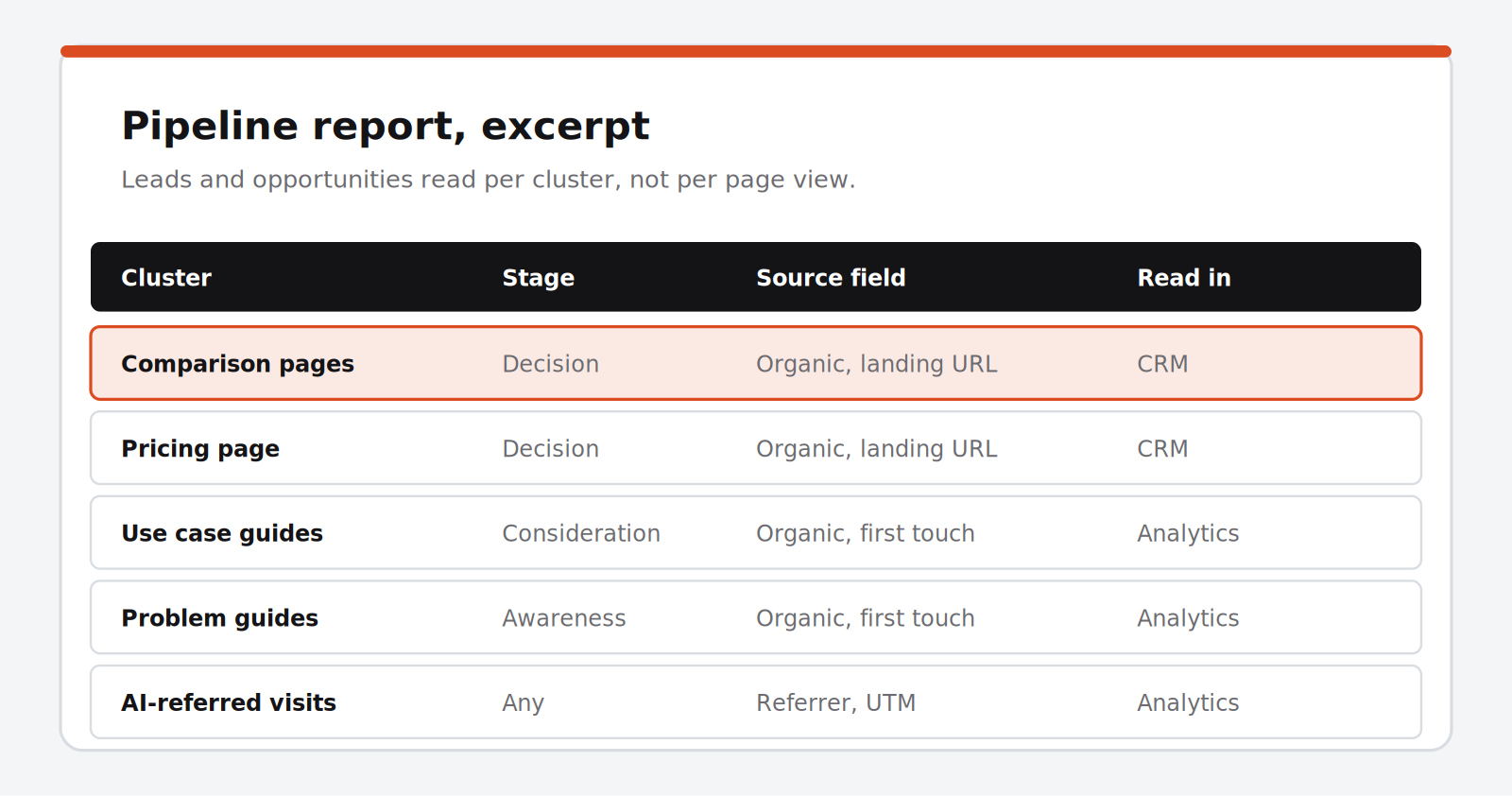
Sample Pipeline Attribution deliverable, shown as an excerpt table

How does Pipeline Attribution work?

A rank report hides the page that closed the deal.

Buyers move through a query path: a symptom, a category, a comparison, a vendor, a decision. Each stage has a page type. Most sites build the first two and report on all five. Pipeline Attribution SEO builds the last three and wires the measurement so the report shows pipeline by cluster.
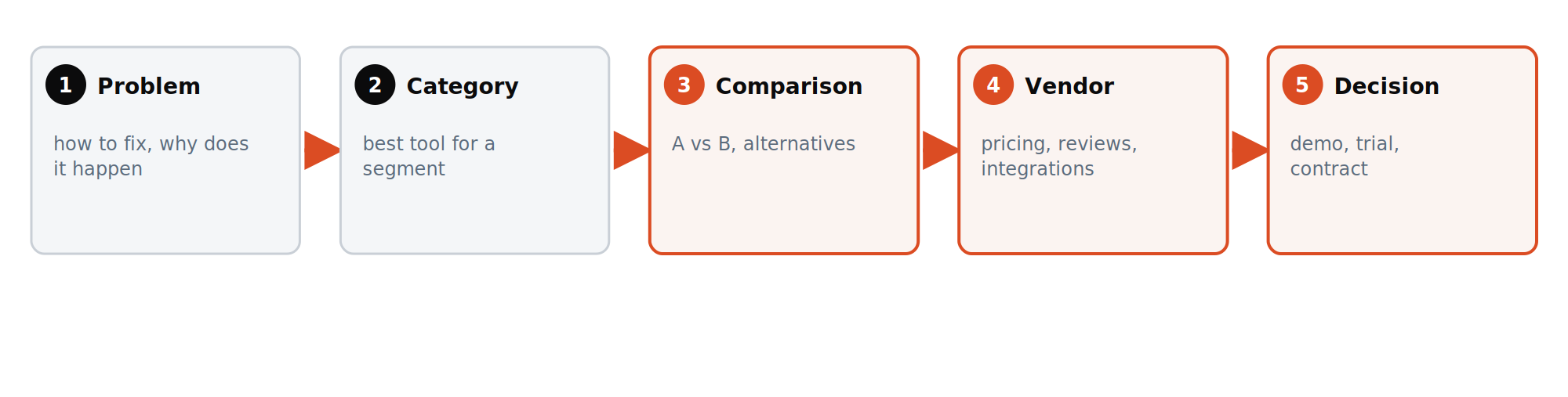
The five-stage buyer query path from problem query to decision query, with the page type and the measurement at each stage

How does Pipeline Attribution SEO wire attribution?

  1. Path mappingThe five stages populated with the client's real queries from Search Console and sales call notes.
  2. Page build or rebuildComparison, vendor, and decision pages built to their page type, with the form or estimator as the main component.
  3. CaptureSource page recorded on every form submission. CRM stage fields aligned with the path stages.
  4. GroupingPages grouped by cluster in analytics and Search Console. Every number reported per cluster.
  5. ReportSessions, leads, opportunities, and closed revenue per cluster, monthly. The four numbers and nothing else on page one.

Who is Pipeline Attribution SEO for?

Founder-led B2B and SaaS with a CRM

A pipeline exists to attribute to. Most reports never touch it.

Companies reporting SEO to a board or investor

Rankings do not go in a board deck. Pipeline by cluster does.

Ecommerce with a long consideration cycle

Revenue by landing-page cluster instead of last-click by product.

Not the right fit

A site with no lead capture and no CRM. Nothing exists to attribute. Start with the architecture and add capture before this layer.

How is Pipeline Attribution priced and delivered?

Shape
Monthly
Pricing basis
Sized by the number of clusters in the core section
What you receive
The pipeline report per cluster, monthly

Exact scope is quoted in writing after the strategy call. How semantic SEO is priced.

A client property from the results page

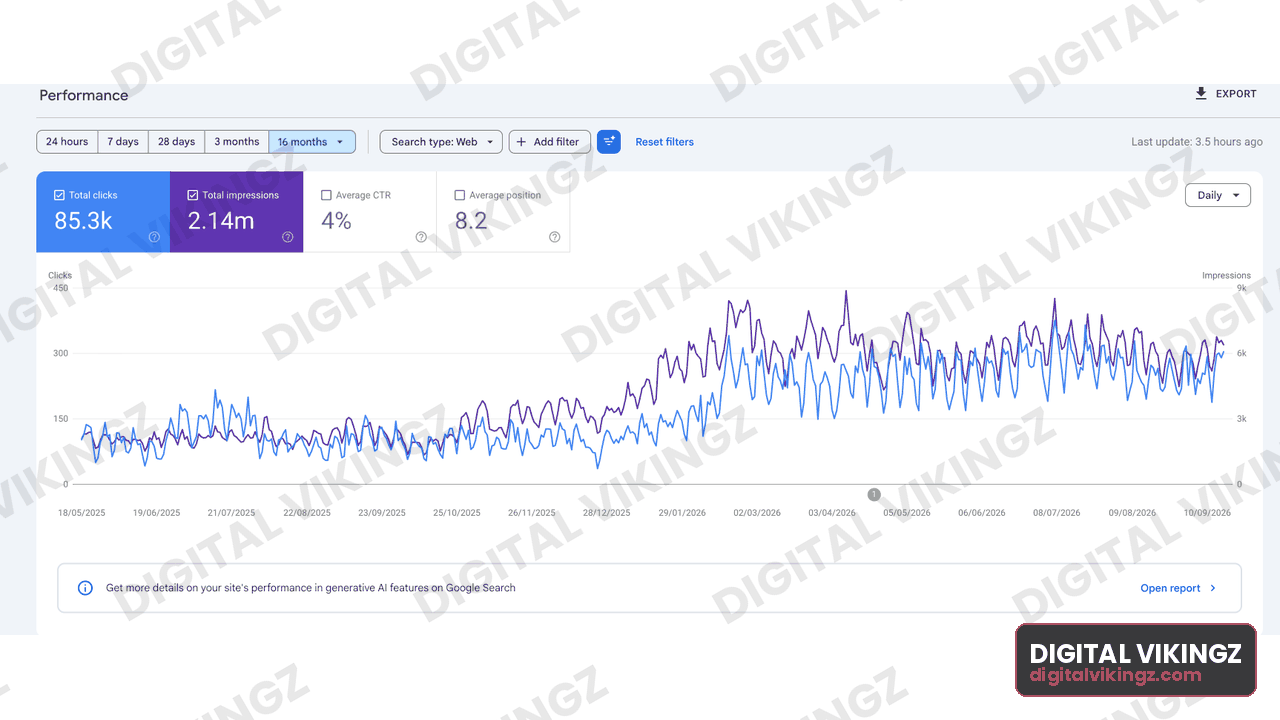
Google Search Console performance panel, IT services · 16 months: 85.3K clicks, 2.14M impressions, 4% CTR, average position 8.2
All results

Questions about Pipeline Attribution

Do you need access to our CRM?
Read access, or a monthly export with the source field and stage field. Nothing is written to the CRM.
Does this replace the architecture?
No. Pipeline Attribution SEO is a layer on the core section. The architecture decides which comparison and vendor pages exist. Pipeline Attribution SEO builds them and measures them.
Our sales cycle is nine months. How do you report?
Opportunities created are reported monthly, and closed revenue is reported when it lands. Both numbers per cluster. The report does not wait for the close.
Which tools do you use?
Search Console, your analytics, and your CRM. The wiring is form fields and page groups, not a new platform.
Can you attribute AI-referred traffic?
Where the referrer is passed, it is captured as a source. Where it is not, the prompt-set record from AI Search Visibility fills the gap. The report labels each.
What if the comparison pages name competitors?
They do. A comparison page without the competitor's name and the differentiating attribute is not a comparison page. The claims are factual and dated.
What happens to our existing comparison and pricing pages?
Each one is checked against its page type first. A page that fits is rebuilt in place on its URL. A missing page type is built new.
What does our sales team need to do?
Share call notes for path mapping. Keep the CRM source and stage fields filled. The report is only as complete as those two fields.
Who approves claims about competitors?
Your team approves each one before the page goes live. Every claim is factual and dated, so a later review checks it against that date.
Do you use first-touch or last-touch attribution?
The capture point is the page where the form was submitted. Earlier stages report their own numbers: sessions, next-page rate, and clicks to vendor pages. Together they show which clusters feed the converting pages.
Book a callWhatsApp