Semantic Content Audit: A Written Issue Map of Your Site

The Semantic Content Audit is a fixed-fee diagnostic of a site's semantic structure. The audit checks entity coverage, predicate consistency, semantic dilution, layout, and AI citation readiness. The written issue map ranks every finding by the cost of its fix.

Semantic Content Audit, a Digital Vikingz semantic SEO service

Is the Semantic Content Audit the right next step for your site?

Tick every statement that is true of your site. The count shows how many structural signs the audit checks for.

0 of 8

Tick each statement that is true of your site.

Book the review call

What does the Semantic Content Audit check?

Six checks. Each one has a defined failure and a defined fix.
Entity coverage

What it looks for
Every attribute of the central entity has a home on the site.
What a fail looks like
Attributes with no page and no section.
What the fix usually is
Additions to the outer section of the map.

Predicate consistency

What it looks for
One verb for each relationship, across every page.
What a fail looks like
The same relationship written three ways.
What the fix usually is
A source term vector, then a rewrite pass.

Semantic dilution

What it looks for
One URL per query intent.
What a fail looks like
Two or more URLs competing for one query.
What the fix usually is
Merge or prune, with redirects.

Centerpiece and block order

What it looks for
The first 400 characters after the H1 carry the entity, the claim, and the function.
What a fail looks like
A share bar, date stamp, or carousel ahead of the main component.
What the fix usually is
A template change, tested on one page group first.

AI citation readiness

What it looks for
One fact per sentence, a named author, stable ids, consensus wording for consensus facts.
What a fail looks like
Compound claims, anonymous pages, unique claims with no evidence.
What the fix usually is
Sentence rewrite plus an identity block.

Competitive entity gaps

What it looks for
What the top results cover that the site does not.
What a fail looks like
Attributes present on every competitor and absent here.
What the fix usually is
Prioritized additions, in the order of demand.
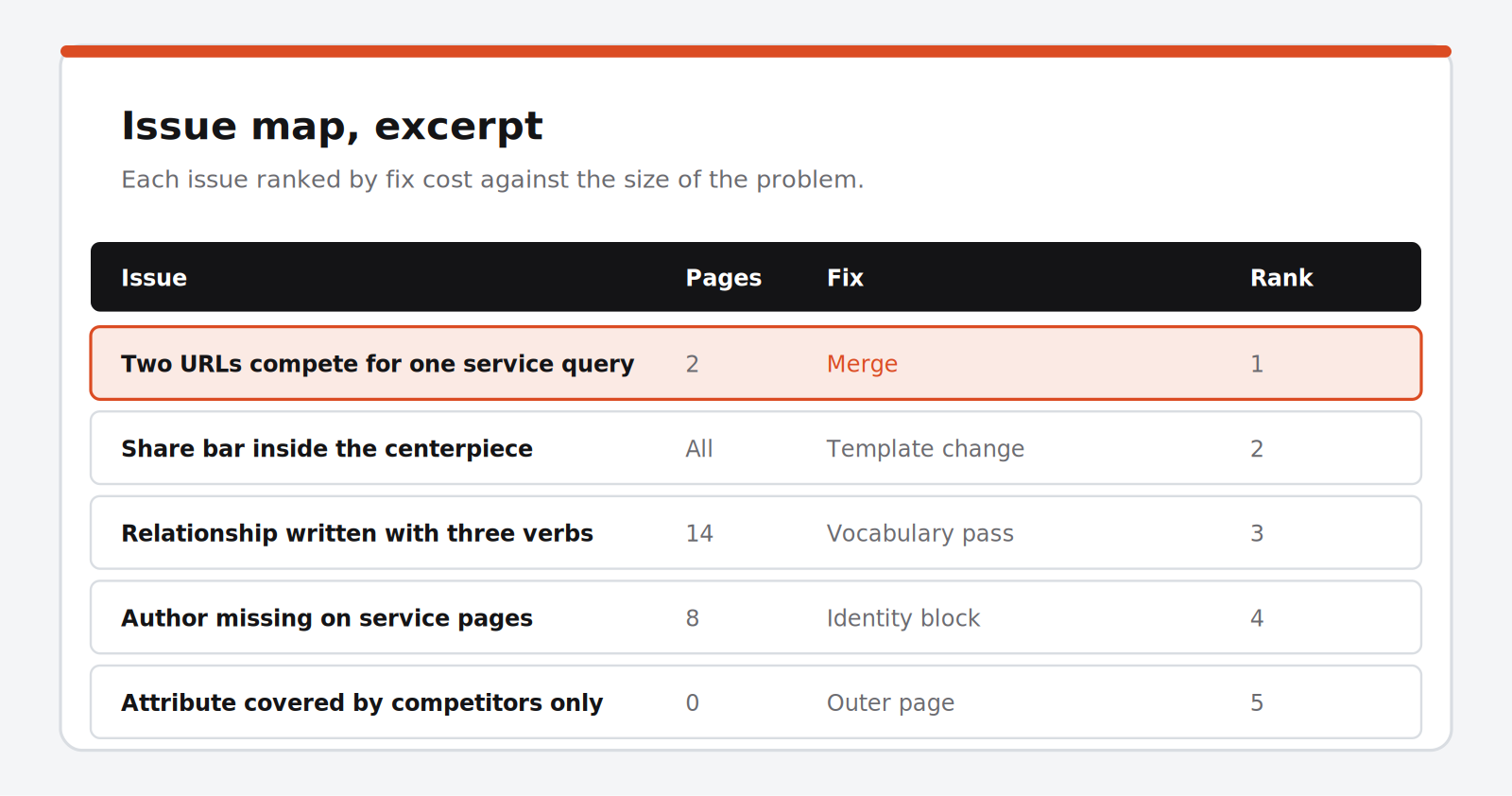
Sample Semantic Content Audit deliverable, shown as an excerpt table

How does Semantic Content Audit work?

The audit is the entry point.

The audit is scoped so both sides decide without a long engagement. You get a document. The document says what is wrong, why it costs rankings or citations, and what each fix involves. Nothing in it depends on hiring us for the fix.
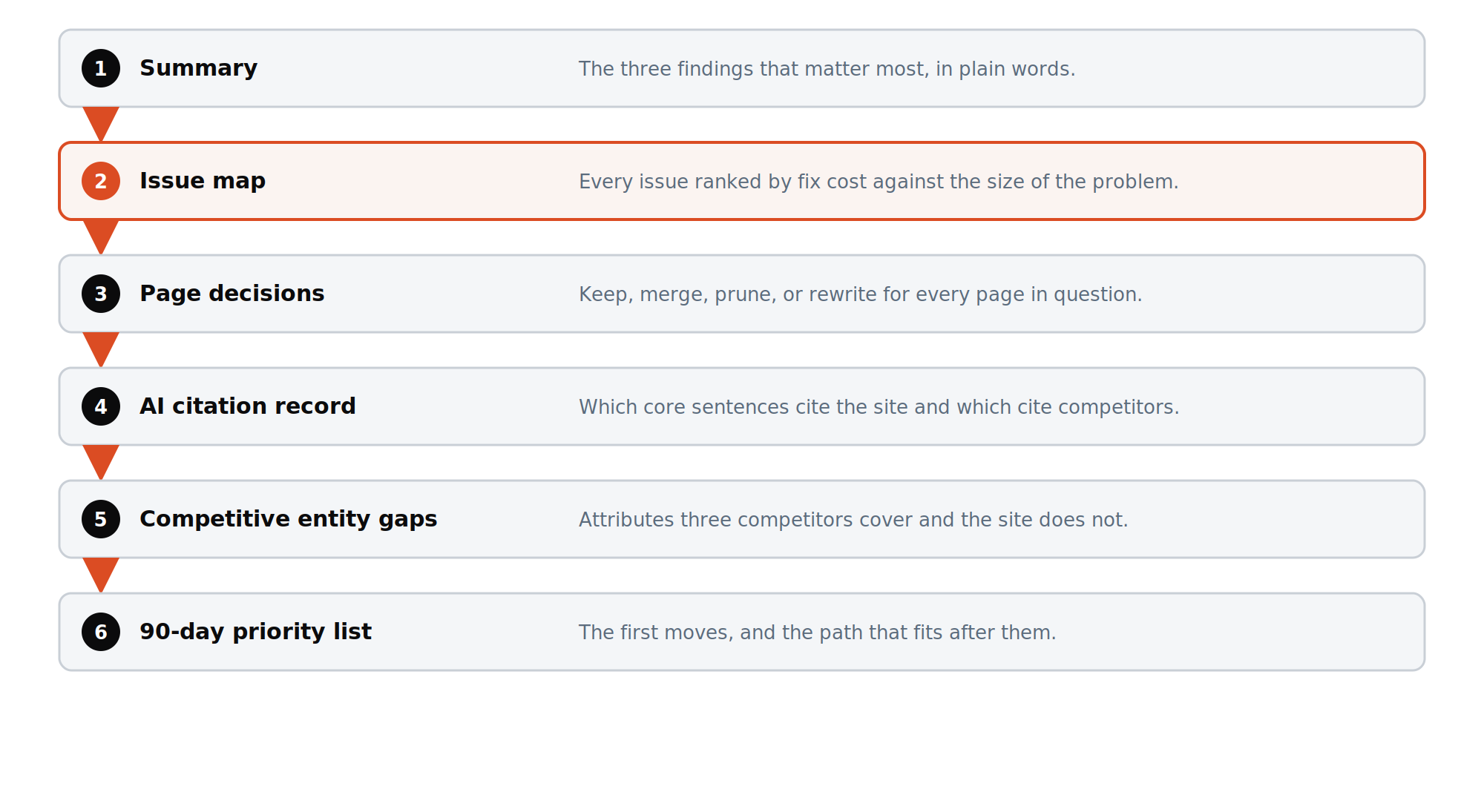
The six sections of the Semantic Content Audit document, from summary to the 90-day priority list

How does the Semantic Content Audit run?

  1. AccessRead access to Search Console, analytics, and the CMS. A subject-matter contact for facts.
  2. Crawl and readEvery indexable page is crawled. A person reads the core pages instead of only parsing them.
  3. Live results checksEach core query is run. The page types and categories in the top results are recorded.
  4. DocumentThe issue map is written, ranked by fix cost, with a page decision for every page in question.
  5. Review callForty-five minutes on the document. What to do first, and which path fits after.

Which Google documents does Semantic Content Audit build on?

Patents describe systems Google has invented. They are not confirmed ranking factors. The work is built so a page passes the check each document describes.

Who is the Semantic Content Audit for?

Anyone deciding if semantic SEO is the right next step

The audit is the cheapest way to find out. The answer is sometimes no, and the report says so.

Sites that lost traffic after a core update

The issue map shows which pages compete with each other and which vocabulary drifted.

Sites with a map or content from another agency

The audit is an independent read of what was built, in writing.

Not the right fit

A site with fewer than ten indexable pages and no content history. The site holds too little to audit. Start with the strategy call instead.

How is Semantic Content Audit priced and delivered?

Shape
Flat fee
Pricing basis
One price, quoted before access is granted
What you receive
The audit document and the review call

Exact scope is quoted in writing after the strategy call. How semantic SEO is priced.

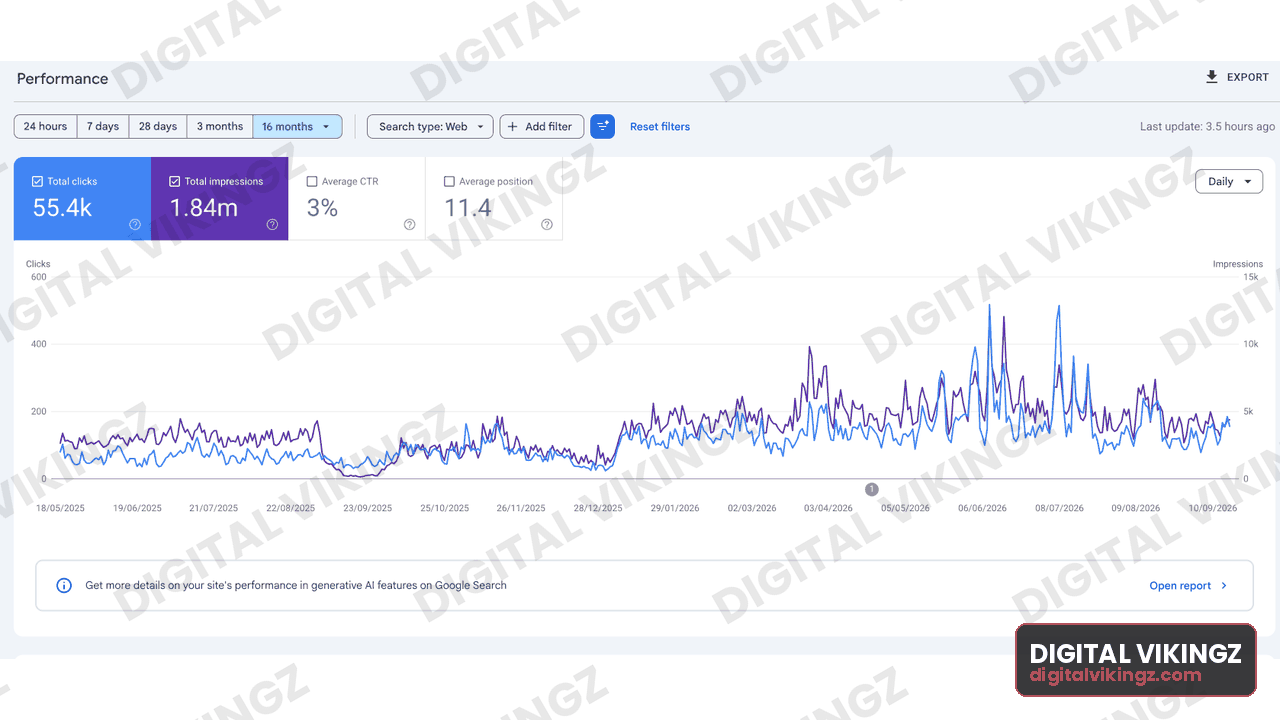
A client property from the results page

Google Search Console performance panel, Home services and HVAC · 16 months: 55.4K clicks, 1.84M impressions, 3% CTR, average position 11.4
All results

Questions about Semantic Content Audit

Is this a technical SEO audit?
No. The audit covers rendering and crawl only where they affect the main component and indexation. A full technical audit of server, speed, and crawl budget is a separate scope.
How many competitors does the audit compare?
Three, for entity gaps. The report lists the attributes every competitor covers and the site does not, in demand order.
Does the audit change anything on our site?
No. The CMS login views but does not edit. Nothing is changed during the audit.
What happens after the audit?
One of three paths. Your team takes the report in-house, and some clients return for the architecture later. The second path is Semantic SEO Architecture, where the issue map becomes phase one. The third path is stopping, because the report shows the site does not need the work.
How is fix cost weighed against problem size?
Reach decides first. A template change that fixes the centerpiece on every page ranks above a rewrite of one paragraph. Problem size then orders fixes of similar cost.
How is AI citation readiness tested in the audit?
A prompt set runs for the core queries. The record shows which sentences cite the site and which cite competitors.
Does the audit cover sites in more than one language?
Yes. Each language version is checked against its own vocabulary. The quote states which language versions are in scope.
Which CMS platforms does the audit work with?
Any CMS that grants a view-only login. WordPress, Shopify, Wix, Squarespace, and headless builds are all common.
What if we disagree with a finding?
Raise it on the review call. Each finding carries its evidence: the crawl record, the live results, or the sentence in question. A finding that does not hold is corrected in the document.
Does the audit include keyword research?
Not as a separate deliverable. Live results checks run for each core query, and competitive gaps are listed in demand order. Full query network collection belongs to Semantic SEO Architecture.
Book a callWhatsApp