Digital Vikingz
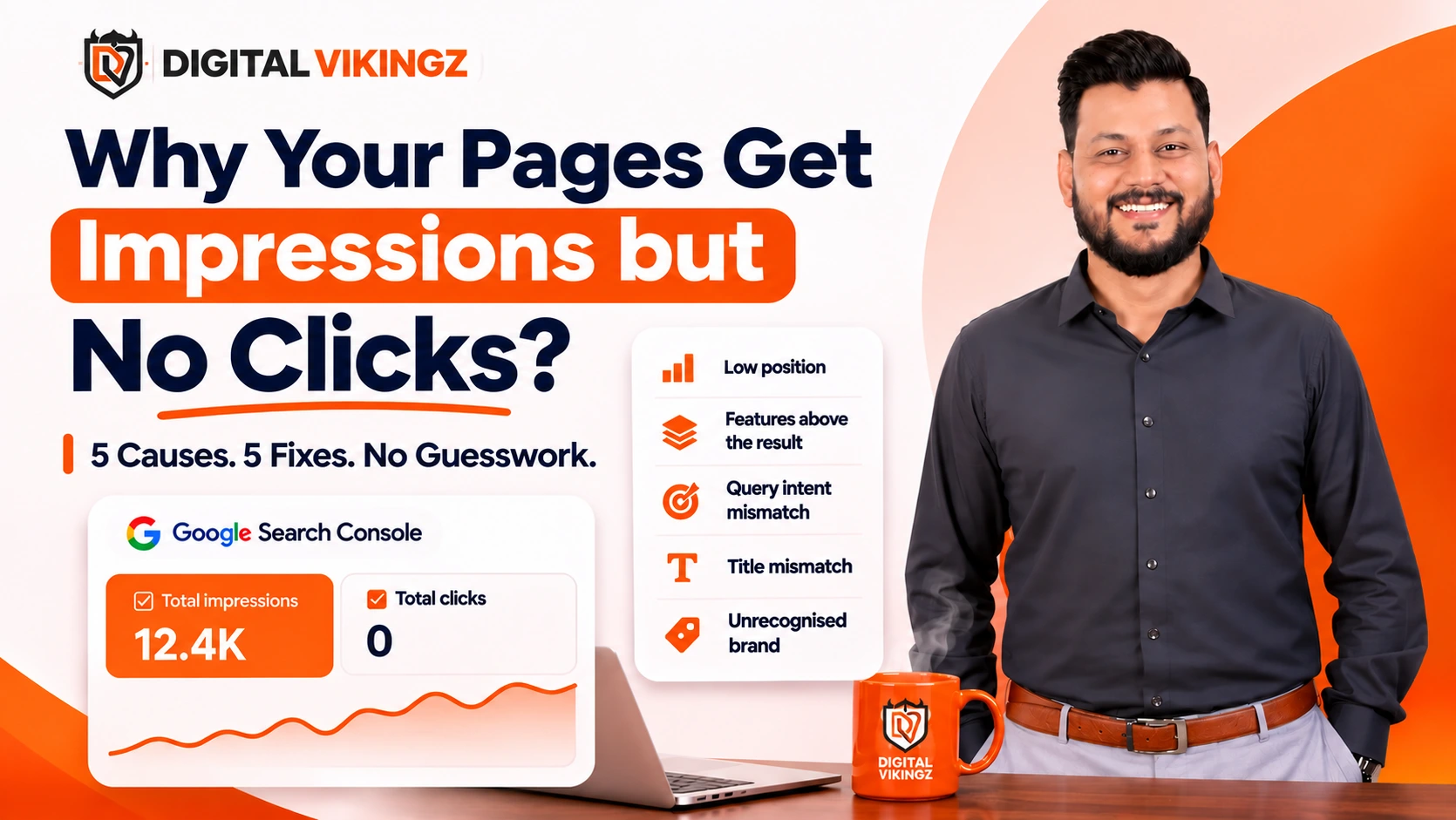
Each cause shows a different shape in the Search Console query table, so the cause is read before anything is changed. The fix follows the cause: a query mismatch is a page decision, a low position is a depth and link problem, and a feature above the result is a passage problem. Impressions with no clicks are not a conversion fault; the conversion fault starts after the click.
Entity card
Field | Value |
Term | Impressions without clicks |
Also called | Zero-click impressions, high impressions low CTR, ranking without traffic |
Part of | Search Console performance diagnosis |
Depends on | The Performance report filtered by page, read per query with position |
Produces | One cause per query group and one fix per cause |
Measured by | Clicks per query group after the fix, at the next configuration pass |
Not the same as | Traffic that arrives and does not convert |
What does an impression without a click mean in Search Console?
An impression without a click means the page appeared in a results page a searcher viewed, and the searcher chose another result, a feature, or no result at all.
Google counts an impression when a link to the page appears in a results page for a searcher. Google counts a click when the searcher follows that link. Average position is the position of the page's topmost result for the query, averaged across the impressions in the window.
The three numbers are reported per query and per page. A page-level total hides the cause, because one page earns impressions for many queries at many positions. The query table is where the cause becomes visible.
Impressions include appearances inside AI Overviews. Google includes AI Overview impressions and clicks in the Performance report for web search without a separate filter. A page cited in an AI Overview earns an impression at the position of the overview, and a click only when the searcher expands and follows the citation.
Five causes explain the pattern, and each one leaves a different trace in the query table.
What causes impressions without clicks?
Impressions without clicks have five causes: low position, features above the result, query intent mismatch, title mismatch and an unrecognised brand.
The five causes, the trace each one leaves and the fix each one takes are listed below:
Cause | What the query table shows | Fix type |
Low position | Average position beyond 8 on the queries carrying most impressions | Depth and links |
Features above the result | Position 1 to 5 and near-zero clicks on question queries | Passage shape |
Query intent mismatch | High impressions on queries that name an entity or an intent the page does not serve | Page decision |
Title mismatch | Position 3 to 8, clicks far below neighbours, title missing the query's entity words | Title and snippet |
Unrecognised brand | Position 2 to 6 on commercial queries, clicks go to known brands above and below | Entity work |
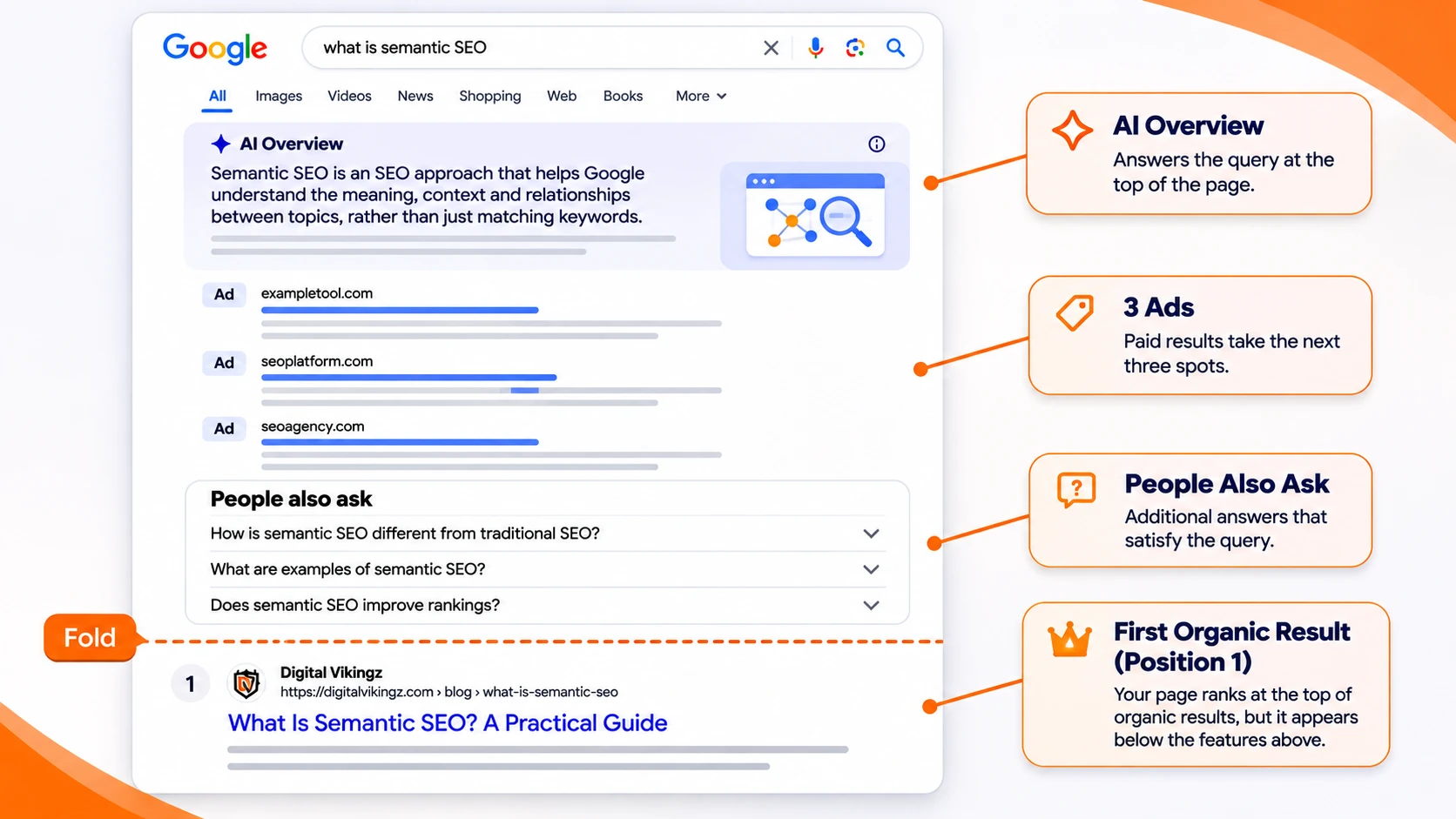
The image above shows a results page where the first organic result sits below an AI Overview, three ads and a People Also Ask box. A page at position 1 on that results page earns an impression on every search and a click on few of them.
How does low position produce impressions without clicks?
Low position produces impressions without clicks because a result at position 8 or beyond is seen by the searchers who scroll and clicked by almost none of them.
The query table shows the shape directly. The queries carrying most impressions sit at average position 8 to 20. The queries at position 1 to 3 carry few impressions. The page total reads as thousands of impressions and a handful of clicks.
The cause is topical, not technical. The page holds enough relevance to enter the results and not enough to lead them. Depth on the attribute the queries name, and internal links from the pages in the same cluster, move the position. A title rewrite alone does not.
How do features above the result take the click?
Features above the result take the click when an AI Overview, a featured snippet, a People Also Ask box or an ad block answers the query before the searcher reaches the organic result.
The query table shows position 1 to 5 with clicks near zero, on queries phrased as questions or definitions. The page ranks. The searcher is satisfied before the page is reached.
Two readings follow. When the page itself is the source the feature cites, the impression is a mention and is read as one, next to the citation record. When a competitor's page is the cited source, the page's passage lost to a passage that stood alone better. The fix is the shape of the answering passage, covered below.
How does query intent mismatch produce impressions without clicks?
Query intent mismatch produces impressions without clicks when Google places the page for queries whose searchers want a different type of result.
The query table shows high impressions on queries that name an entity or a need the page does not serve. The searcher reads the title, sees the wrong type of page, and clicks a result that matches.
Our own Search Console showed the shape in October 2026. The query "llm visibility" produced 5,001 impressions and 1 click on our enterprise LLM visibility post. The query "enterprise llm visibility" produced 1,163 impressions and 7 clicks. The searchers wanted a visibility tool. The page described an agency method. Google placed the page because the page carried the entity words; the searchers passed because the page type was wrong.
The fix is a page decision, never a title tweak. The query either deserves its own page of the right type, or the page is re-anchored to the queries the page does serve and the mismatched queries are released. We re-anchored the post on 28 October 2026 and read the result at the next configuration pass.
How does a title mismatch produce impressions without clicks?
A title mismatch produces impressions without clicks when the title shown in the results page does not carry the entity words of the query.
The query table shows a middling position, 3 to 8, and clicks well below what neighbours at the same position earn. The title names the brand, a slogan or a broader topic. The query names a specific entity and attribute. The searcher does not see the match and clicks the result that states the entity.
Google rewrites titles that do not match the query, and the rewrite is often worse than a written one. The fix is a title written as the query a searcher types: entity type, entity, one constraint, with the query's entity words early.
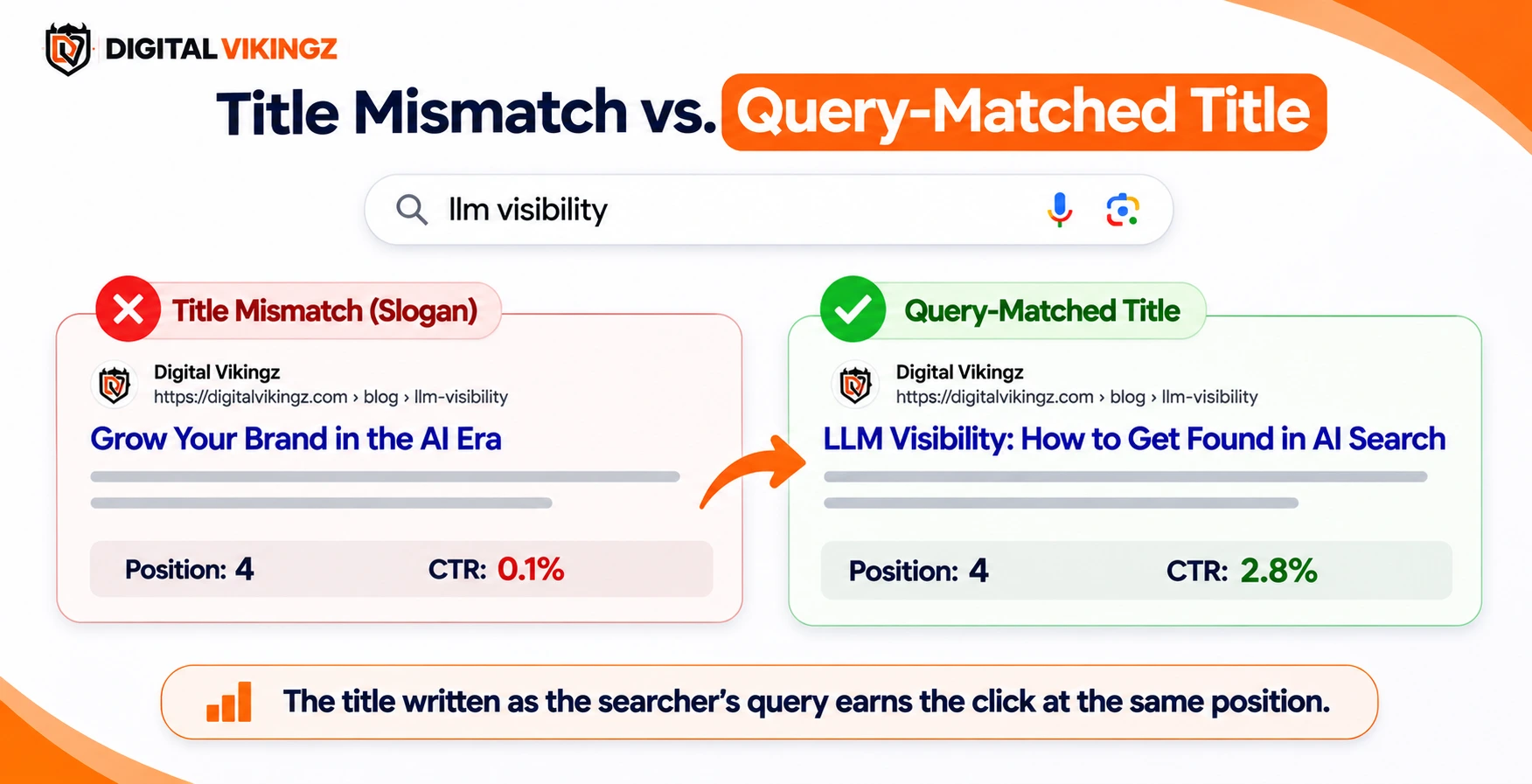
The image above compares two titles for the same page. The first names a slogan. The second names the entity and the attribute the query carries. The second one earns the click at the same position.
How does an unrecognised brand produce impressions without clicks?
An unrecognised brand produces impressions without clicks when the searcher sees the page at a good position and chooses a name already known from the same results page.
The query table shows position 2 to 6 on commercial queries, with clicks far below the position's norm. The pattern appears on vendor and decision queries more than on informational ones. The searcher is choosing a supplier and chooses the one already heard of.
The fix is entity work, not page work: a consistent brand definition on every surface, reviews on platforms the searcher checks, and mentions on pages the searcher reads. The page earns the click once the name carries recognition.
Are impressions without clicks always a problem?
Impressions without clicks are not always a problem, because impressions on queries outside the page's intent cost nothing, and impressions from AI Overview citations are mentions in their own right.
The problem exists when the queries match the page's intent, the position is reachable, and the click still goes elsewhere. That case is diagnosed with the procedure below.
How do you diagnose impressions without clicks in Search Console?
Impressions without clicks are diagnosed by filtering the Performance report to one page, reading the query table with position, and assigning one of the five causes to each query group.
The steps to diagnose impressions without clicks are listed below:
Open the Performance report, set the search type to Web, and set the date range to the last three months. A 28-day window is too short to separate the cause from noise.
Filter by page to the URL in question. Read the query table with impressions, clicks and average position visible.
Sort by impressions. Group the top queries by the entity and intent each one names. Three to six groups cover most pages.
Read the average position band of each group: 1 to 5, 6 to 10, beyond 10.
Search each query of a group at position 1 to 5 with near-zero clicks, and record what sits above the organic result: AI Overview, featured snippet, People Also Ask, ads, video.
Compare each group's entity words with the page title. Record a match or a miss.
Assign one cause per group from the table above. Record the cause next to the query group.
Read the second filter: compare the page with the other URLs of the site for the same queries. Two URLs sharing one query split the clicks between them, and that split is a separate fault with its own fix.
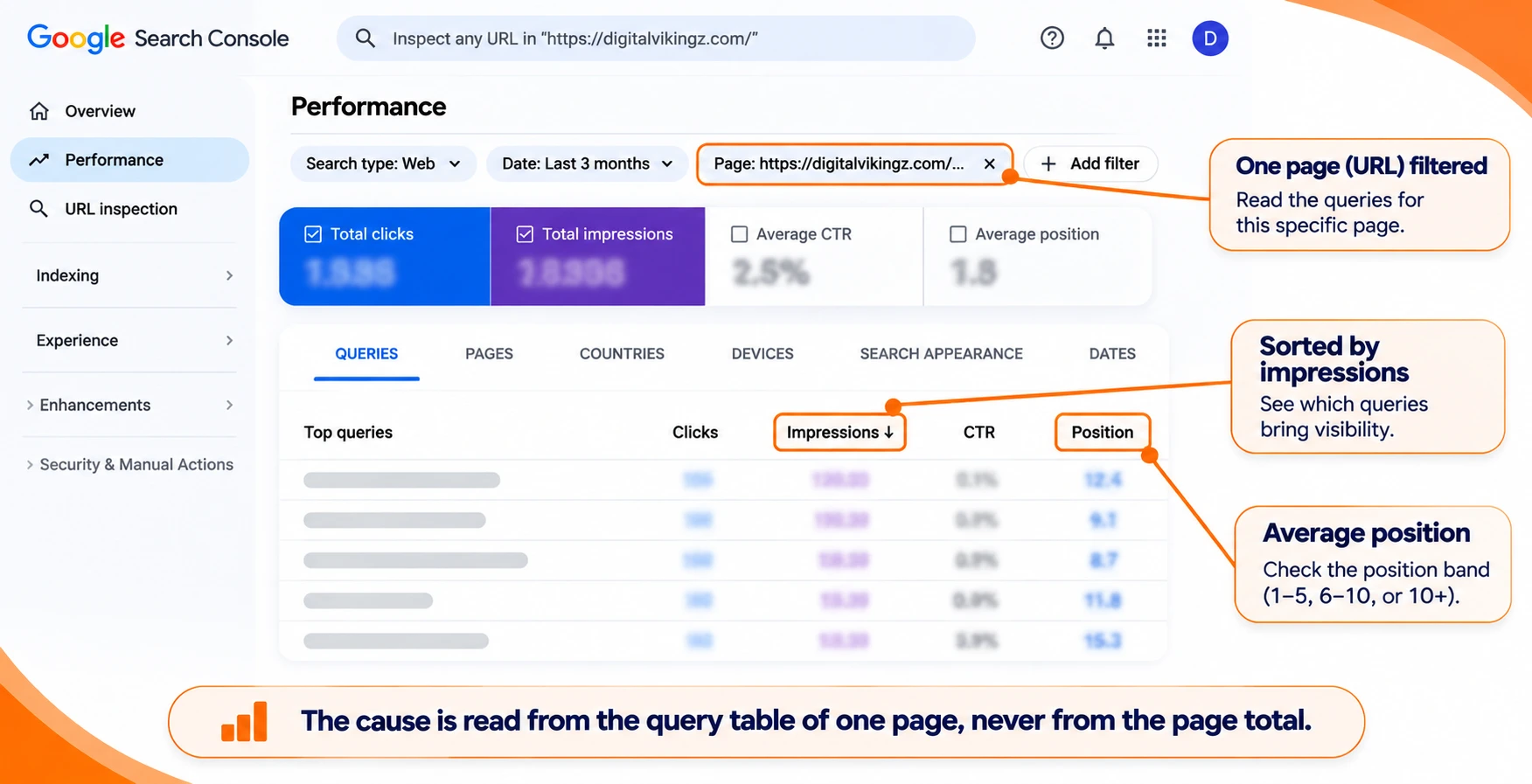
The image above shows the report in the state step 3 produces: one page, queries sorted by impressions, position visible. The cause is read from that table, never from the page total.
We run the diagnosis on paper before any page is opened. A page edited before the cause is written becomes a refresh with nothing to measure against.
How do you fix impressions without clicks?
Impressions without clicks are fixed by applying the fix that matches the cause, one cause at a time, and reading the query group at the next configuration pass.
How do you fix a query intent mismatch?
A query intent mismatch is fixed by a page decision: the query earns its own page of the right type, or the page is re-anchored and the query is released.
Run the page test on the mismatched query group: demand, a different entity, low similarity to the existing page, a recurring pattern, a distinct predicate. Five passes mean a new page of the type the searchers want. Fewer passes mean the query is released and the page is tightened to the queries the page serves. Query Deserves a Page sets out the five checks.
How do you fix a feature above the result?
A feature above the result is fixed by giving the page a passage that answers the question in one standalone sentence, placed directly under a heading that asks the question.
The passage carries the entity, the attribute and the value in the first sentence. The sentence stands alone when lifted from the page. A list follows when the question asks for types or steps, with a sentence that defines the list before the list starts. The passage is the unit a featured snippet, a People Also Ask answer and an AI Overview each lift.
How do you fix a title mismatch?
A title mismatch is fixed by rewriting the title as the query a searcher types, with the entity words early and no slogan.
One title per page, written once. The H1 and the meta description change with the title, so the three agree. The change is logged with the date and the query group, and read at the next pass.
How do you fix low position and an unrecognised brand?
Low position is fixed with depth on the named attribute and internal links from the cluster, and an unrecognised brand is fixed with entity work off the page.
Neither fix is a quick edit. Depth is added where the query group names an attribute the page treats in one sentence. Internal links are added from the pages in the same cluster, with anchors that carry the page's entity. Brand recognition is built across surfaces and read in branded query growth, not on the page.
How are impressions without clicks read per cluster instead of per page?
Impressions without clicks are read per cluster when the same cause repeats across a group of pages, because the fix is then applied to the template and not to one URL.
A single page with the pattern is a page fault. Ten pages of one template with the pattern are a template fault: the same title pattern, the same missing passage shape, or the same intent drift across the cluster. The per-template read finds the repeat.
Pipeline Attribution SEO reads Search Console per cluster and per buying stage, so a cluster earning impressions and no clicks is seen as one row and fixed as one decision. The read after each core update follows the content configuration pass, where the query groups diagnosed here become the lost and new query lists for the cluster.
When is the fault after the click instead?
The fault is after the click when the page earns clicks at a normal rate for its position and the visits produce no leads.
Impressions without clicks and clicks without leads are two different faults with two different fixes. The first is read in the Search Console query table. The second is read in the analytics property and the CRM. A page with both faults is fixed in order: the click first, the conversion second.
Content not converting covers the second fault: the query-match check on arriving visits and the next-step element the page lacks.
Read your page's query table on a call
On a 30-minute call we open your Search Console, filter to the page you are worried about, and name the cause for each query group. You leave with the fix order with or without an engagement.
Book a strategy call · Request the audit
Questions about impressions without clicks
Is a low click-through rate the same as impressions without clicks?
Click-through rate is clicks divided by impressions for a query or a page. Impressions without clicks is the pattern where that rate sits near zero on the queries carrying the impressions. The rate is the number; the pattern is the diagnosis.
Does Google count an impression when the result is below the fold?
Google counts an impression when the link appears in a results page the searcher viewed, and the rule on scrolling differs by result type. Google's documentation on impressions states the rule per element.
Do AI Overview appearances count as impressions?
Yes. Google includes AI Overview impressions and clicks in the Performance report for web search, without a separate filter. A citation inside an overview earns an impression at the overview's position.
Does a meta description change clicks?
A meta description changes clicks when Google shows the written description and the description states the answer the query asks for. Google rewrites descriptions that do not match the query, so the written one is matched to the page's main query group.
Why does one page earn impressions for hundreds of queries?
A page earns impressions for every query Google judges the page relevant to, including queries at position 30 that one searcher reached. The long tail of a query table is noise. The top groups by impressions are where the cause is read.
Should a page be deleted when the impressions never convert into clicks?
No. The page is diagnosed first. A page with a query mismatch is re-anchored, a page with a low position is deepened, and a page cited in AI Overviews is kept as a mention source. Deletion is a decision for a page with no intent match and no cluster role.
How long after a fix do clicks change?
A title change shows within weeks, once the result is re-crawled. A depth or link change shows over the following months and is read with confidence at the next core update.
Can impressions without clicks come from image or video search?
Yes, when the search type filter is left on all types. The diagnosis is run with the search type set to Web, and image and video impressions are read separately.
Is a high impression count with no clicks ever a good sign?
Yes, on a new page. Impressions arrive before clicks as Google tests the page across queries. A new page is read for query count and impressions first, and for clicks after the position settles.
Does the fix differ for a service page and a blog post?
The causes are the same. A service page with the pattern is more often an unrecognised brand or a title mismatch. A blog post with the pattern is more often a feature above the result or a query mismatch.
Who should run the diagnosis?
The person who owns the topical map, because two of the five fixes are page decisions and one changes the cluster's links. A writer applies the title and passage changes once the cause is written.