 Digital Vikingz
Semantic SEO for Real Estate and Property
Semantic SEO for real estate is a site architecture that connects properties, locations, and agents as entities. Each location gets one page with a filtered listing grid as its main component. Every price and market figure carries a date, so the page reads as current.

Which pages does a real estate website need?
8 query patterns, each with its page test verdict, its page type, the main component the query asks for, and the trust element the page carries.
| Query pattern | Verdict | Page type | Main component | Trust element |
|---|---|---|---|---|
| homes for sale in [city] | Page | City listing page | Filtered listing grid, first; filter on price, bedrooms, type | Listing count and median price as dated text |
| homes for sale in [neighborhood] | Page or section | Neighborhood listing page when it passes demand and distinct entity set; else a filter state of the city page | Filtered grid with the neighborhood in the heading | Listing count as text |
| [neighborhood] guide | Page | Neighborhood guide in the outer section | Map, then typed facts: schools, transport, median price, property types | Dated figures with their source |
| [city] real estate market report | Page | Market report, updated on a fixed cadence | Price trend chart with the data table beneath it | Period stated; source named |
| [property address] | Page | Listing page | Price, status, and specs as typed text; photo gallery with captions | Agent named; listing date and status as text |
| [agent name] | Page | Agent profile | Licence, areas covered, current listings, contact | Licence number as text where allowed |
| how to buy a home in [city], selling a home in [city] | Page | Buyer or seller guide in the outer section | Steps with the local specifics: taxes, timelines, documents | Author named; dated |
| [city] vs [city] for [need] | Section | Section on the city guide unless demand is high | Two-column typed comparison | Both entities in each sentence |
What is the central entity of a real estate website?
The location is the central entity of a real estate website, with a listing set attached to it.
A city, a neighborhood, and a building are each locations. Each one has properties for sale or rent, a price history, and an agent who covers it. Buyer queries name the location and an attribute: price, bedrooms, type, or school zone. The architecture gives each location that passes the page test one page, with the filtered listing grid first. The neighborhood guide, the market report, and the agent link to it.
Location
Property
How do core and outer sections split a real estate website?
The core section earns. The outer section explains and links inward.
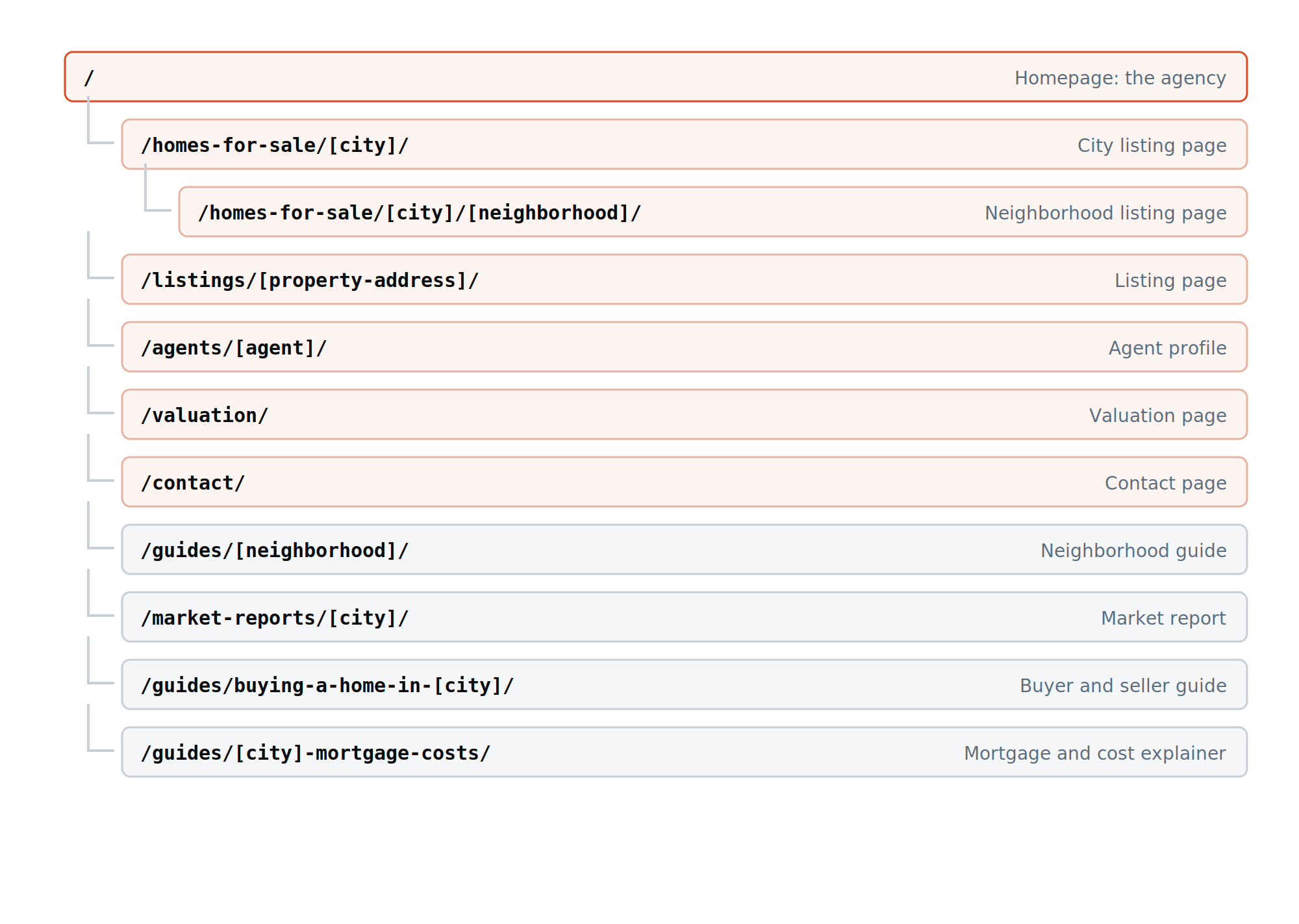
- City and neighborhood listing pages
- Listing pages
- Agent profiles
- Contact and valuation pages
- Neighborhood guides
- Market reports
- Buyer and seller guides
- Mortgage and cost explainers
Where do real estate websites go wrong?
'2 bedroom apartments for sale in [suburb]' as a URL for every suburb is a filter state. The result is thousands of near-duplicates, none indexed. The page test keeps the locations with demand and consolidates the rest.
A sold property with no status change is a page that states a wrong price. The fix is status as text plus an unavailable-after date, or a redirect to the neighborhood page.
'Prices rose 8 percent' with no period is unverifiable. The report states the period, the source, and the update cadence.
What makes a real estate page trustworthy to search engines and buyers?
- Agent profiles with licence number where allowed
- Listing status and date as visible text
- Market figures dated with the source named
- Identity block: registered agency, address, regulator
- Google Business Profile matched to each office page
- Listing photos with captions naming the property
What is measured on a real estate site?
- Clicks per template: city listing, neighborhood, listing, guide, report, agent
- Enquiries and valuation requests by source page
- Index coverage: excluded listing URLs trending down
- Query count per city page as neighborhoods consolidate
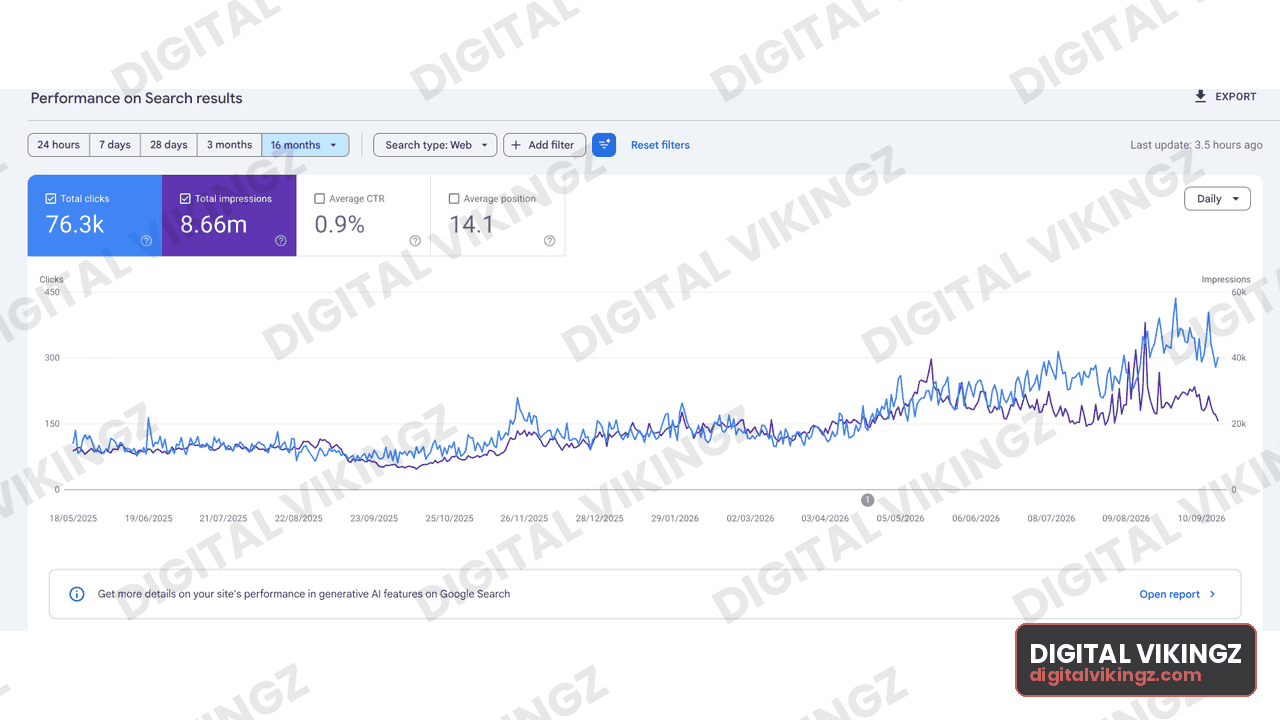
From the results page
Which services fit a real estate website?
 Semantic Content AuditSix checks. Each one has a defined failure and a defined fix.
 Semantic SEO ArchitectureSeven documents with a fixed structure. Every engagement produces all seven.
 Website DevelopmentFive platforms, chosen by what the architecture needs, not by preference.
 Query Deserves a PageThe test behind every verdict in the table
 Talk to usMessage the team on WhatsApp
Questions about semantic SEO for real estate
Do market reports need to be monthly?
How do agent pages help a real estate site?
Our listings come from a feed. Can the pages still be unique?
Do rentals and sales share one location page?
Do off-plan projects and new developments get their own pages?
Which advertising rules apply to property pages?
Does a property site serving international buyers need translated pages?
We are switching website providers. What happens to our listing and neighborhood URLs?
Where do client reviews of agents belong?
Who supplies neighborhood facts and market data?
Which structured data types does a real estate site use?
Does the architecture work on a hosted real estate website platform?

Map your site in thirty minutes
Bring your site. The call names the central entity and the first page decisions.