
Link value comes from Source Context: a link helps when the linking page shares topical similarity with yours. Done right, this is the external half of topical authority. It feeds directly into our authority link building service.
What Is Authority Link Building?
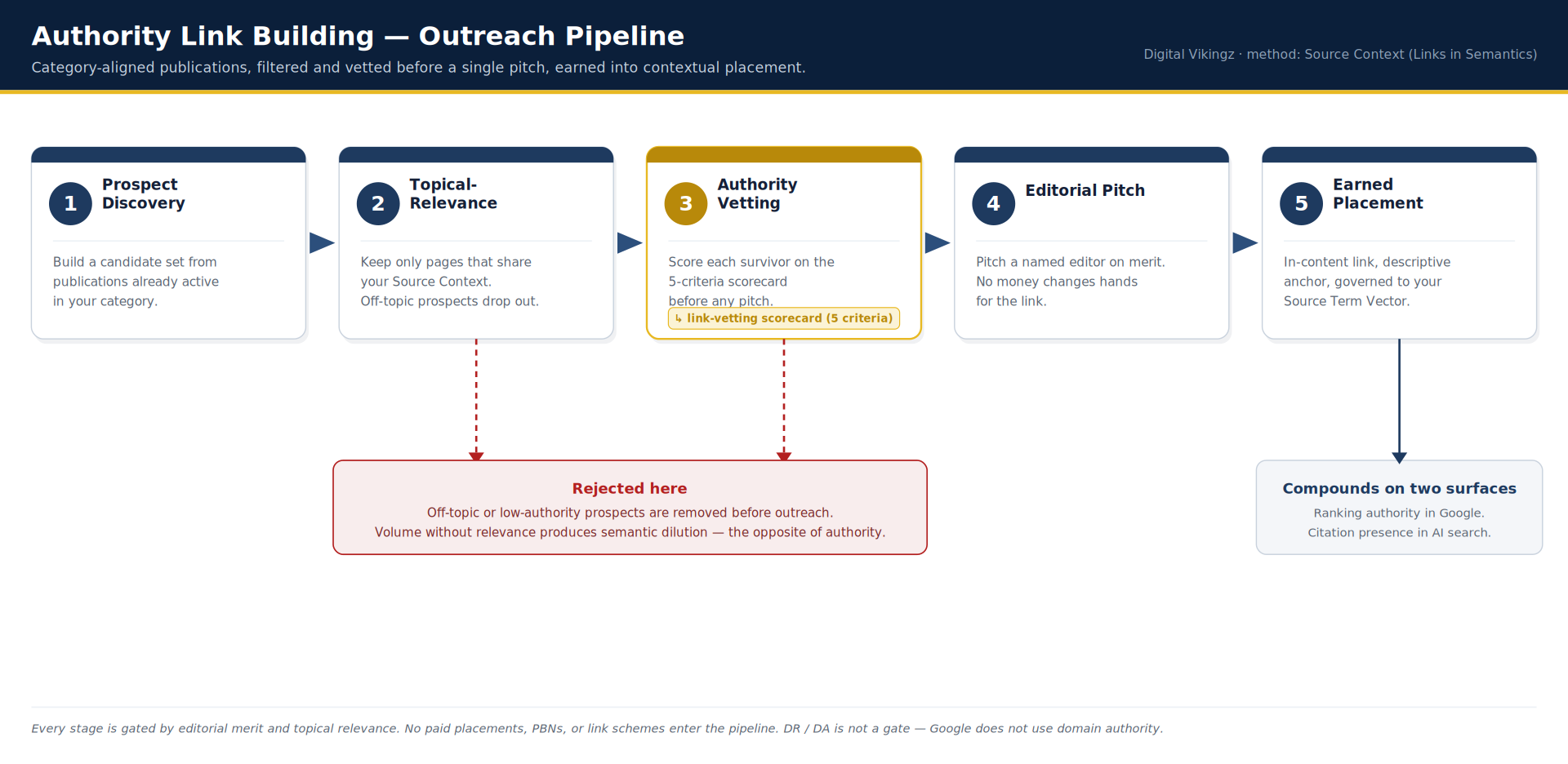
Authority link building is entity reinforcing link acquisition. It earns editorial links from topically relevant publications with real audiences. The goal is a stronger Central Entity, not a higher third party score.
The industry uses several near synonyms. Link acquisition, link earning, and editorial link building all describe the same practice. The constraint never changes: relevance.
How PageRank Powers Authority Links
The mechanism sits on PageRank. Google's original model treats each backlink as a vote of confidence between two documents. Backlinks remain one of Google's strongest ranking signals.
The correlation is well documented. Backlinko analyzed 11.8 million search results. The #1 result had an average of 3.8x more backlinks than positions 2 through 10. Top pages also had about 2x more linking domains.
That is correlation, not causation. Top results also attract links naturally over time. Still, the direction has held for years.
Which Link Types Qualify as Authority Links
Four link types deliver against this definition. Digital PR placements. Contributed editorial. Resource page links. Niche edits, but only when an editor adds them without payment.
Each one is earned through editorial merit. Nothing else qualifies.
How Is Authority Link Building Different From Buying Backlinks?
Buying backlinks trades money for placement. Authority link building earns placement through editorial merit. Google treats the two very differently.
What Google's Spam Policies Say About Paid Links
Google's spam policies are explicit. "Buying or selling links for ranking purposes" is link spam. The policy names advertorials, paid guest posts, and press releases with optimized anchors.
Paid links must carry rel="sponsored" or rel="nofollow". Any link that passes ranking credit for money counts as spam. A link that would not exist without a commercial motivation gets devalued or penalized.
Link Schemes We Refuse to Build
The antonyms are clear. PBNs. Link farms. Paid placement networks. Link schemes. We run none of them.
Most agencies sell activity: a link count, a DR average, a monthly quota. We sell architecture. Every link we build is earned through a real editorial relationship.
Why Does Topical Relevance Decide a Link's Value?
A link passes meaningful authority only when the linking page shares topical similarity with the target. This is Koray Tuğberk Gübür's Source Context principle. A relevant DR 40 link can outperform an irrelevant DR 90 one.
The Source Context Principle
Koray states it directly: "It is not Links vs Semantics; it is Links in Semantics." His framework holds that PageRank flow increases when there is topical similarity between the web pages.
An aligned Source Context lets a high PageRank reference lift you. An irrelevant one moves you nowhere near your industry's central query networks.
Why DR and DA Fall Short as Authority Metrics
Domain Rating and Domain Authority are third party metrics. Google's John Mueller has confirmed Google does not use domain authority at all in its algorithms.
The anchor carries semantic weight too. We govern anchor text against your Source Term Vector for predicate consistency. The full rules live in our operating manual. Every link then describes the same entity relationship the same way.
How Do You Vet a Link's Real Authority?
Real authority is a function of relevance, real audience, and editorial standards. A DR score is not proof. Practitioners report DR can be inflated to 50 or higher for roughly $100 on link marketplaces.
Vet each prospect on five attributes.
Topical Relevance
Does the site regularly publish in your category? A relevant site passes context along with PageRank.
Real Organic Traffic
Authority scores can be manufactured. Google sent traffic is hard to fake.
Editorial Gatekeeping
Does the publication actually reject submissions? Gatekeeping is what makes a link earned.
Link Ratio
A site with millions of outbound links and few inbound ones passes little.
Placement Context
The link belongs inside relevant main content with a descriptive anchor. Footer links carry far less weight.
The base rate favors the disciplined. Ahrefs analyzed 1 billion pages in Content Explorer. 66.31% had zero external backlinks. Even a modest, relevant profile clears most of the web.
A semantic content audit surfaces where your existing profile drifts from your entity. Run it before you spend a dollar on outreach.
What Does Authority Link Building Cost?
Authority link building is priced as a continuous retainer. Relationship driven outreach compounds over months, not days. Real editorial placements have cycle time.
Per link figures for genuine, traffic driven sites cluster around $400 to $600. Monthly agency retainers typically range from $1,000 to $20,000 and above. Enterprise and PR led programs exceed $35,000.
We scope 6 to 12 links monthly at steady state. We have declined engagements where a category had no editorially earnable placements.
Cheaper models exist. They buy volume. Volume without relevance produces semantic dilution. That is the opposite of the authority you are paying for.
Where Do Brand Mentions Fit in Authority Link Building?
Brand mentions now carry weight beyond classic PageRank. Linked or unlinked, they teach AI search engines who to trust. AI systems learn from text, not from link graphs alone.
What AI Citation Studies Show About Mentions
The numbers favor mentions. Ahrefs studied 75,000 brands in August 2025. Branded web mentions correlated with AI Overview visibility at 0.664. Backlinks correlated at 0.218. That is roughly a 3x gap.
Muck Rack analyzed more than 25 million links across ChatGPT, Claude, and Gemini in May 2026. Earned media accounted for 84% of all AI citations. Paid and advertorial content accounted for 0.3%.
One Earned Authority Engine, Two Search Surfaces
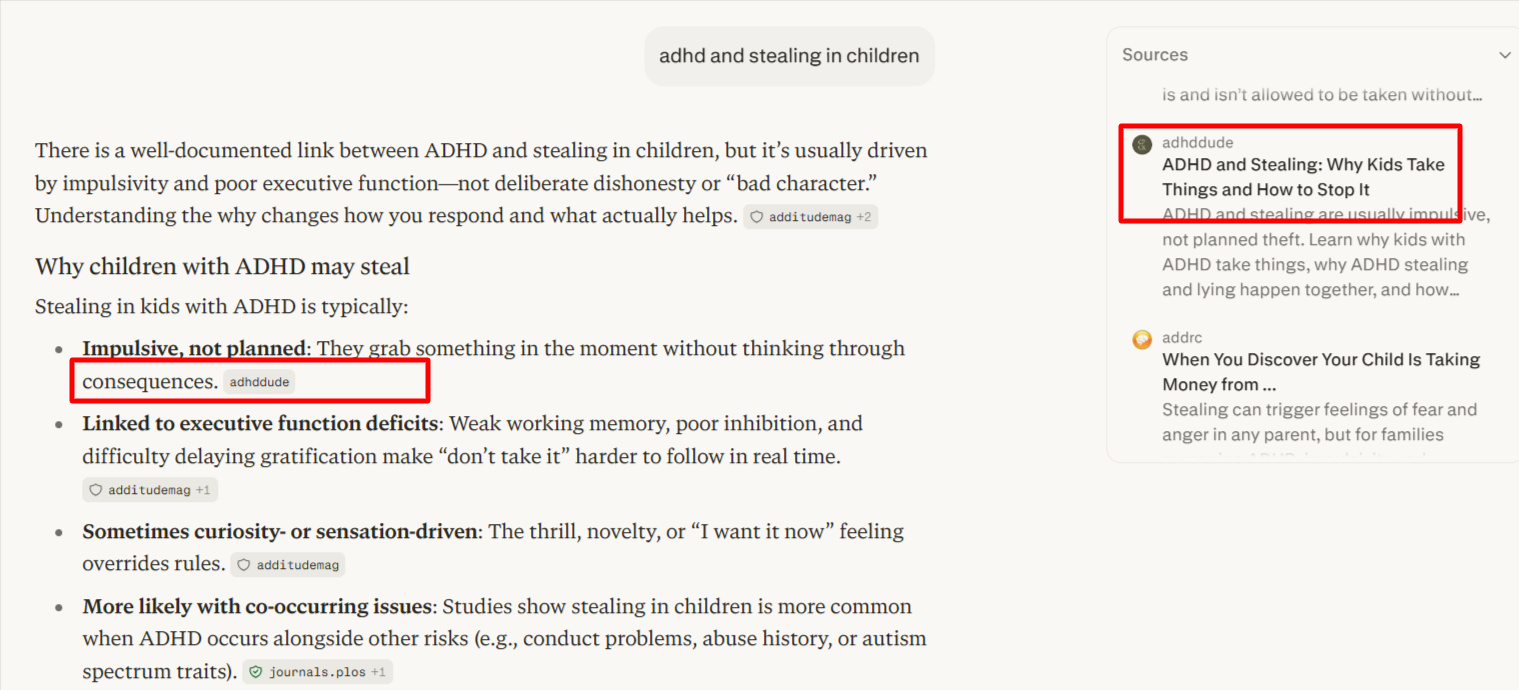
The same earned coverage builds both surfaces. Category aligned editorial placements compound ranking authority in Google. They also build citation presence in ChatGPT, Perplexity, and AI Overviews.
This is the bridge to AI search visibility. Links and mentions are not rival strategies. They are one earned authority engine measured on two surfaces.
Authority Link Building That Compounds: Key Takeaways
Authority is structural compression. Links are one input to it. Digital Vikingz builds links the way Koray Tuğberk Gübür's framework demands: topically aligned, predicate clean, editorially defensible. They compound for years instead of breaking at the next Google update.
Most agencies optimize for link count. We optimize for entity reinforcement. Want links that strengthen your Central Entity rather than dilute it? Start with our authority link building service.
FAQs About Authority Link Building
Is link building still worth it in 2026?
Yes, but the definition narrowed. Backlinks remain a top Google signal. Siege Media's data shows 53.3% of marketers now rate link building a prominent tactic, down from 73.3% a year earlier. Relevance and earned media are the durable plays.
How many backlinks do I need to rank?
There is no fixed number. The target is the referring domain gap between you and the weakest page one competitor. Roughly two thirds of all pages have zero backlinks. Your first relevant referring domains move you ahead of most of the web.
What is a high authority backlink?
An editorial link from a topically relevant site with real organic traffic and genuine editorial standards. Placement sits inside contextual main content. A relevant mid DR link often beats an irrelevant high DR one.