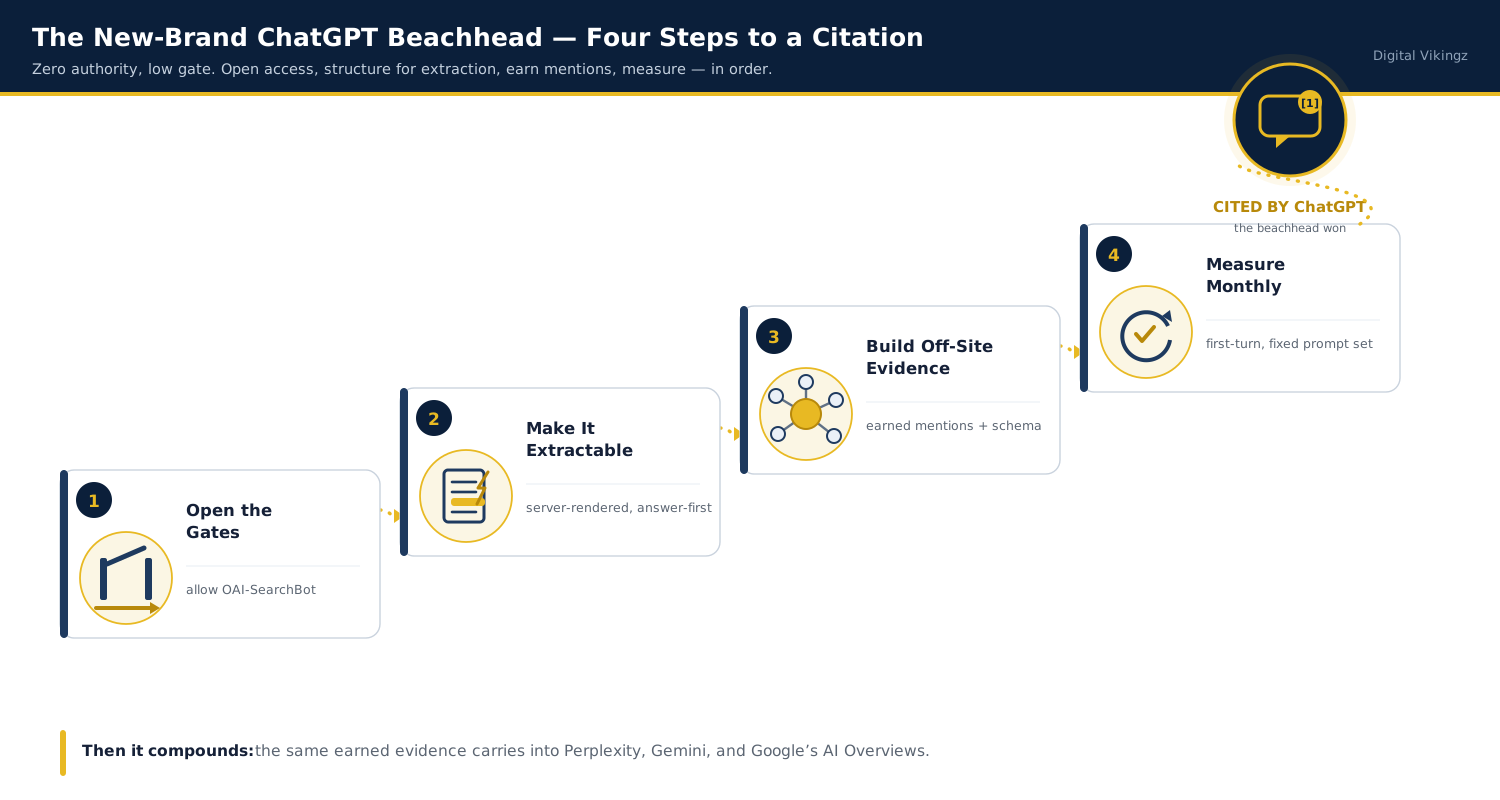
The gate is low, not open, because authority still correlates inside ChatGPT. New brands compensate with a four-step stack: crawler access, extraction, off-site mentions, and monthly measurement. The payoff converts harder than any organic channel. This is the sequencing logic inside our AI search visibility work, and we run it on ourselves.
Why ChatGPT Is the Lowest Gate in AI Search
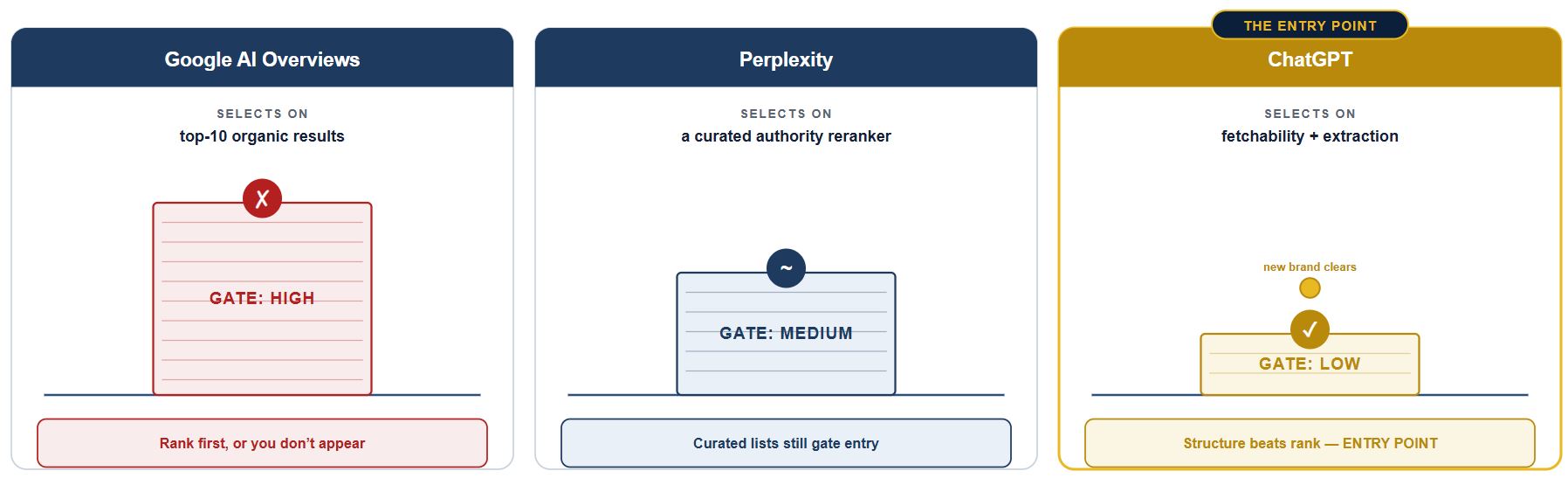
ChatGPT is the least authority-gated AI engine, per Ahrefs' citation research, and its citations decouple from Google rankings. Third-party measurements put only about 10% of ChatGPT cited URLs in Google's top 10.
Compare the gates. Google's AI Overviews lean heavily on top 10 organic results. Perplexity runs curated authority lists inside its reranker. ChatGPT's retrieval rewards fetchability and extraction more than rank, and its measured Bing alignment fell to roughly 8% by mid 2025 while Google alignment tripled. The old "rank in Bing, appear in ChatGPT" shortcut weakened into a footnote.
The prize justifies the sequencing. ChatGPT serves roughly 900 million weekly users and cites about six sources per conversation. Seer measured ChatGPT referrals converting at 15.9% against 1.76% for Google organic. We mapped how every AI engine selects citations already. This post is the ChatGPT door specifically.
The Honest Counterweight: Authority Still Helps Inside ChatGPT
Least gated does not mean ungated. SE Ranking's study of 10,000 ChatGPT queries found domain authority the strongest single predictor of citation, with high authority domains cited 3.8x more often than weak ones.
Both findings are true at different levels. Across engines, ChatGPT's gate is the lowest. Inside ChatGPT, authority still correlates. The same study drew the conclusion that matters for new brands: small sites have a real chance, but they must excel on every other criterion.
That compensating stack is the rest of this post. Four steps, in order.
Step 1: Open the Gates With Crawler Access
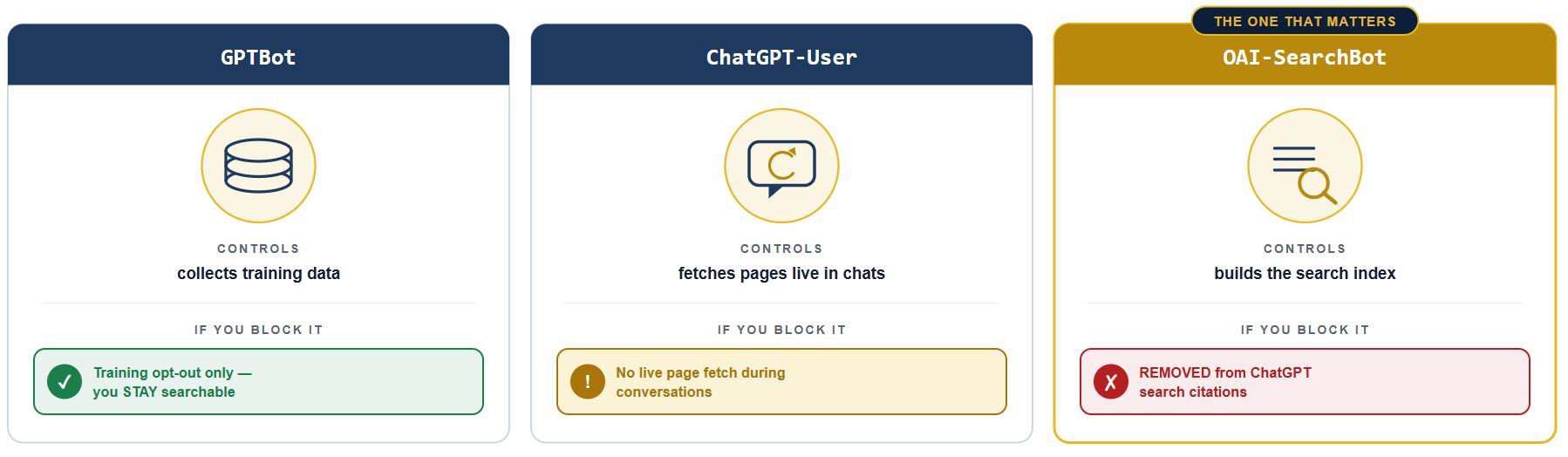
Inclusion has one official lever: allow OAI-SearchBot. OpenAI states it directly, and its publisher guidance says any public website can appear in ChatGPT search.
OpenAI runs three separate crawlers. GPTBot collects training data. ChatGPT-User fetches pages live during conversations. OAI-SearchBot builds the search index. The tokens are independent: blocking GPTBot does not remove you from search, and blocking OAI-SearchBot does.
Then check the trap most new brands miss. Cloudflare has blocked AI crawlers by default since July 2025, and many WAF rules do the same. Verify your CDN allows OpenAI's published crawlers before assuming anything else is broken. Keep Bing Webmaster Tools verified as cheap insurance, nothing more.
Step 2: Make Every Page Fetchable and Extractable
OAI-SearchBot does not render JavaScript and skips slow pages, per third-party technical teardowns. Server-rendered HTML is the baseline. Reported fetch timeouts sit near two seconds, so slow servers get passed over.
Extraction happens at passage level. Teardowns describe content being split into small chunks, with the strongest chunk auditioning the whole page. Front load the direct answer under every heading, because a buried answer never gets its audition.
Depth correlates too. SE Ranking found pages over 2,900 words averaged 5.1 ChatGPT citations against 3.2 for pages under 800 words. The mechanism is coverage, not padding: longer pages answer more sub questions and offer more extractable passages. Keep content fresh, because updates within the last 30 days measurably outperform stale pages.
Step 3: Build the Off-Site Evidence ChatGPT Cross-References
ChatGPT evaluates your brand across the web, not your site in isolation. Reddit ranks among its most cited external platforms. Wikipedia presence feeds multiple retrieval paths. Branded mentions correlate with AI visibility at 0.664, and earned media takes 84% of AI citations.
For a new brand, this is the compensating asset. Category co-occurrence on independent surfaces builds the trust that domain metrics cannot. The brand mentions data covers the full case.
Add the on-page trust layer while the mentions build. Pages carrying three or more schema types showed a 13% higher LLM citation likelihood in one analysis. Article, FAQPage, and Organization are the minimum set.
Step 4: Measure on First Turn Prompts, Monthly
Test where selection happens: the first turn. Profound measured first-turn questions triggering citations 2.5x more often than follow-ups.
Run a fixed prompt set monthly and split mentions from citations, because the two measure different things. The full instrument lives in our enterprise LLM visibility framework. One thing not to spend time on: llms.txt, which showed no significant correlation with ChatGPT citations in SE Ranking's data.
Why We Run This Playbook on Ourselves
This is not theory. Digital Vikingz is a new domain running this exact sequence. Crawlers open. Server-rendered pages. Extraction-first structure on every post. Earned mentions building. Monthly citation tests across four surfaces.
New brands do not need permission from their domain rating. They need the gates open and the structure right. We publish the sequence because we are living proof it is executable from zero.
ChatGPT Citations First, Then Compound
The sequence is the strategy. Open the gates. Fix extraction. Build the mention pattern. Measure on first turns, monthly. ChatGPT is the beachhead because its gate is lowest, and the same earned evidence then compounds into Perplexity, Gemini, and AI Overviews.
Most agencies tell new brands to wait for authority. We build the door instead. When you want the sequence run on your domain, start with our AI visibility engagement.
FAQs About Getting Cited by ChatGPT
Does blocking GPTBot remove you from ChatGPT search?
No. GPTBot controls training data, and OAI-SearchBot controls search inclusion, and the tokens are independent. Blocking OAI-SearchBot removes you from search citations. Blocking GPTBot only opts you out of model training.
Do Google rankings transfer to ChatGPT citations?
Mostly no. Measurements put only about 10% of ChatGPT cited URLs in Google's top 10, and Bing alignment fell to roughly 8% by mid 2025. Fetchability and passage extraction decide more than rank.
How long does it take to get cited by ChatGPT?
Movement can start within weeks once crawler access and extraction are fixed, because retrieval runs live rather than on a training cycle. Competitive prompts take longer, since authority and mention patterns still weigh in. Test monthly on a fixed prompt set.