 Digital Vikingz
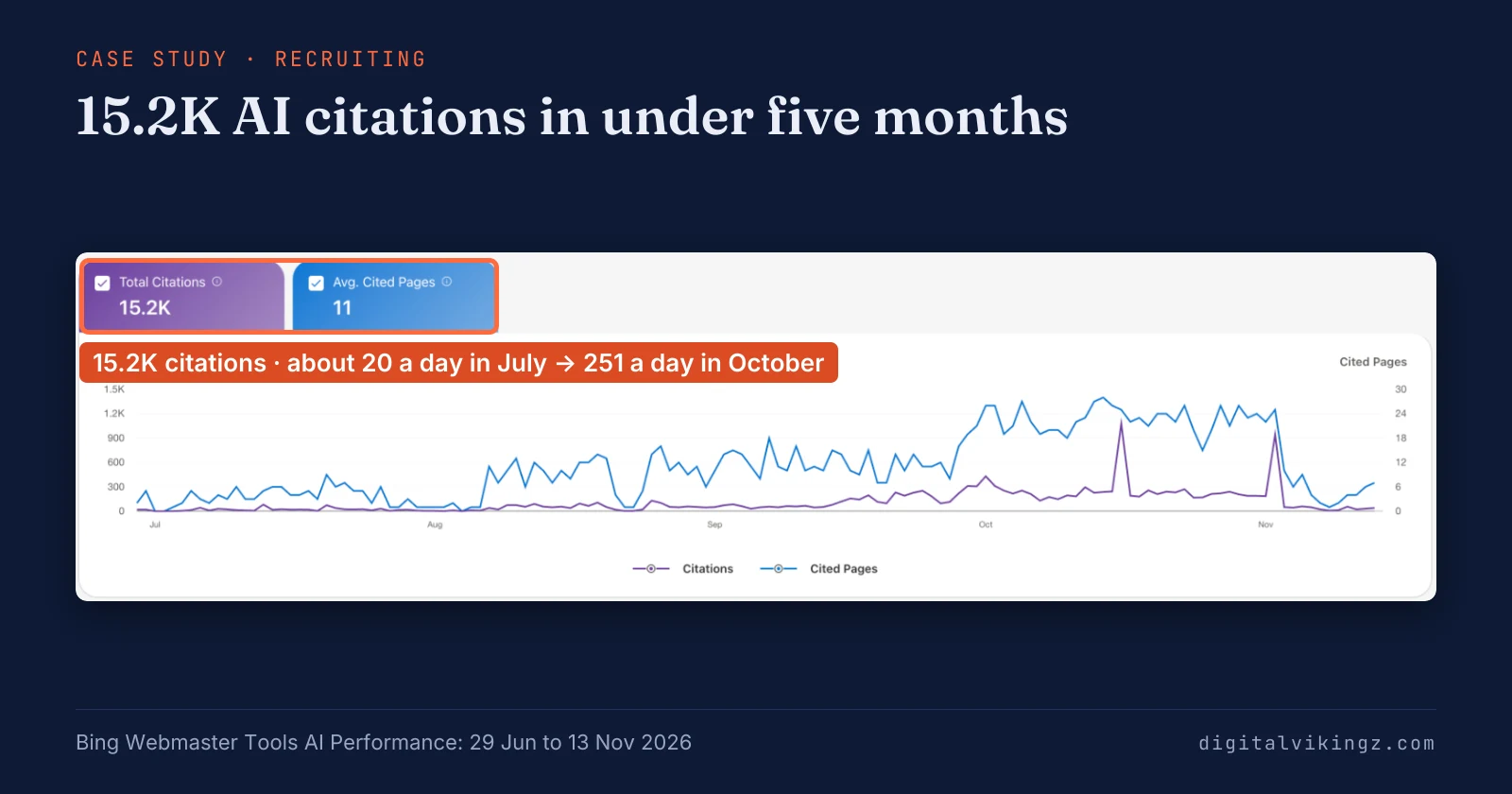
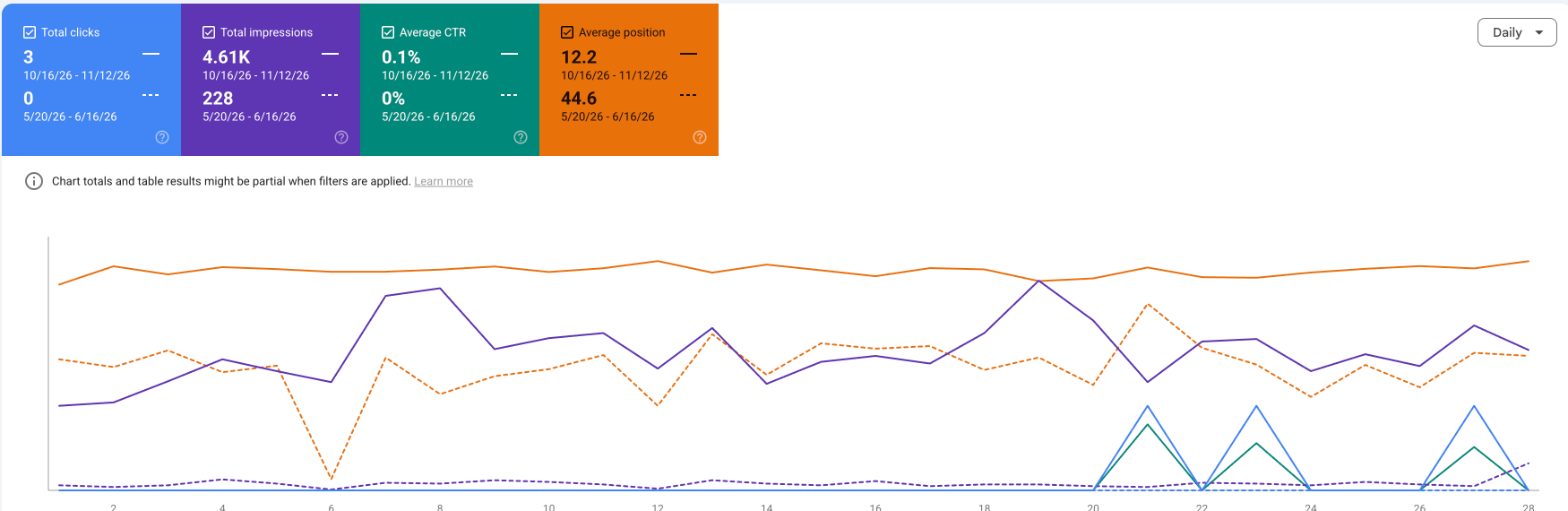
Our embedded recruiting firm SEO case study follows a US recruiting firm that places recruiters inside the hiring teams of startups and tech companies, through the semantic SEO program Digital Vikingz began in May 2026. Microsoft Copilot and partners cited the firm's pages 15.2K times from 29 June to 13 November 2026. Non-branded Google impressions grew from 228 to 4.61K between the first 28 days of the program and the latest 28 days.
Results at a glance
| Metric | First 28 days | Latest 28 days | Change |
|---|---|---|---|
| Impressions, all queries | 6.1K | 14.8K | about 2.4x |
| Clicks, all queries | 455 | 540 | +19% |
| Impressions, non-branded queries | 228 | 4.61K | about 20x |
| Non-branded queries in the top 10 | 18 | 468 | 26x |
| Non-branded queries in the top 3 | 8 | 221 | about 28x |
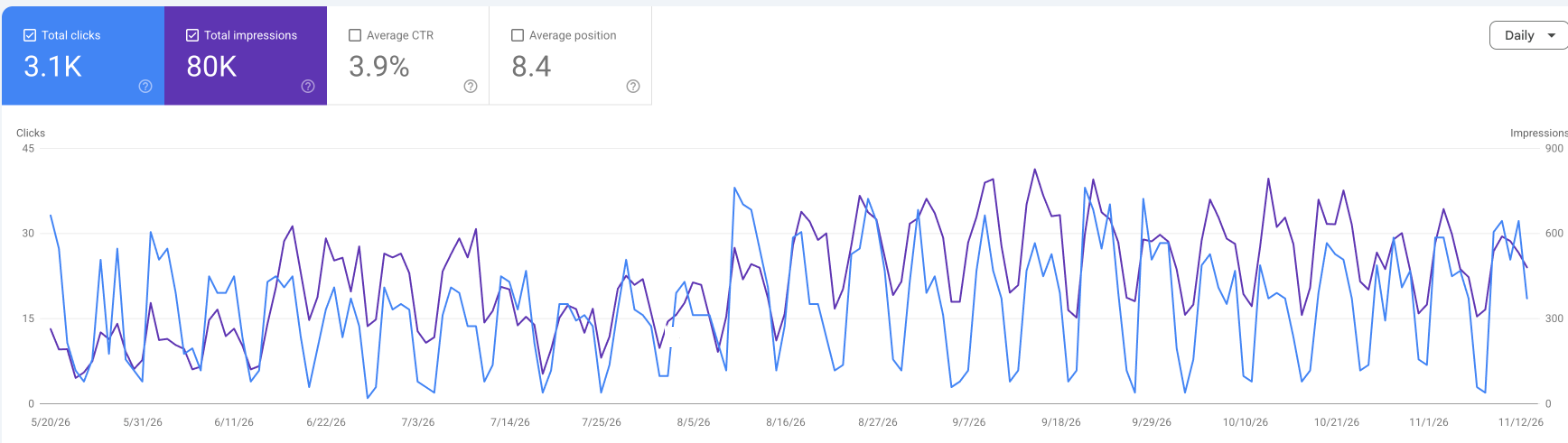
The first 28 days column covers 20 May to 16 June 2026, and the latest 28 days column covers 16 October to 12 November 2026, both read in Google Search Console (Search type Web) on 15 November 2026. Search Console data for the recruiting firm's site begins on 20 May 2026, so we compare equal windows inside the program instead of a six-month period before it.
The starting point
The recruiting firm's search traffic came from its own name. Brand searches carried almost every click in May 2026. Non-branded queries earned 0 clicks in the first 28 days.
The site had no blog section before June 2026. Founders search for recruiting models, flat-fee pricing and when to hire a first recruiter, and the site had no guide that answered those questions. Non-branded queries sat at an average position of 44.6 in the first 28 days.
The firm's identity was split across three service names. Other companies share the firm's acronym, so its short name pointed to more than one business. The backlink profile also carried thousands of spam links from throwaway redirect domains.
What we did
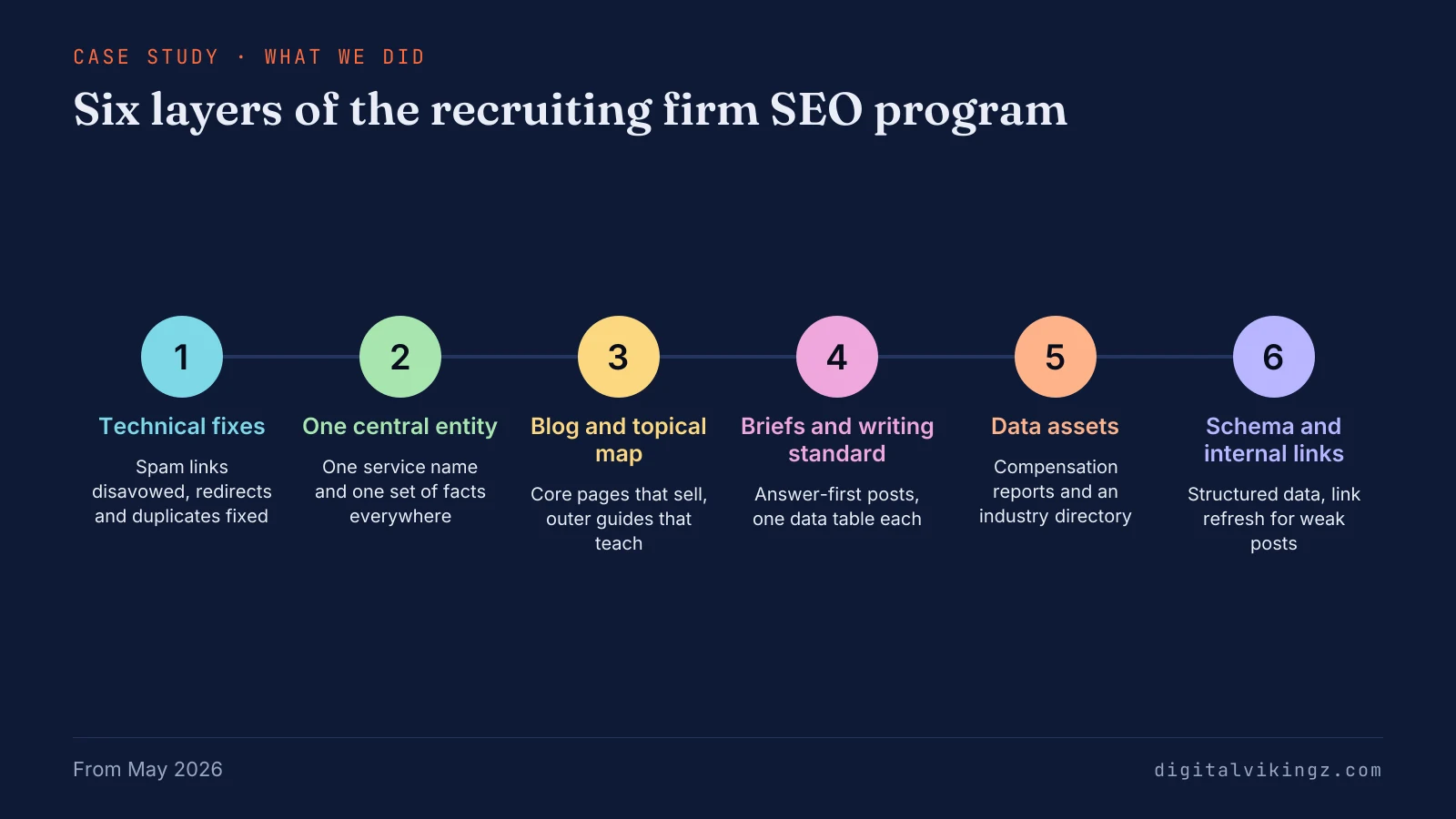
The six layers of the recruiting firm's SEO program are listed below:
- Technical fixes. We disavowed the spam link pattern, cleaned up redirects and kept duplicate and staging pages out of the index.
- One central entity. We made one service name the central entity across every buyer-facing page, with one set of facts that every page and profile repeats.
- A blog section and a topical map. We built the blog section and a topical map with a core section on engagement models, fees and partner choice, and an outer section on hiring operations, compensation and funding-stage hiring.
- Content briefs and a writing standard. We wrote each post from a content brief, with question headings, answer-first paragraphs and one data table, and the blog grew from 0 posts to 52 by October 2026.
- Data assets. We built compensation reports with data tables and an industry directory of recruiting partners with an at-a-glance table and FAQs.
- Schema and internal links. We added Article, Dataset, FAQPage, ItemList and BreadcrumbList schema to the matching pages and refreshed internal links to lift weak posts.
What changed in Google Search
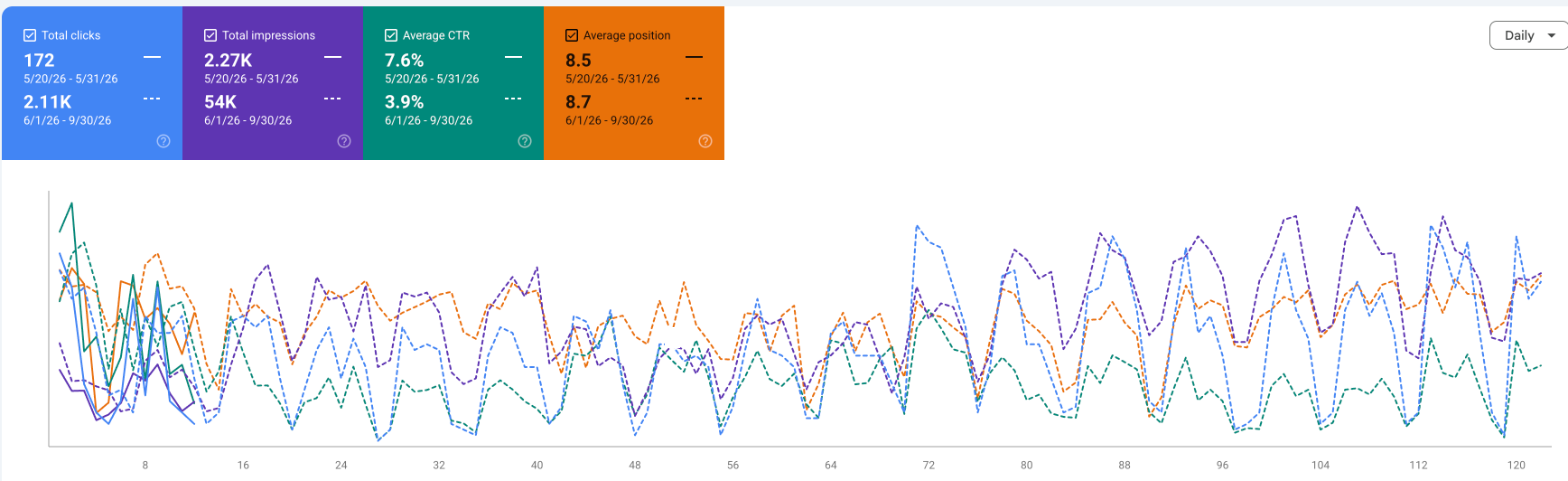
Daily impressions more than doubled between the first days of the program and the summer. The site averaged about 189 impressions a day from 20 to 31 May 2026. The site averaged about 443 impressions a day from 1 June to 30 September 2026.
Guides on recruiting models and fees led the non-branded gain. The guide comparing flat-fee and contingency recruiting grew from 2 to 771 non-branded impressions. The same guide moved from position 17 to 8.4.
The guide to recruiting models for startups grew from 1 to 752 non-branded impressions. The same guide moved from position 10 to 5. The industry directory of recruiting partners went from 0 to 449 non-branded impressions.
Founders' long questions now find the firm in the top 3. The latest window shows 312 non-branded queries of eight words or more. Long questions in the top 3 number 132.
The long questions read like a founder asking an assistant for advice, such as whether to build an internal recruiting team or use outside help after a funding round. Several newer posts reached the top 5 in the latest window, including guides on hiring security engineers and on a seed-stage hiring sequence.
What changed in AI search
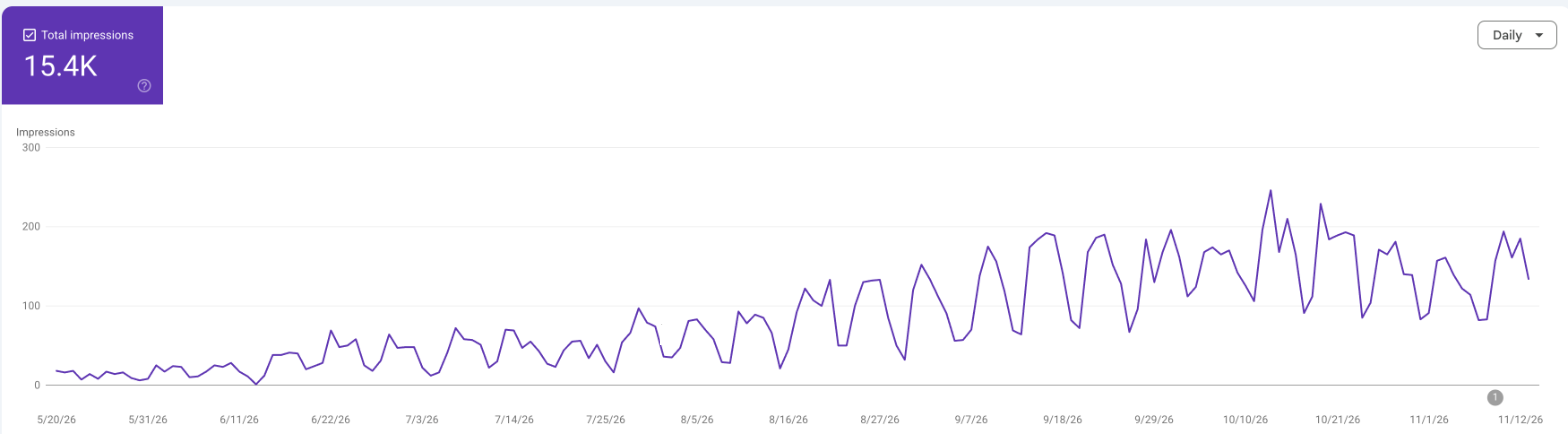
Google showed the firm's pages 15.4K times in its generative AI features. Daily AI feature impressions sat at about 10 to 25 in late May 2026. Daily AI feature impressions reached about 150 to 250 from September 2026.
The homepage led the Google AI features report with 4,203 impressions. The guide to the full cost of recruiting followed with 1,946, and the flat-fee versus contingency guide with 1,873.
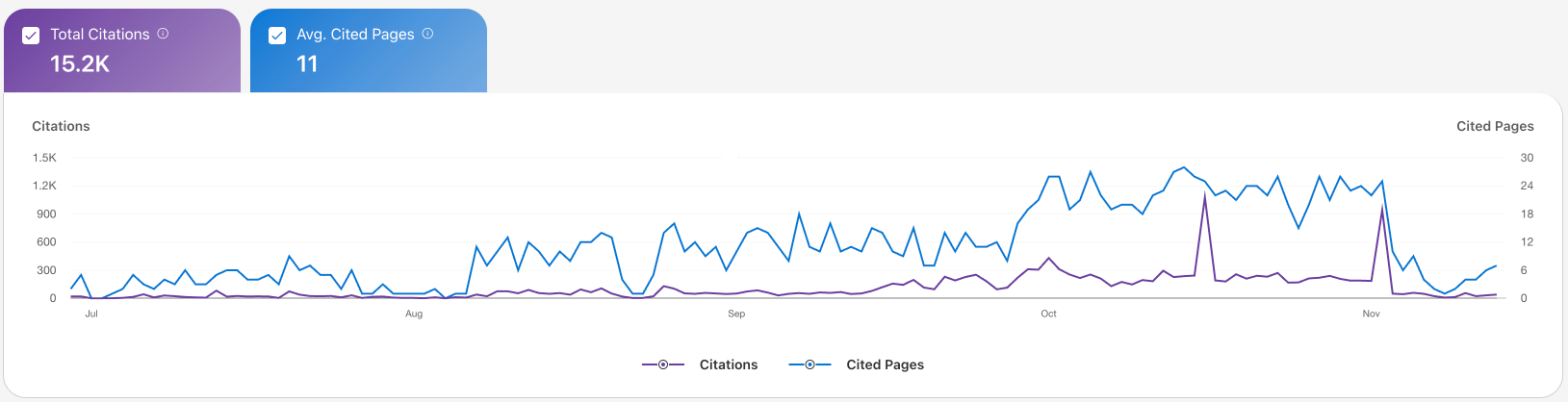
Microsoft Copilot citations grew about twelvefold between July and October 2026. Daily citations rose from about 20 in July to about 251 in October. Cited pages rose from about 4 a day to about 23 a day over the same months.
The pages cited most are listed below:
- Industry directory of recruiting partners: 3.1K citations.
- Engineering compensation report: 2.7K citations.
- Guide to recruiting models for startups: 1.4K citations.
- Guide to the full cost of recruiting: 993 citations.
The two data assets earned the most citations, and both carry their facts in data tables.
What did not move
Non-branded clicks stayed low. Non-branded queries earned the recruiting firm 3 clicks in the latest 28 days. The gain so far is visibility, position and AI citations, not traffic from new searchers.
Average click-through rate fell. Click-through rate dropped from 7.5% to 3.6% between the two 28-day windows, because most new impressions come from non-branded searches at lower positions than brand searches. Brand searches still carry most clicks.
Copilot citations dropped in November 2026. Daily citations fell to about 8 to 59 from 3 November 2026, and the report does not show a cause. We have no lead or revenue data for the period, so this case study reports search and AI visibility only.
What this means for your business
The lessons for a recruiting or staffing firm are listed below:
- Name one service. One service name and one set of facts across your site and profiles give search engines and assistants a single entity to describe.
- Answer the founder's question first. The guides on recruiting models and on flat-fee versus contingency fees reached the first page of Google results, and both follow the answer-first writing standard.
- Publish data in tables. The partner directory and the engineering compensation report, both built on data tables, earned the most Copilot citations.
- Read AI visibility in two reports. Google's generative AI features report and Bing's AI Performance report show different engines, so track both.
Our AI Search Visibility service builds this kind of program, and Semantic SEO Strategy starts it with a topical map of the questions your buyers ask.