
Shopify Store Design Built for Semantic SEO

Shopify Store Design from Digital Vikingz is a Shopify build whose collections, product pages and guides follow the topical map. The build makes product data complete enough for Google Shopping and AI shopping agents.
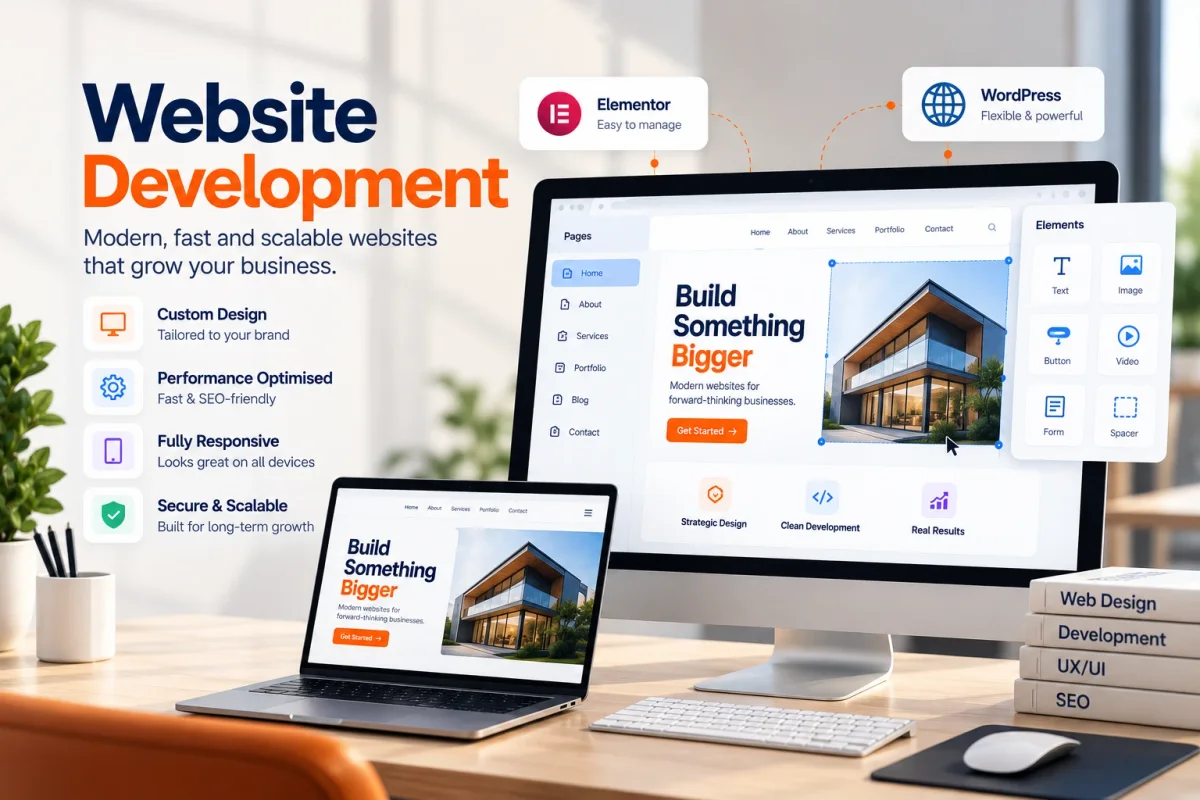
Shopify Store Design by Digital Vikingz, a semantic SEO agency

What does a Shopify Store Design project from Digital Vikingz include?

A Shopify Store Design project includes four deliverables: theme templates, product data, collection architecture and launch redirects.

Theme templates

What you get
Collection, product, page and blog templates in the theme's sections.
Why it matters
Every product and collection page follows one structure.

Product data

What you get
Titles, variants, Product markup with price, stock, shipping and returns.
Why it matters
Shoppers, Google and AI agents read the same facts.

Collection architecture

What you get
Collections as category pages, with an intro and filters.
Why it matters
Each collection owns one buying intent.

Launch and migration

What you get
URL redirects for every product, collection and image.
Why it matters
A moved store keeps its history.

Which Shopify websites has Digital Vikingz designed?

Digital Vikingz shows Shopify projects only with the client's permission, so some are shared on a call instead of listed here.

Shopify projects on request

Live Shopify sites we built are shown on the call, chosen from your industry where we have one. Client permission comes first, so not every project is listed publicly.

Which Shopify settings decide how Google and AI crawlers read the site?

Digital Vikingz enforces six Shopify build rules that decide how Google and AI crawlers read the store, starting with one URL per product.

  1. One URL per productProducts linked inside a collection can open at a collection path. The theme links to the single /products/ address, so each product has one URL.
  2. Collection pages that define the categoryEach collection opens with one paragraph that defines the category, then the grid with filters on at least two attributes.
  3. One Product markup per productThemes and apps can each add Product markup. One source is kept, and its price and stock match the page.
  4. Shipping and returns statedShipping and return policies are set in Shopify's policy settings and linked from every product.
  5. Filter pages kept out of the indexFiltered and sorted collection URLs stay out of the index, so the main collection keeps the ranking.
  6. Product feed in syncThe Google channel syncs products to Merchant Center, so price and stock match everywhere.

Who is Shopify Store Design for?

Shopify Store Design is for Shopify brands, stores moving to Shopify and new stores.

Shopify brands growing past theme defaults

Collections, products and guides rebuilt as one cluster.

Stores moving to Shopify

From WooCommerce, Wix or Squarespace, with every URL redirected.

New Shopify stores

Built to the map from the first collection.

Not the right fit

A store that only needs a new look. The design follows the map and the product data.

Questions about Shopify Store Design

Can you redesign our existing Shopify store?
Yes. We keep what ranks, rebuild the collection and product templates to the map, and redirect any URL that changes.
Do you build a custom theme or use an existing one?
Both. We start from a well-built theme when it fits the map and build custom sections where it does not.
Will this help us show up in AI shopping answers?
The build removes the reasons an AI shopping agent skips a store: missing prices, unclear stock, hidden shipping and return terms, and split product URLs. Demand, reviews and competition still decide recommendations.
Can you migrate us to Shopify?
Yes. From WooCommerce, Wix or Squarespace, with every product, collection and image URL redirected one to one.
Book a callWhatsApp