Digital Vikingz
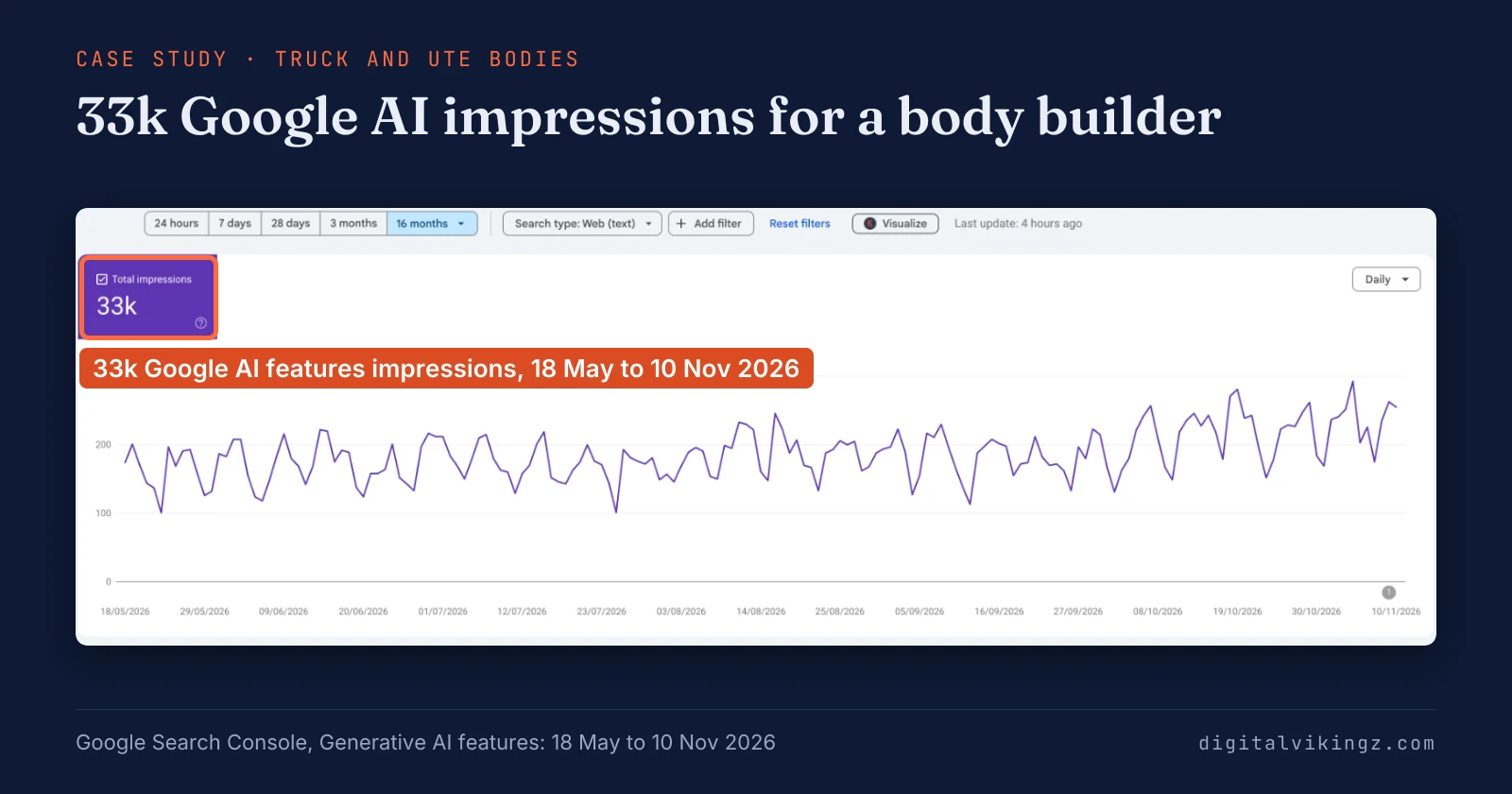
Our truck body builder SEO case study follows an Australian truck and ute body builder through the six-month semantic SEO program Digital Vikingz ran from November 2025 to April 2026. Google Search Console's Generative AI features report counted 33k impressions for the builder's pages between 18 May and 10 Nov 2026. Google clicks rose a modest 11%, from 2.63k in the program window to 2.93k in the six months after it.
Results at a glance
| Metric | Program window | Six months after | Change |
|---|---|---|---|
| Clicks, all queries | 2.63k | 2.93k | +11% |
| Impressions, all queries | 179k | 206k | +15% |
| Average CTR | 1.5% | 1.4% | -0.1 points |
| Tray body size guide, clicks | 611 | 907 | +48% |
| Service bodies page, clicks | 210 | 276 | +31% |
The program window column covers the body builder's six-month program, 11 Nov 2025 to 11 May 2026, and the six months after column covers 12 May to 10 Nov 2026, both read in Google Search Console (Search type Web) on 13 November 2026.
The starting point
The body builder's site earned about 8 to 20 Google clicks a day from July 2025. Daily impressions sat at about 500 to 700 from July to October 2025, before the program began.
Service body searches showed demand the site did not yet win. The query "ute service body" showed 1,570 times in the program window. The same query held an average position of 28.8 in that window.
The plural "ute service bodies" sat at an average position of 38.5 in the program window.
What we did
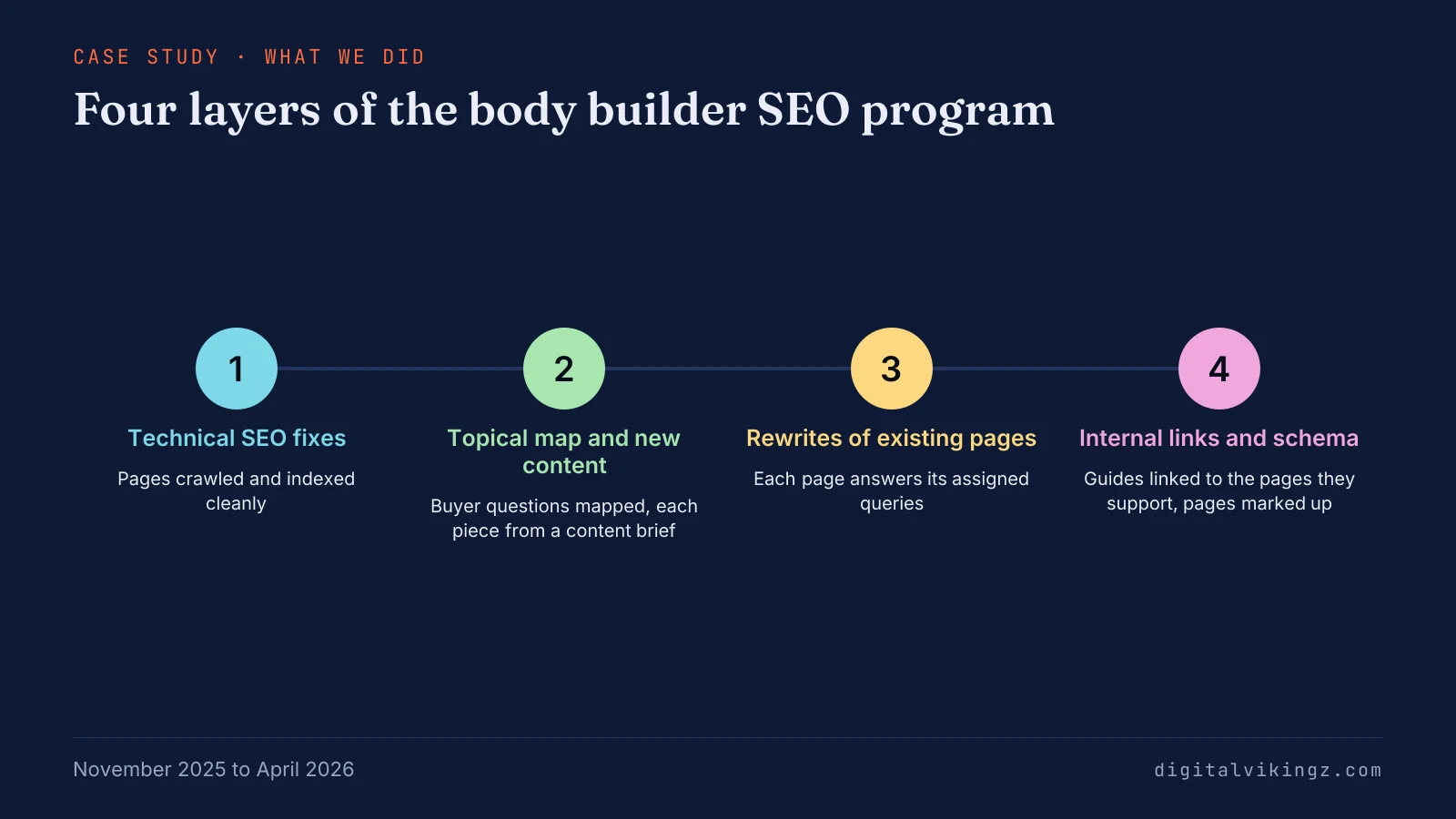
The four layers of the body builder SEO program are listed below:
- Technical SEO fixes. We fixed technical SEO issues so search engines crawl and index the builder's pages cleanly.
- A topical map and new content. We built a topical map with custom truck and ute bodies as the central entity and the questions buyers search before they order a body as its subtopics, and wrote new content, each piece from a content brief.
- Rewrites of existing pages. We rewrote existing pages so each page answers the queries the topical map assigns to it.
- Internal links and schema. We linked buyer guides to the pages they support and added schema markup that describes the business and its pages.
What changed in AI search
Google Search Console's Generative AI features report, in beta, is the only AI visibility source in this case, and Bing data is not part of it. The report starts on 18 May 2026, after the program ended, so its figures show a level, not a change.
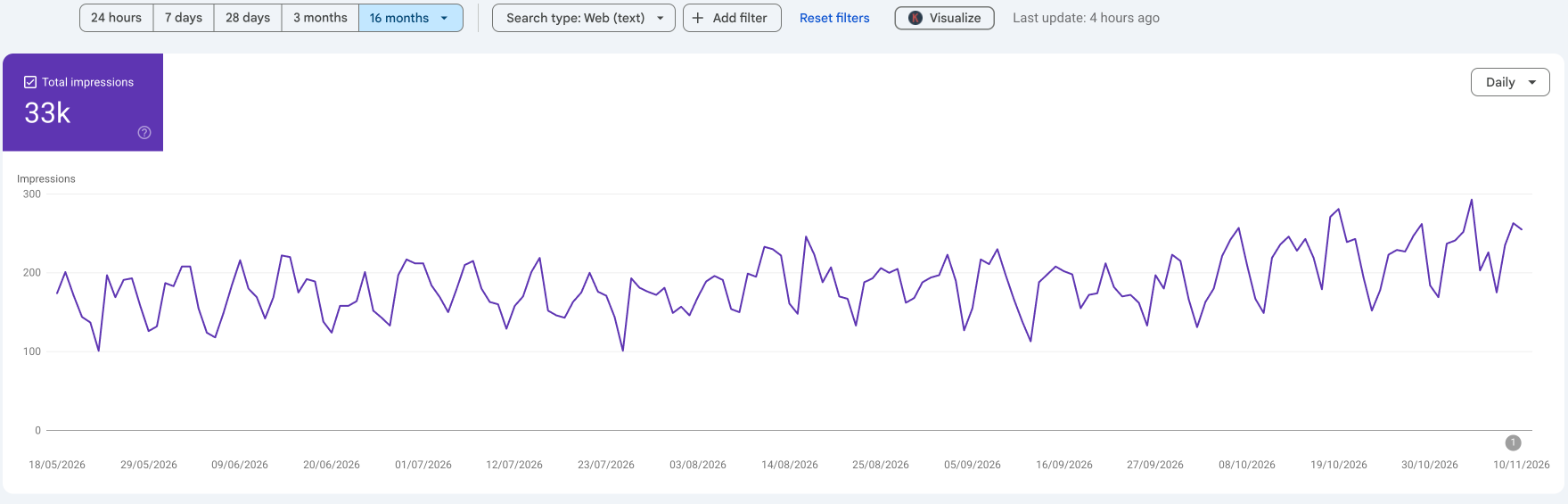
The Generative AI features report counted 33k impressions for the body builder's pages between 18 May and 10 Nov 2026. Daily impressions rose from about 120 to 220 between May and September 2026 to about 200 to 290 in October and early November 2026.
One buyer guide carried most of the body builder's AI visibility. The tray body size guide by cab and chassis held 22,810 of the 33k impressions. The guide's share comes to about 69% of the total.
The other pages most shown in Google AI features are listed below:
- Service bodies page: 2,180 impressions.
- Cab layout guide for trade fleets: 1,821 impressions.
- Homepage: 790 impressions.
- Guide comparing two popular utes for a custom service body: 747 impressions.
- Aluminium vs steel service bodies guide: 681 impressions.
- Guide to one truck make's range of custom bodies: 552 impressions.
Buyer guides hold five of the ten most shown pages. The cab layout guide and the two-ute comparison guide had no Google impressions in the program window, so both are later results of the content layer.
What changed in Google Search
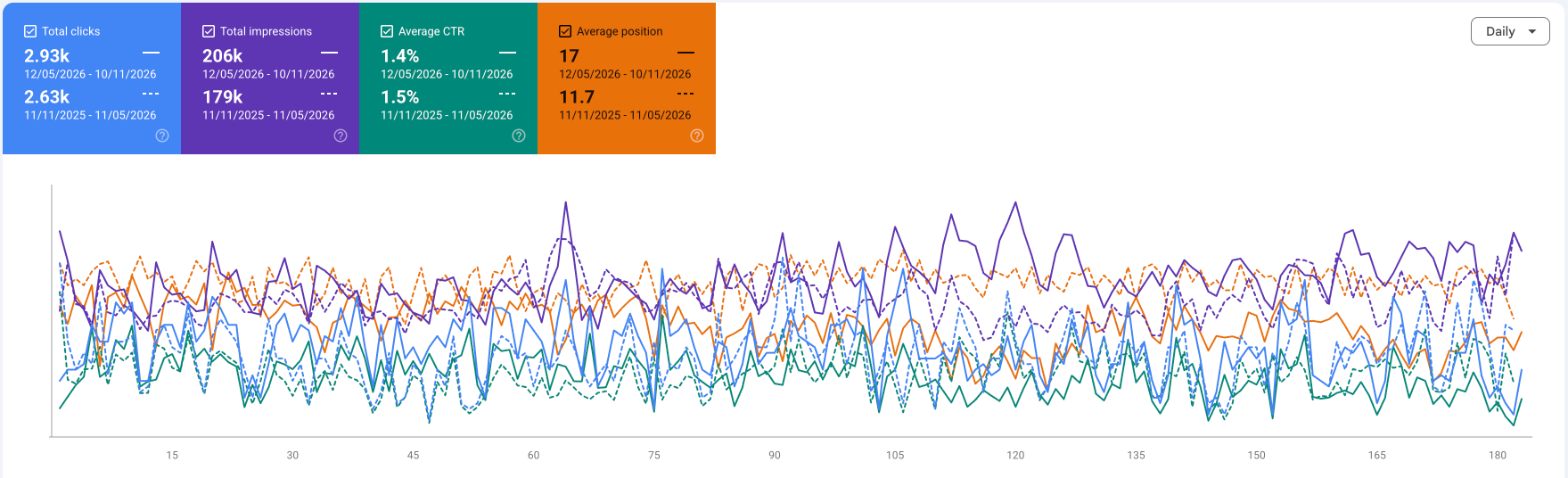
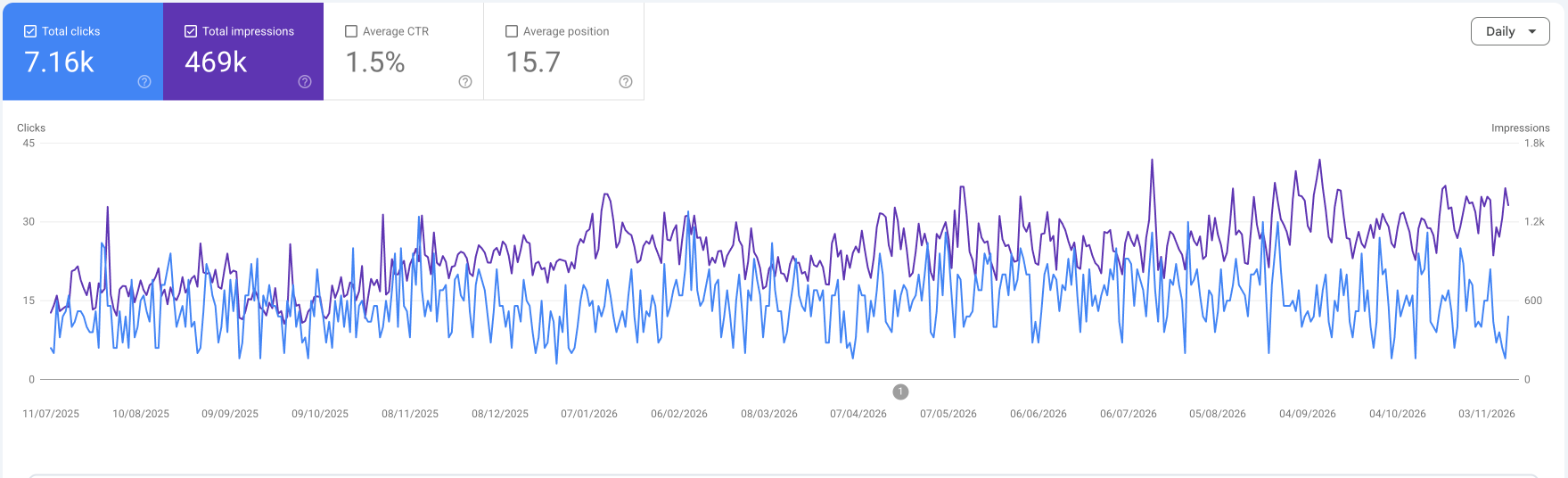
Google clicks for the body builder rose a modest 11% between the two windows. Branded clicks stayed flat, so the gain of about 300 clicks came from non-branded searches.
The 16-month trend shows daily impressions rising in two steps. Daily impressions moved from about 800 to 1k between November 2025 and April 2026 to about 1k to 1.3k between July and November 2026.
The tray body size guide carried the largest page gain in clicks. The guide grew from 611 to 907 clicks between the two windows.
The other pages with click gains are listed below, two of them later results of the content layer:
- Service bodies page: 210 to 276 clicks.
- Homepage: 476 to 539 clicks.
- Cab layout guide for trade fleets, new in the six months after: 0 to 40 clicks.
- Two-ute comparison guide, new in the six months after: 0 to 31 clicks.
- Aluminium vs steel service bodies guide: 5 to 30 clicks.
Tray size searches by cab type grew as a group. Five tray size and tray length searches for different cab types each gained clicks between the two windows.
Ute service body searches gained clicks. The query "ute service body" grew from 7 to 12 clicks. The same query's average position moved from 28.8 to 19.
The plural "ute service bodies" went from 0 to 7 clicks. The query "truck tray builders" went from 0 to 6 clicks.
What did not move
The limits of the body builder results are listed below:
- Average position. Average position fell from 11.7 in the program window to 17 in the six months after, while impressions grew.
- Average CTR. Average CTR moved from 1.5% to 1.4%.
- The tray size guide's impressions. Impressions for the tray body size guide fell from 92,115 to 82,295, while its clicks grew. The guide's average position moved from 5.3 to 6.9.
- Branded searches. The business name query moved from 294 to 293 clicks. A spelling variant of the name fell from 149 to 137 clicks.
- Some service searches. A truck body builders search with the city name fell from 25 to 20 clicks. The query "service body" fell from 24 to 20 clicks.
- Some service pages. The truck body builders service page for the city fell from 76 to 50 clicks. The plumbing truck bodies service page fell from 34 to 8 clicks. One truck make's service body page fell from 55 to 14 clicks.
- A second homepage URL. A second homepage URL fell from 258 to 235 clicks.
- Season and timing. The data starts in July 2025, which leaves no earlier year to separate seasonal demand from the program. Impressions began rising in November 2025, so the program window already holds part of the impression gain.
- AI search baseline. The Generative AI features report holds no data before May 2026.
What this means for your business
The points a truck body, ute tray or canopy business can act on are listed below:
- Answer one buyer question per guide. One tray size guide drew about 69% of the builder's Google AI features impressions. Open each guide with a direct answer to its question, a first step toward AI citation readiness.
- Cover the next buyer questions before one guide carries everything. The cab layout and two-ute comparison guides, which had no Google impressions in the program window, ranked among the ten pages most shown in Google AI features.
- Link every guide to the body-type page it supports. The service bodies page gained clicks and ranked second in Google AI features impressions. Digital Vikingz plans and writes those guides and pages through Semantic Content Writing.
- Record an AI search baseline before the work starts. The AI report in this case begins after the program, so it shows a level, not a change.
SEO for truck body builders, like other trade services SEO, now covers AI answers as well as Google results, and in this AI search visibility case study the same guides drew both. Digital Vikingz plans and measures that work through AI Search Visibility.