 Digital Vikingz
What Is the Difference Between Semantic SEO and Traditional SEO?
Keyword SEO asks which words a page contains, and semantic SEO asks which entity the page is about and how it connects to every other page on the site. Traditional SEO is keyword SEO, built from a keyword list.

How do semantic SEO and traditional SEO compare, part by part?
Semantic SEO and traditional SEO differ in nine parts of an engagement, from strategy to AI answers.
| Part | Traditional SEO | Semantic SEO |
|---|---|---|
| Strategy | A keyword list with volumes, grouped by tool | A central entity, its attributes, and a topical map with a page decision per node |
| Page count | One page per keyword group | One page per node that passes the page test; sections and sentences for the rest |
| Content | Articles on topics, written to a word count | Pages written from briefs, with the entity as subject and one fact per sentence |
| Vocabulary | Synonyms rotated for variety | One name per thing, fixed in a document, used on every page |
| Links | Domain authority targets and monthly counts | Placements from pages that share the topic, with the anchor governed by the map |
| Layout | Handed to design after the content is written | Decided per page type before writing: main component, block order, captions |
| Measurement | Rank tracker positions for a keyword set | Search Console per template, query count growth, pipeline per cluster |
| Timeline | A three-month campaign, renewed | A twelve-month roadmap with 90-day reviews |
| AI answers | A separate service, if offered | The same structure: passages, authors, consensus wording |
Why does the difference between semantic SEO and traditional SEO matter in practice?
Both semantic SEO and traditional SEO produce pages, but only semantic SEO produces a site that reads as one source.
Picture a traditional engagement that publishes forty pages in three months. The engagement has no page test, so it never decides that thirty of those pages are sections of ten. Google's ranking systems guide states that deduplication shows only the most relevant of very similar pages. The thirty extra pages compete for queries the ten already answer.
The engagement has no vocabulary document either, so each writer picks a different verb. Rank reports never show which comparison cluster produced sales opportunities.
The site ends twelve months larger and harder to evaluate, not stronger.
What stays the same in semantic SEO and traditional SEO?
Technical SEO, factual accuracy, subject expertise and patience stay the same in semantic SEO and traditional SEO.
Rendering, crawl, indexation and speed are prerequisites for both approaches, and a page Google fails to render or index gains nothing from either.
Neither approach moves a site in a week. The difference shows in month six: one approach renews a campaign, and the other reads a 90-day review.
A content brief does not supply expertise, so both approaches need a writer who knows the subject.
How does link work differ between semantic SEO and traditional SEO?
Traditional SEO counts links against domain metrics, while semantic SEO places links on same-topic pages with anchors set by the topical map.
A traditional link report counts placements per month against domain authority targets and ignores what the linking page is about.
Semantic SEO places each link on a page that shares the target's topic, with the anchor matching the target page's canonical phrase. Google's filing on its generative search names inbound links as one input to a document's trustworthiness.
Semantic SEO also counts named mentions without links on pages about the same entity.
How does an existing site move from traditional SEO to semantic SEO?
An existing site moves to semantic SEO through an audit, a merge and prune plan, and a rewrite in roadmap order.
The audit reads every page against the page test. Pages that target the same intent merge into one URL, and the others redirect to it.
The vocabulary is fixed before rewrites start, and rewrites run in roadmap order in batches small enough to read in Search Console.
URLs that already earn clicks keep their address. Every retired URL gets a permanent redirect to its destination, and every internal link points to the final page.
When is traditional SEO the right choice over semantic SEO?
Traditional SEO fits a site with one product, one page and one head term, or a site that lives on freshness.
A site with one product, one page and one head term needs no topical map. A news site living on freshness needs an editorial calendar, not a topical map.
Any site with more than one entity and more than one page type gets the cheaper route from the topical map, because the map stops the pages that never needed building.
- Google Search Central: A guide to Google Search ranking systems
- US 2024/0289407 A1: Search with stateful chat (Google, pending application)
Patents and filings describe systems Google has invented. None is a confirmed ranking factor.
What should you read next about semantic SEO and traditional SEO?
 What is semantic SEO?Search optimization that structures a site around entities, their attributes and their values.
 How much does semantic SEO cost?Four things set the cost: site size, query network size, number of languages and who runs production.
 What is topical authority?The state in which a site ranks across the whole network of queries around one topic.
 Semantic SEO AuditSix checks. Each one has a defined failure and a defined fix.
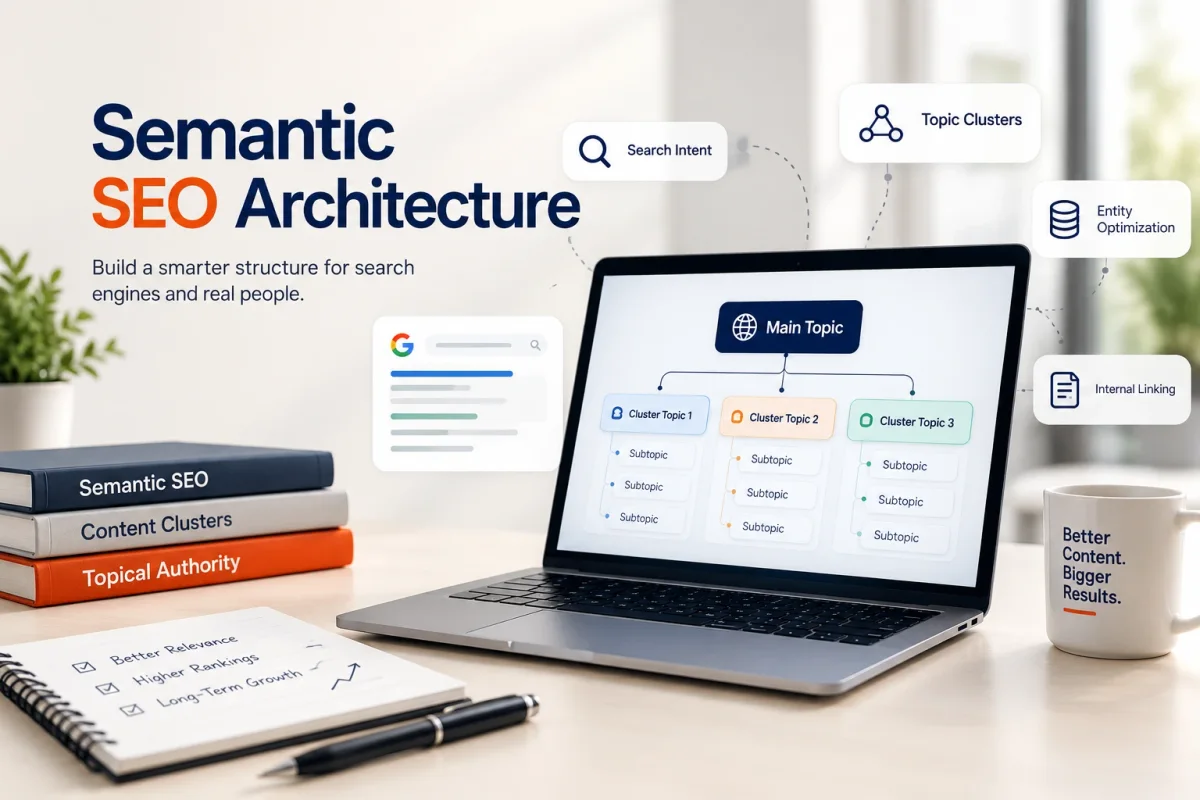 Semantic SEO StrategySeven documents with a fixed structure. Every engagement produces all seven.
 Talk to usMessage the team on WhatsApp
Questions about semantic SEO vs traditional SEO
Is semantic SEO more expensive than traditional SEO?
Do keywords stop mattering in semantic SEO?
Does traditional SEO still work?
Is semantic versus traditional the same distinction as on-page versus off-page?
How do I know which approach my current agency uses?
Which approach fits a new site?
Can semantic SEO and traditional SEO run on the same site?
Which approach helps a site that lost traffic in a core update?
Is semantic SEO harder for an in-house team to maintain?
Does the choice change for an ecommerce site?
Is semantic SEO a new name for content marketing?
See it applied to your site
The Semantic SEO Audit uses every term in the knowledge hub. Fixed scope, written deliverable.