Digital Vikingz
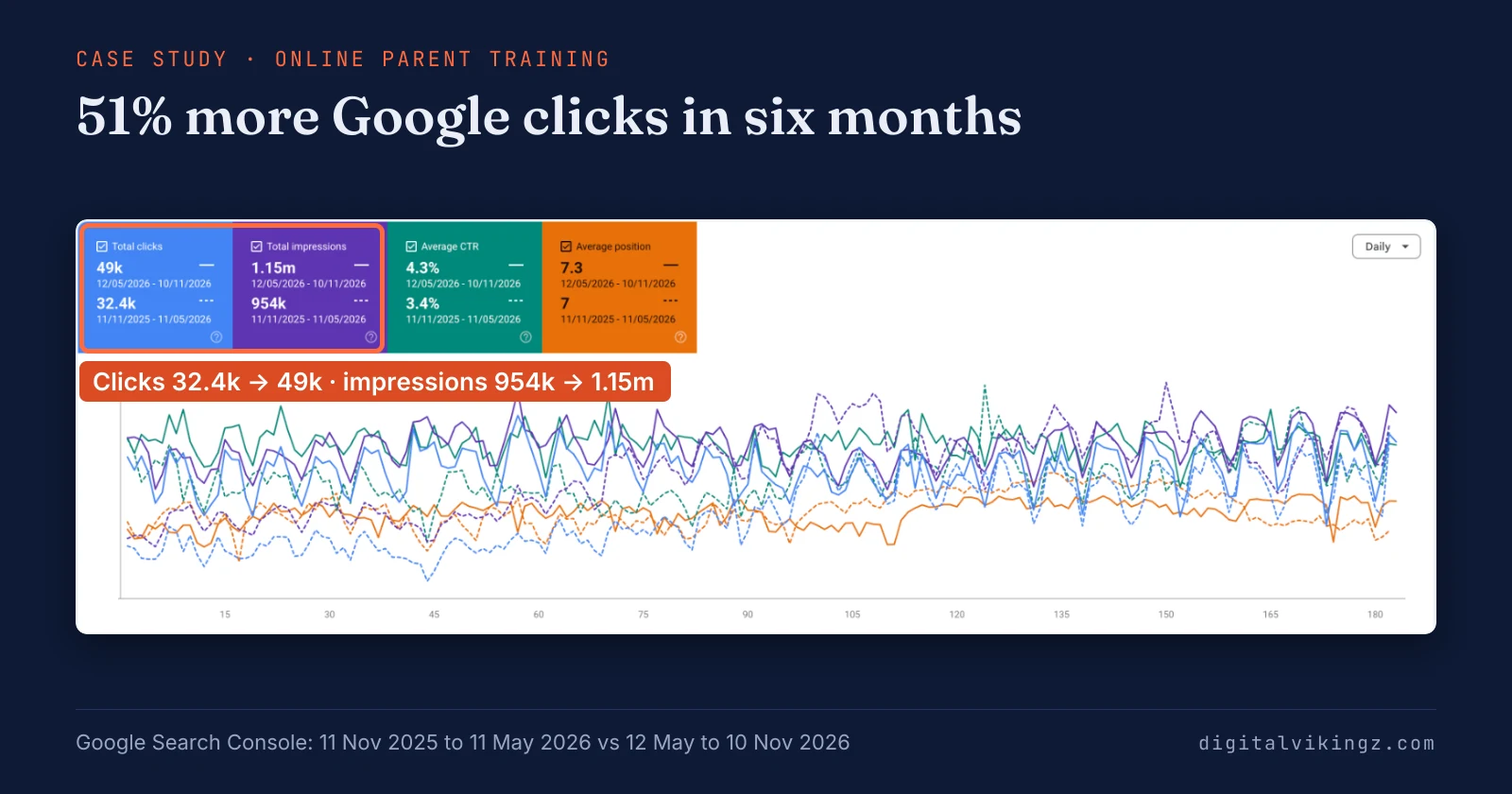
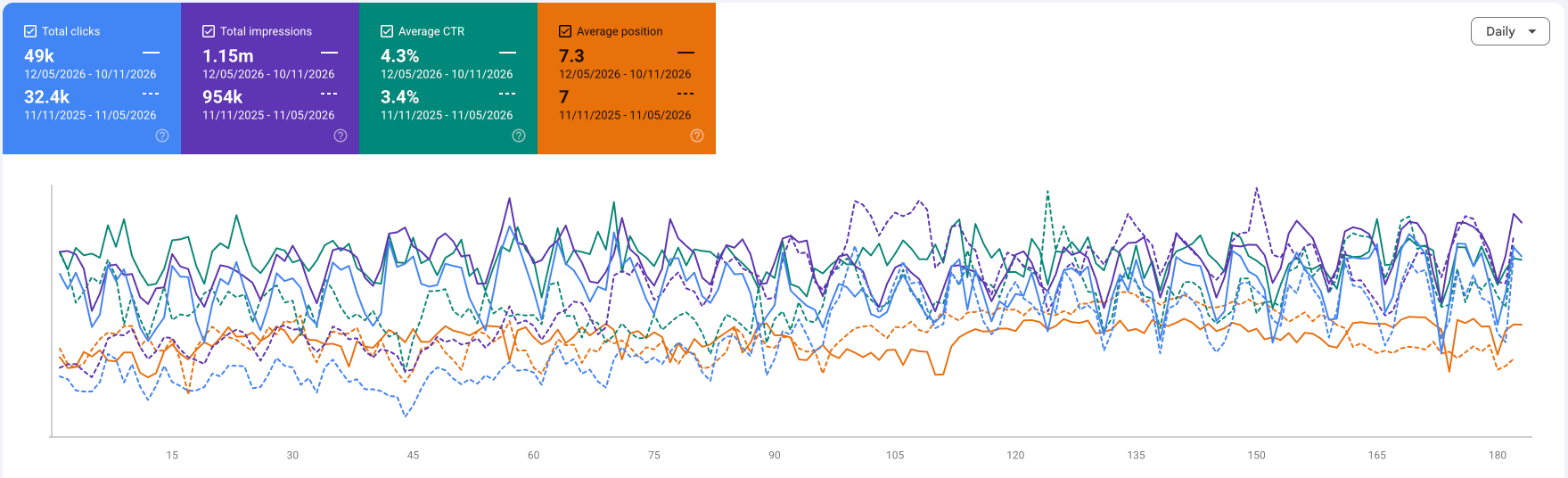
Our online course SEO case study follows a US online parent-training program for parents of children and teens with ADHD, a video course and coaching membership with a free guide library, through the six-month semantic SEO program Digital Vikingz ran from November 2025 to April 2026. Google clicks rose 51%, from 32.4k to 49k, in the six months after the program against the six months of the program, and branded searches brought most of that gain. Non-branded clicks rose 29% over the same windows.
Results at a glance
| Metric | Program window | Six months after | Change |
|---|---|---|---|
| All clicks, branded and non-branded | 32.4k | 49k | +51% |
| All impressions | 954k | 1.15m | +21% |
| Non-branded clicks | 3.59k | 4.62k | +29% |
| Non-branded impressions | 278k | 241k | -13% |
| Guide folder, non-branded clicks | 2,669 | 3,357 | +26% |
The program window column covers the six-month program, 11 Nov 2025 to 11 May 2026, and the six months after column covers 12 May to 10 Nov 2026, two windows of 182 days each read in Google Search Console (Search type Web) on 13 November 2026.
The starting point
The parent-training site earned about 100 to 150 Google clicks a day in the second half of 2025. The 16-month Search Console chart shows that level from July 2025, when its data starts. Daily impressions sat at about 2.5k a day over the same months.
Branded searches brought most of the site's clicks. The program window, the earliest six-month window in this comparison, held 32.4k clicks in all. Non-branded queries earned 3.59k of those clicks.
Parent questions already showed demand the program's guides did not yet win. The bedtime routine guide showed 1,048 times in the program window. The guide turned those impressions into 7 clicks.
What we did
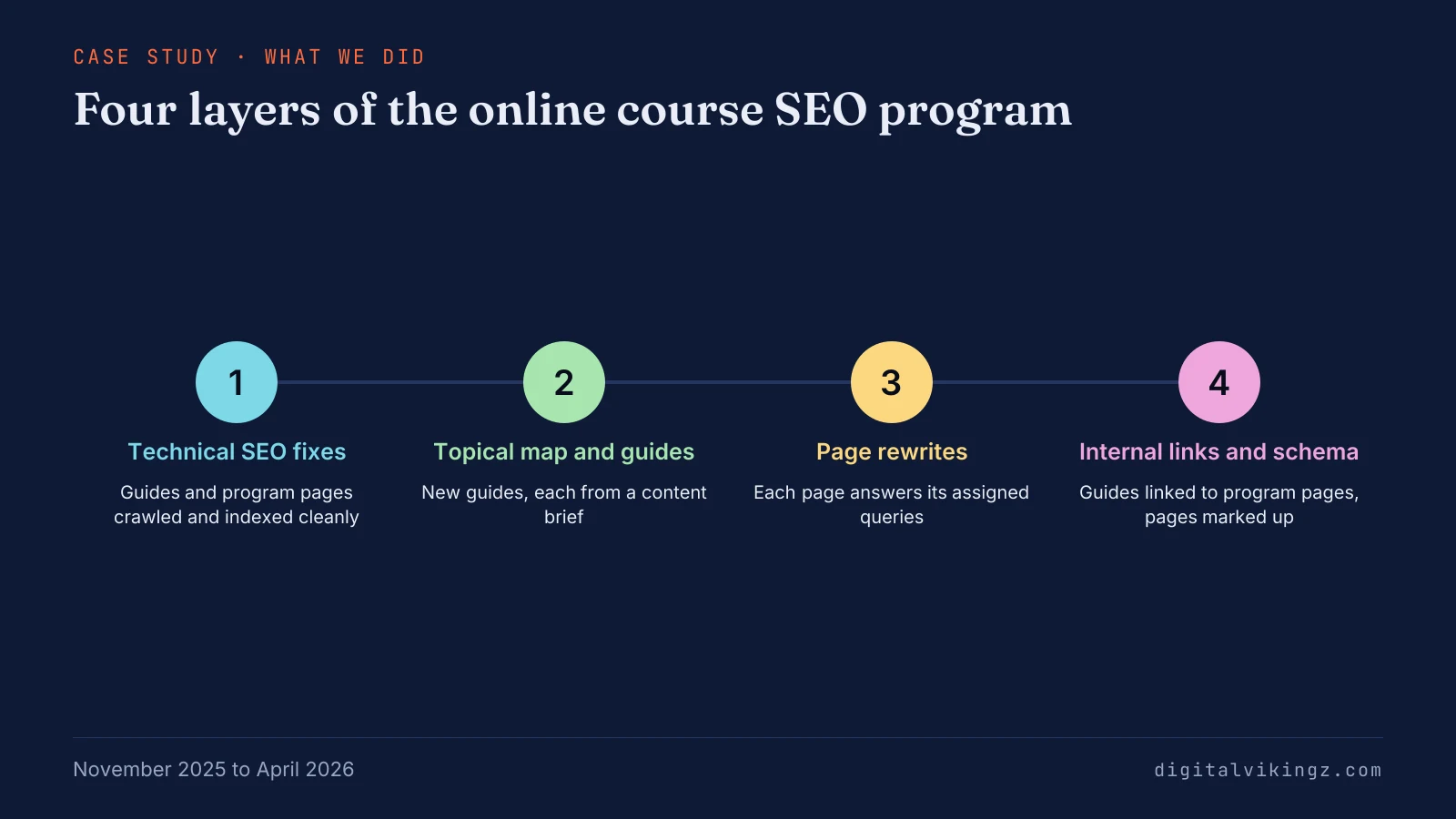
The four layers of the online course SEO program are listed below:
- Technical SEO fixes. We fixed technical SEO issues so search engines crawl and index the program's guides and pages cleanly.
- A topical map and new guide content. We built a topical map with the parent-training program as the central entity and the behavior questions parents search as its subtopics, and wrote new guides, each from a content brief.
- Rewrites of existing pages. We rewrote existing pages so each page answers the queries the topical map assigns to it.
- Internal links and schema. We linked the guides to one another and to the program pages, and added schema markup that describes the business and its pages.
What changed in Google Search
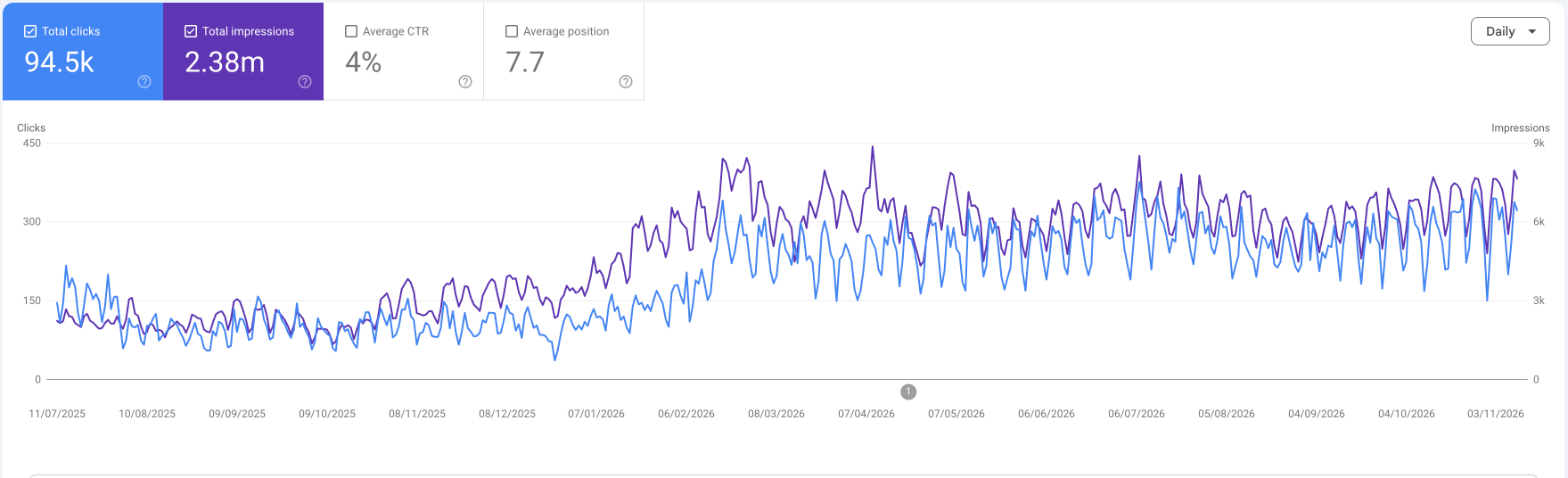
Daily Google clicks for the program's site moved to a higher level during the program and held there. Daily clicks rose through January 2026. The site earned about 250 to 350 clicks a day from February 2026 to November 2026.
The step came inside the program window, so the six-month comparison sets the months after the program against months that already include part of the rise. The 16-month chart counts all queries, branded searches included.
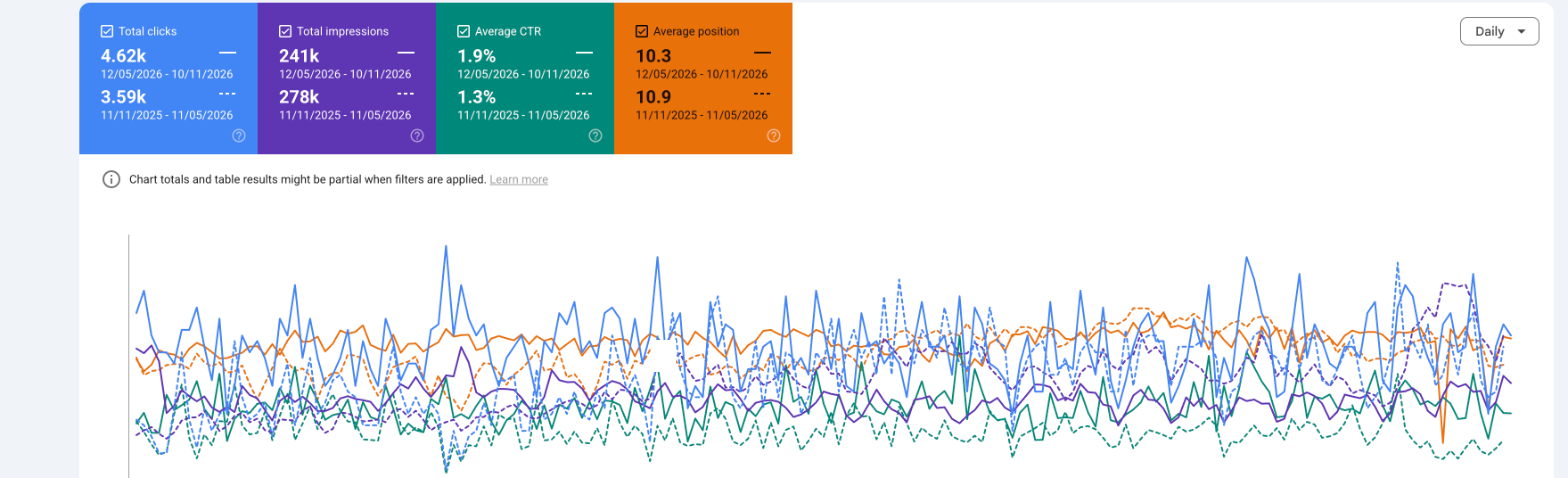
Branded searches carried most of the program site's click gain. All clicks rose by 16.6k between the two windows. Non-branded clicks rose 29%, from 3.59k to 4.62k, over the same windows.
Non-branded impressions fell from 278k to 241k. Non-branded click-through rate rose from 1.3% to 1.9%, so the site earned more non-branded clicks from fewer non-branded impressions.
Guide pages carried most of the non-branded gain. The guide folder earned 3,357 non-branded clicks in the six months after the program, up from 2,669.
The guides with the largest non-branded click gains, with no claim on when each was published, are listed below:
- Stealing guide: 170 to 666 clicks.
- Arguing guide: 257 to 440 clicks.
- Bedtime routine guide: 7 to 182 clicks.
- Guide on why consequences fail: 39 to 209 clicks.
- Hitting siblings guide: 28 to 141 clicks.
Specific parent queries grew over the same windows. A search about fathers and ADHD grew from 6 to 88 clicks.
Queries on the same subjects as the top guides grew as well. A search about a child taking things grew from 25 to 132 clicks. A search about bedtime struggles grew from 6 to 120 clicks.
Non-branded figures exclude the brand name, its misspellings and the program founder's name. Search Console notes that filtered totals may be partial.
What changed in AI search
Two reports measure how often AI search features show or cite the program's pages. Both reports, as read for this case, start in May 2026, after the program ended, so both figures describe where the site stood after the program, not a change. We do not compare the two reports, since each counts a different thing over a different window.
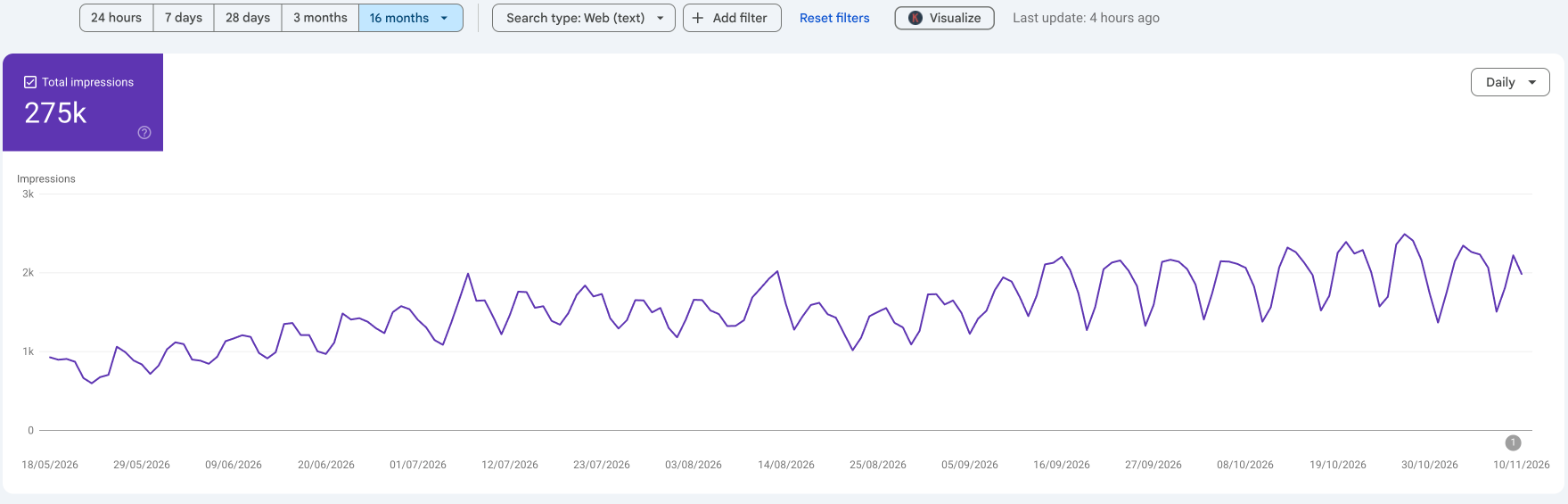
Google Search Console's Generative AI features report, in beta, counted 275k impressions for the program's pages between 18 May and 10 Nov 2026. Daily impressions grew from about 0.9k in late May 2026 to about 2k to 2.4k a day in October and November 2026. The most shown pages are the stealing guide, the homepage, the hitting parents guide, the best schools guide and the arguing guide.
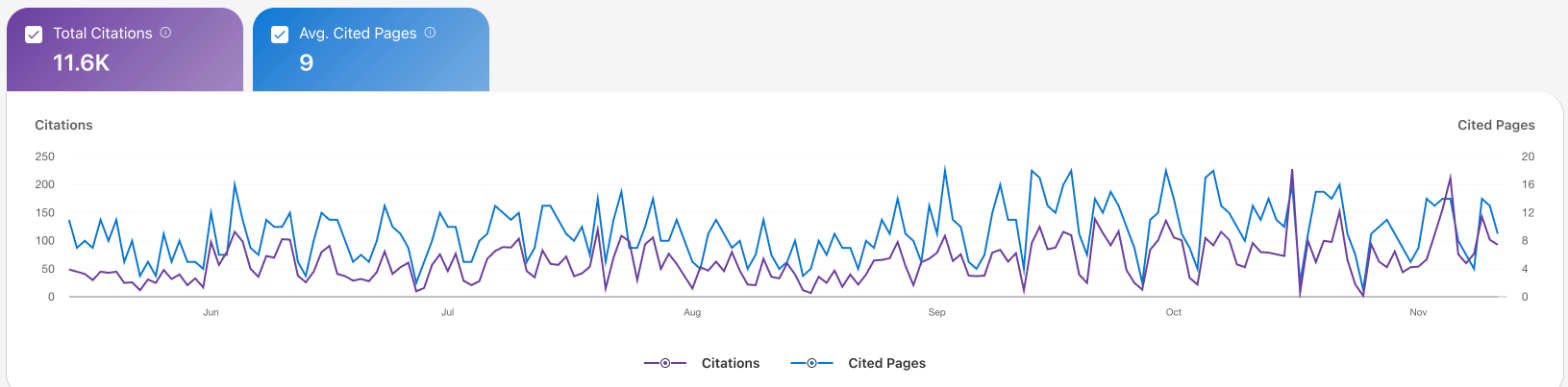
Bing Webmaster Tools' AI Performance report, which covers Microsoft Copilot and partners, counted 11.6K citations between 14 May and 11 Nov 2026. The report lists 77 cited pages across the period. The most cited pages include the homepage, the stealing guide, the bedtime routine guide and the arguing guide.
What did not move
The limits of the online course SEO results are listed below:
- Branded share. Most of the 51% click gain came from branded searches, and this data does not show what drove branded demand for the program. Non-branded clicks rose 29% over the same windows.
- Non-branded impressions. Non-branded impressions fell 13%, from 278k to 241k, between the two windows.
- Average position. Average position across all queries moved from 7 to 7.3, slightly lower in the results. Both windows fall after Google's mid-September 2025 change to how Search Console counts results, so that change does not affect this comparison.
- Season. The Search Console data read for this case starts in July 2025, which leaves no earlier year to separate seasonal demand from the program.
- AI search baseline. Neither AI report holds data from before May 2026.
The guides with the largest non-branded click losses are listed below:
- Hitting parents guide: 685 to 409 clicks.
- Best schools guide: 475 to 381 clicks.
- Gentle parenting guide: 141 to 25 clicks.
- Manipulating emotions guide: 141 to 61 clicks.
- Alternatives to punishment guide: 79 to 10 clicks.
What this means for your business
The points an online course or education business can act on are listed below:
- Split branded and non-branded clicks in every report. A non-branded filter in Search Console shows whether SEO for online courses reaches people who do not know the program yet.
- Give each question your buyers search its own guide. Guides on specific questions earned most of the non-branded gain here, and our guide on how to write a semantic content brief shows how each one starts.
- Plan the guides as one topical map. A topical map gives every question one owner page and links the guides to the program pages, the structure that builds topical authority for an education website.
- Review the guides that lose clicks. Several guides lost non-branded clicks in this case, so education website SEO needs a refresh list next to the publishing plan.
- Record an AI search baseline before the work starts. An early baseline turns AI search visibility for course creators into a change you can measure.
Parenting program SEO, like any online course SEO, rests on a topical map and a publishing plan that fit the program's subject. Digital Vikingz builds both through Semantic SEO Strategy.