 Digital Vikingz
What Is a Content Brief?
A content brief is the document that turns one row of the topical map into one page: the entity, the predicate, the facts, the questions in order, the component for each section and the links.

What does a content brief decide?
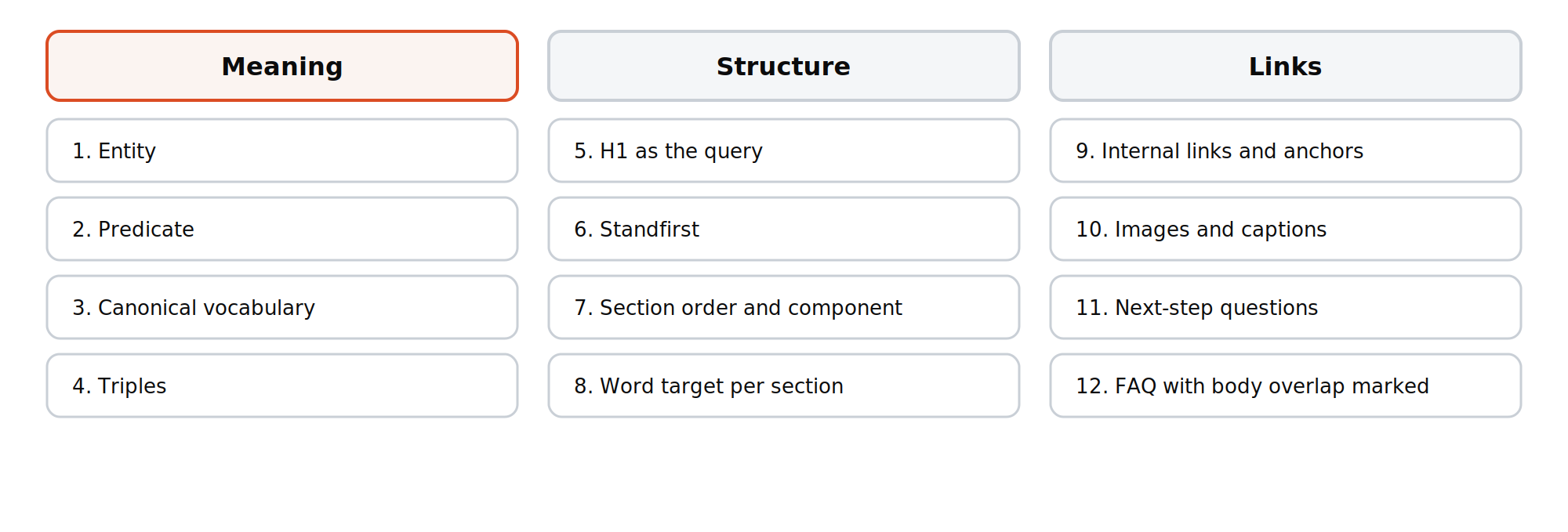
A content brief makes every decision the writer is not supposed to make, in three groups: meaning, structure and links.
Meaning covers the entity, the predicate, the canonical vocabulary and the triples, each a fact stated as subject, relationship and object.
Structure covers the H1, written as the query a user types, the standfirst, written as the extractive answer, and the section order with a component and a word target per section.
Links cover the internal links with their canonical anchors, the images with their captions and the next-step questions the page answers. Each field is filled from the map node, the live results for its queries or the client's subject-matter contact, never from the writer's preference.
What does a content brief excerpt look like?
The head of the brief for this page shows the format: entity, predicate, triples, augmented queries, section order, component and targets.
Entity: content brief. Predicate: decides, with the head term in subject position. Triples: a content brief turns one map node into one page. A content brief fixes the entity and predicate before writing. A content brief records the section order.
Augmented queries: what is a content brief, content brief template, content brief vs outline, who writes a content brief. Section order: what it decides, excerpt, difference from an outline, contextual vector, who reads it, how it is checked. Component for section two: a labeled excerpt block.
Word target: one range per section, and 10 to 13 questions in the closure. Anchor for the production page: 'Semantic Content Writing'. Every H2 is a question that names the entity and carries a bold opener.
How does a content brief differ from an outline?
An outline lists headings, and a content brief fixes meaning.
An outline says 'write about benefits'. A brief says which entity has the benefit, which attribute it is, which value it takes, and which sentence and component state it.
Two writers following one outline produce two different pages, while any writer following one brief produces the same page.
Outlines skip the component, the part a developer builds. A pricing section in an outline is a heading, and the same section in a brief is a price table with named columns and the values to collect before writing.
How does a content brief set the contextual vector?
A contextual vector is the order of headings and page segments that carries context from one topic toward the next, and two sites can share a topic and differ only in that order.
A content brief sets the contextual vector by fixing the heading order, so each heading path carries context toward the next topic. One agency's page on topical maps flows toward hiring a strategist, and another's flows toward building the map in-house.
A Google patent on context scoring adjustments for answer passages, US 9,959,315, describes a heading vector: the path from the root heading of a document to the heading above a passage. A passage under 'Pricing' inside a page titled 'Services' carries a thin path. The patent describes adjusting the passage's score by how well that path matches the question.
Every H2 names the entity and asks the question its passage answers, while generic headings such as 'Overview' or 'Benefits' leave the path empty. The section order moves the reader from definition toward decision, and the closing links point the same way.
Who reads a content brief?
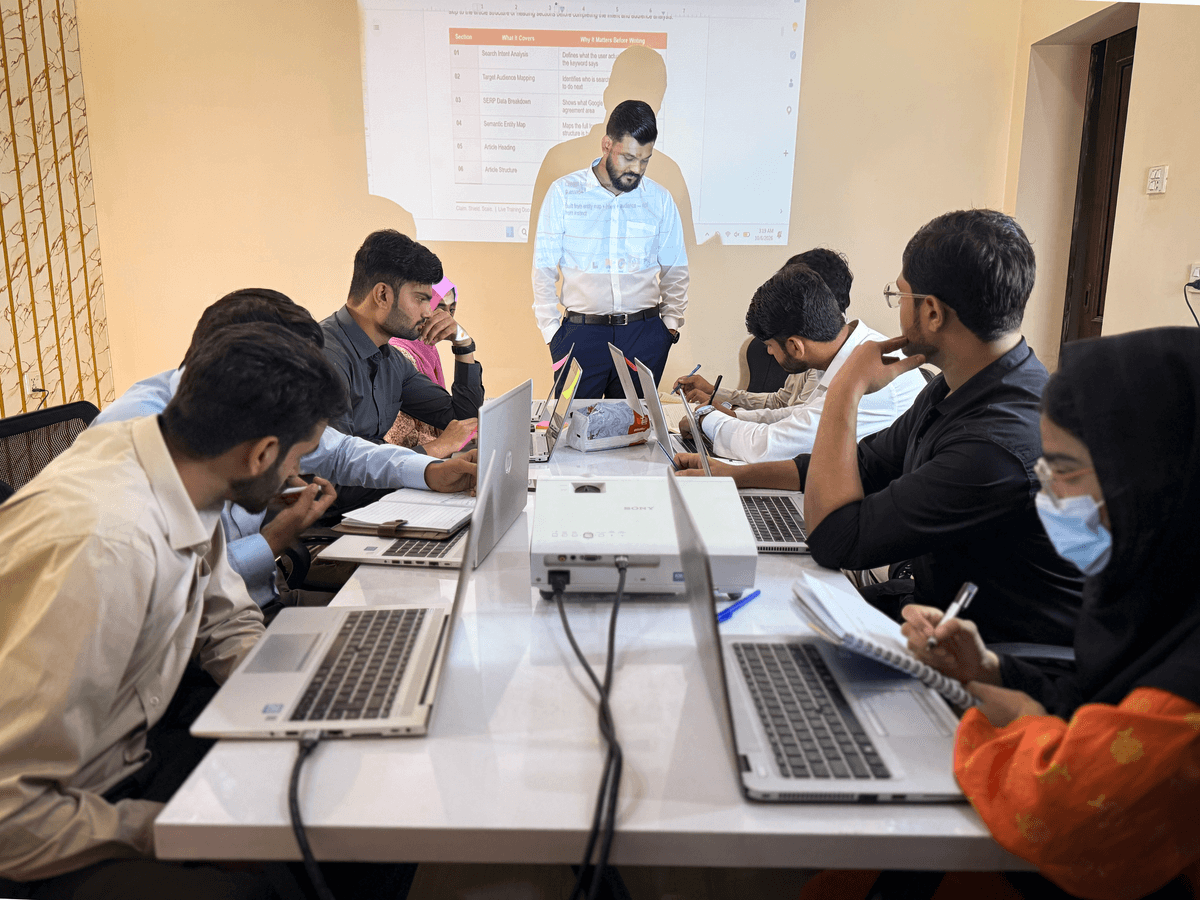
Four people read a content brief, in order: the strategist, the writer, the editor and the developer.
The strategist writes the brief from the node, the topical map row the page comes from. The writer drafts from it section by section, and the editor checks the draft against it sentence by sentence. The developer configures the page from the structure and link fields.
Each reader reads different fields. The writer reads meaning first, the editor reads meaning and structure, and the developer reads structure and links without rewriting a sentence.
How is a page checked against its content brief?
Every field of the content brief is a test the page passes or fails.
The head term is the subject of the opening sentence. Every triple appears as one sentence. The sections follow the brief's order, each with the brief's component and inside its word target. Every internal link uses the canonical anchor, and every image has its caption.
Meaning is checked first, because a wrong entity makes every later field wrong, and structure and links follow. A page that fails a field goes back to the writer with the field named.
- Koray Tuğberk Gübür, Search Engine Land: Query templates, expanding the scope of topical authority
- US 9,959,315 B1: Context scoring adjustments for answer passages (Google)
- Google: Search Quality Rater Guidelines (PDF)
Patents and filings describe systems Google has invented. None is a confirmed ranking factor.
What should you read after what is a content brief?
 What is a topical mapEvery topic a site will cover, with a page decision for each.
 Query deserves a pageThe test that decides if a search query earns its own URL or a heading.
 MicrosemanticsRelevance at sentence level, decided by word order, subject choice and dependency structure.
 Information gainWhat a page adds beyond what the top results already say.
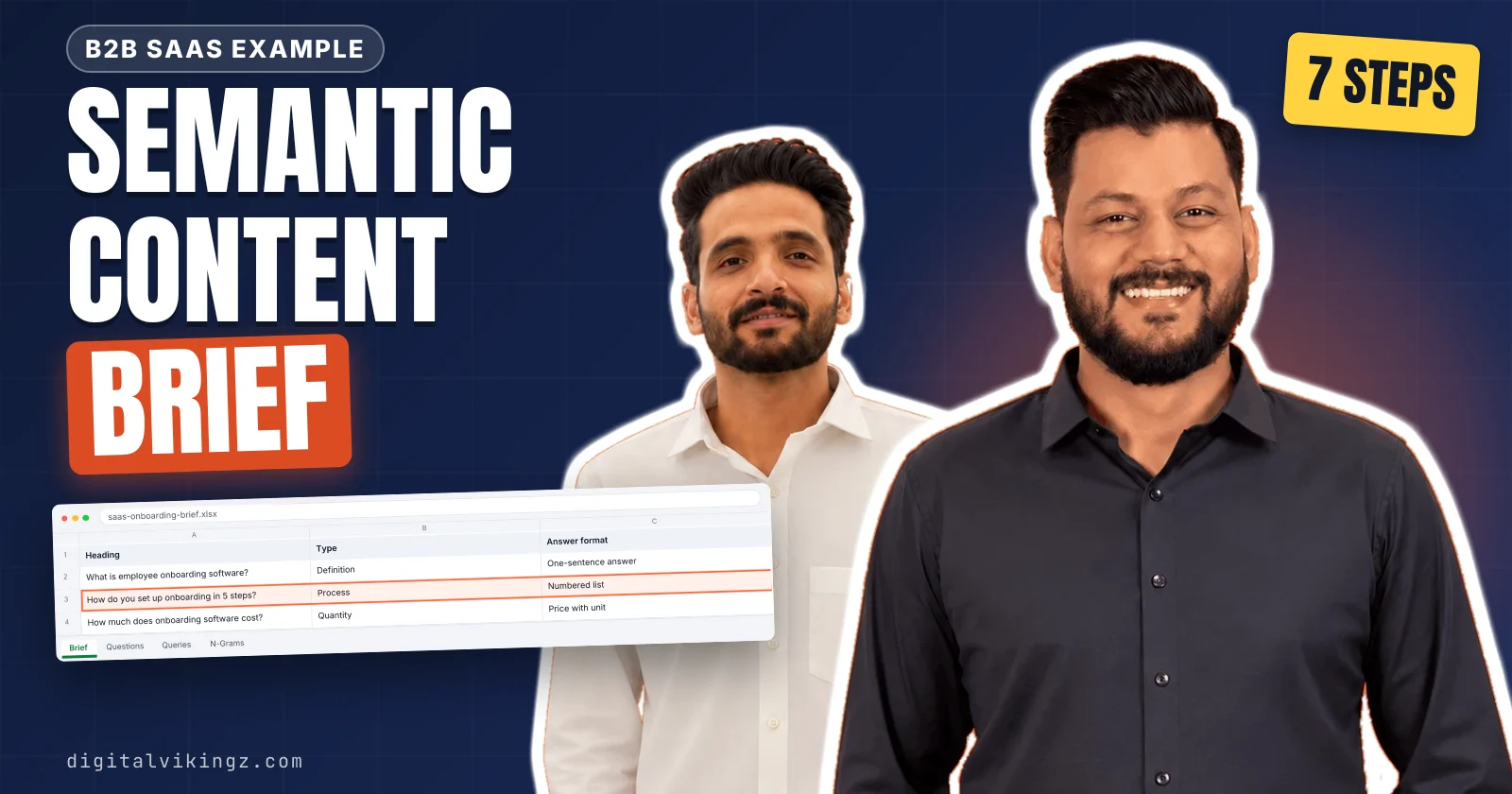 Writing a semantic content brief in seven stepsSeven steps take one topical map row to a checked four-tab brief.
 Semantic Content WritingBriefs and pages written from your topical map.
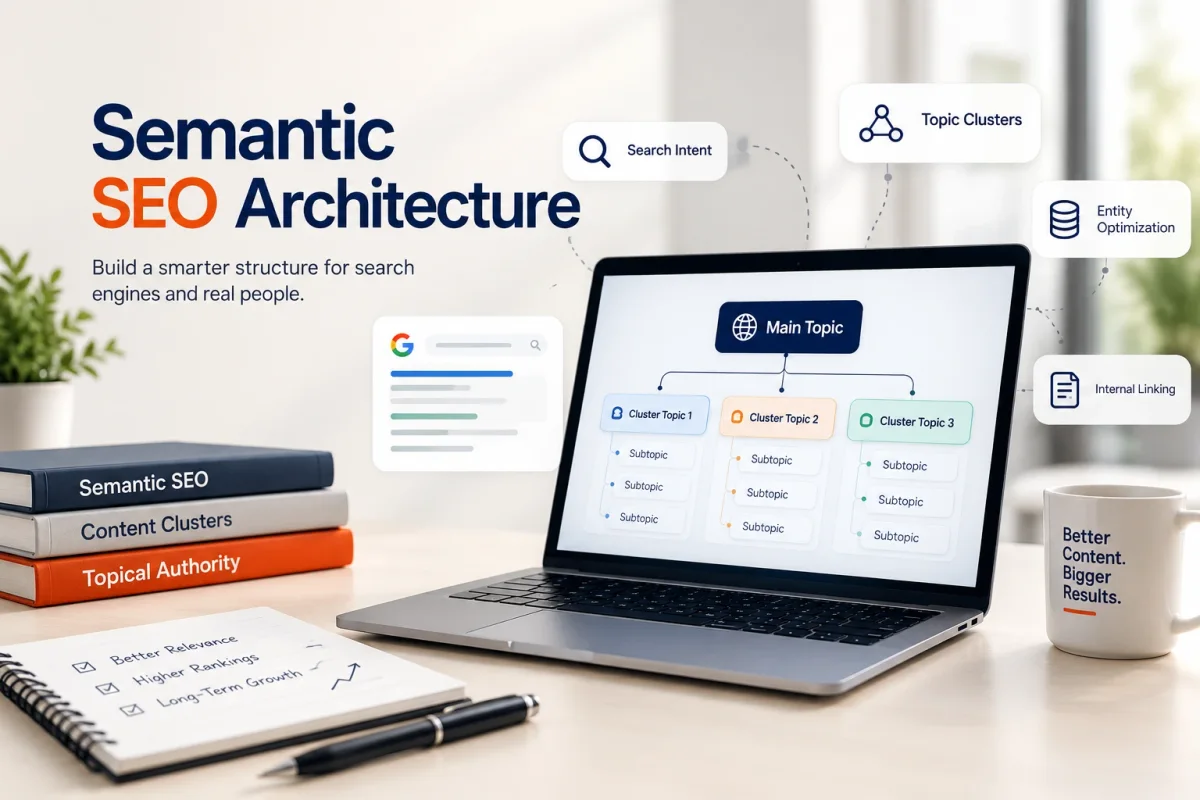 Semantic SEO StrategyYour topical map and 12-month publishing plan.
 Talk to usMessage the team on WhatsApp
Questions about what is a content brief
How long is a content brief?
Can a writer change the brief?
Is a content brief the same as a template?
Do product descriptions get a brief?
Who checks brief integrity at Digital Vikingz?
Does a brief include the FAQ questions?
Can I see a full brief?
Does a content brief work with AI writing tools?
Does every page need its own content brief?
Does a content brief work for rewriting an existing page?
Does a content brief change for another language?
See it applied to your site
The Semantic SEO Audit uses every term in the knowledge hub. Fixed scope, written deliverable.