Semantic Content Writing: Briefs, Writing, and Publishing in Sequence

Semantic Content Writing from Digital Vikingz is a monthly service that turns each node of the topical map into a published page. Each page gets a content brief, the writing, the on-page configuration and its internal links. The source term vector governs the wording, and the roadmap sets the publishing order.

Semantic Content Writing, a Digital Vikingz semantic SEO service

What pipeline does Semantic Content Writing run for each page?

Semantic Content Writing runs six stages for every page, and each stage ends in a written check.
Brief

Input
The map node: entity, attributes, predicate, page decision.
Output
The semantic content brief document.
Check
Brief QA against the node and the vocabulary.

Draft

Input
The brief.
Output
The first draft, section by section.
Check
Vocabulary check: canonical terms only, head term as subject.

Edit

Input
The draft.
Output
The edited page.
Check
Sentence rules: one fact per sentence, without padding or phrases repeated across pages.

Configure

Input
The edited page.
Output
The CMS page with title, ids, schema, captions and internal links.
Check
Template QA: block order, main component, identity.

Publish

Input
The configured page.
Output
The live page, in roadmap order.
Check
Index check within the crawl cycle.

Measure

Input
The live page.
Output
Google Search Console clicks and impressions by page group.
Check
90-day review: keep, rewrite or merge.
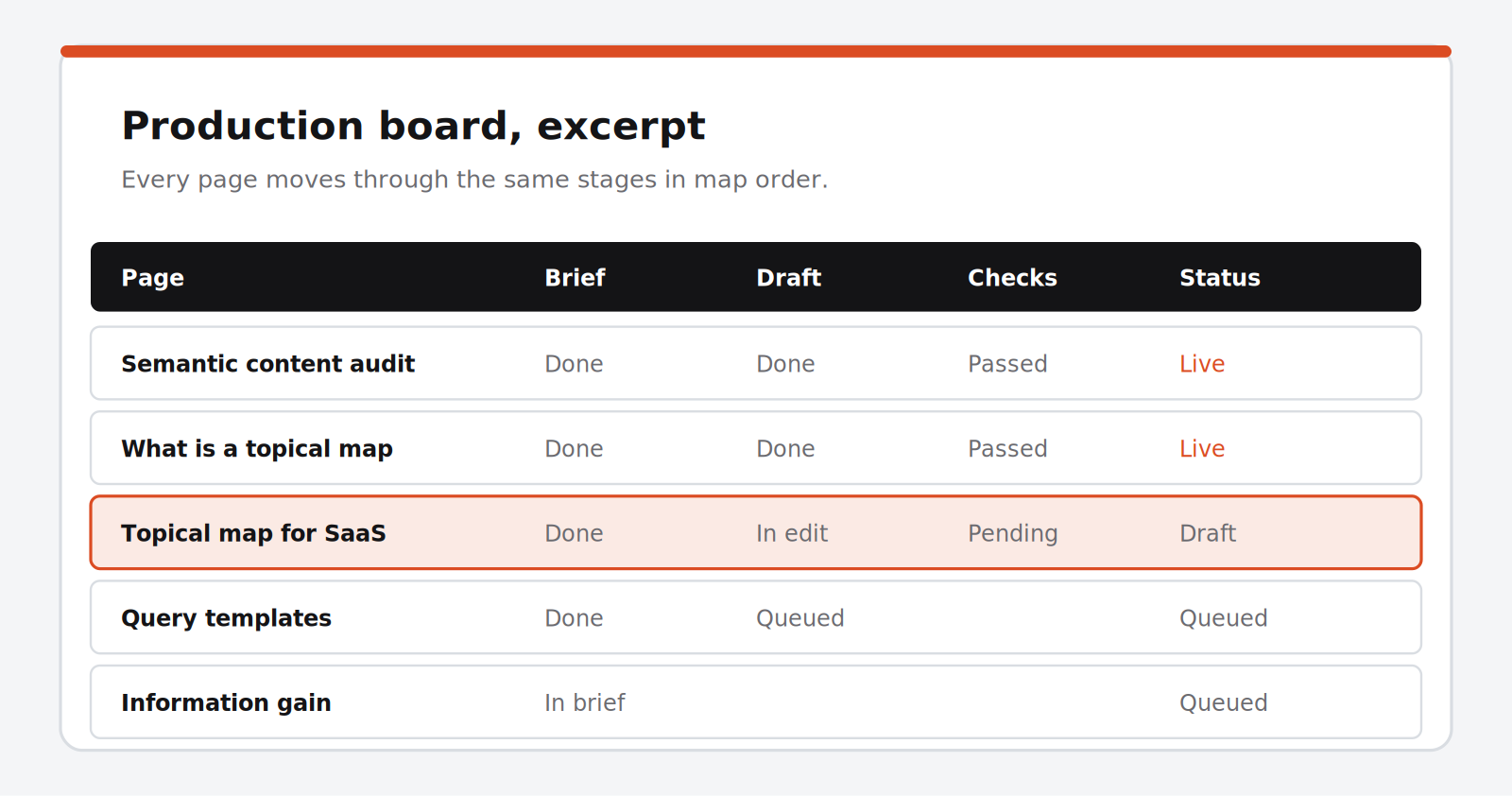
Sample Semantic Content Writing deliverable, shown as an excerpt table

How does Semantic Content Writing work?

Semantic Content Writing executes the topical map in roadmap order.

Every page starts from a content brief, every content brief starts from a map node, and pages go live in sequence. That discipline separates a content network from a blog.
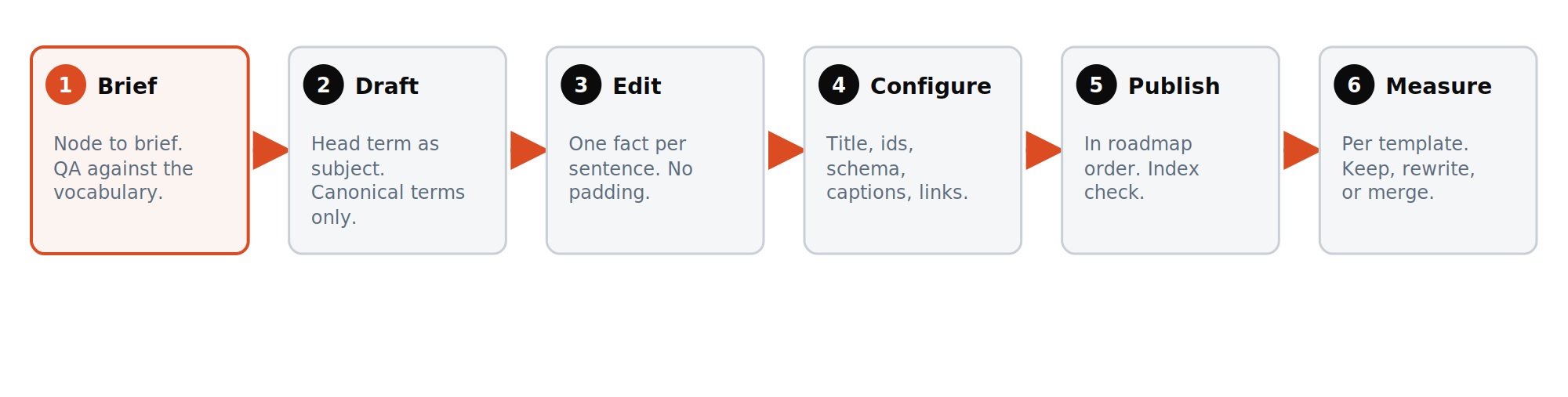
The six-stage pipeline from a map node to a measured page: brief, draft, edit, configure, publish, measure

Which writing rules does Semantic Content Writing apply to every page?

Semantic Content Writing applies six writing rules to every page.

  1. Head term as subjectThe heaviest term in the query is the subject of the opening sentence and of the triples.
  2. One fact per sentenceA verifiable claim sits alone. Compound claims are split.
  3. Consensus facts in consensus wordingAgreed facts use the field's terms. Unique claims carry their evidence in the same block.
  4. No paddingSentences that list uses without naming an attribute are cut. Length is not a target.
  5. No shared phrases across pagesAn n-gram check runs across the site before launch and every 90 days. Repeated four-word phrases are rewritten.
  6. Captions under every imageOne declarative sentence: entity, attribute and relation to the section.

Which Google documents does Semantic Content Writing build on?

Semantic Content Writing builds on two Google patents. Patents describe systems Google has invented, not confirmed ranking factors.

Who is Semantic Content Writing for?

Semantic Content Writing suits three kinds of site.

Teams with a topical map and too few writing hours

The topical map exists, but the team lacks the hours to write from it.

Sites publishing in more than one language

Native-language editors for German, Spanish and Italian write from the same content brief.

Sites whose content failed the Semantic SEO Audit

Rewrite in sequence, page by page, against the new vocabulary.

Not the right fit

A site without a topical map or a Semantic SEO Audit. Writing without page decisions creates the cannibalization it should prevent.

How is Semantic Content Writing priced and delivered?

Semantic Content Writing is a monthly retainer sized by the roadmap, not by a page count.

Shape
Monthly retainer
Pricing basis
Roadmap size
What you receive
Pages live in sequence, with the per-template measurement

Scope is quoted in writing after the strategy call. See how semantic SEO is priced.

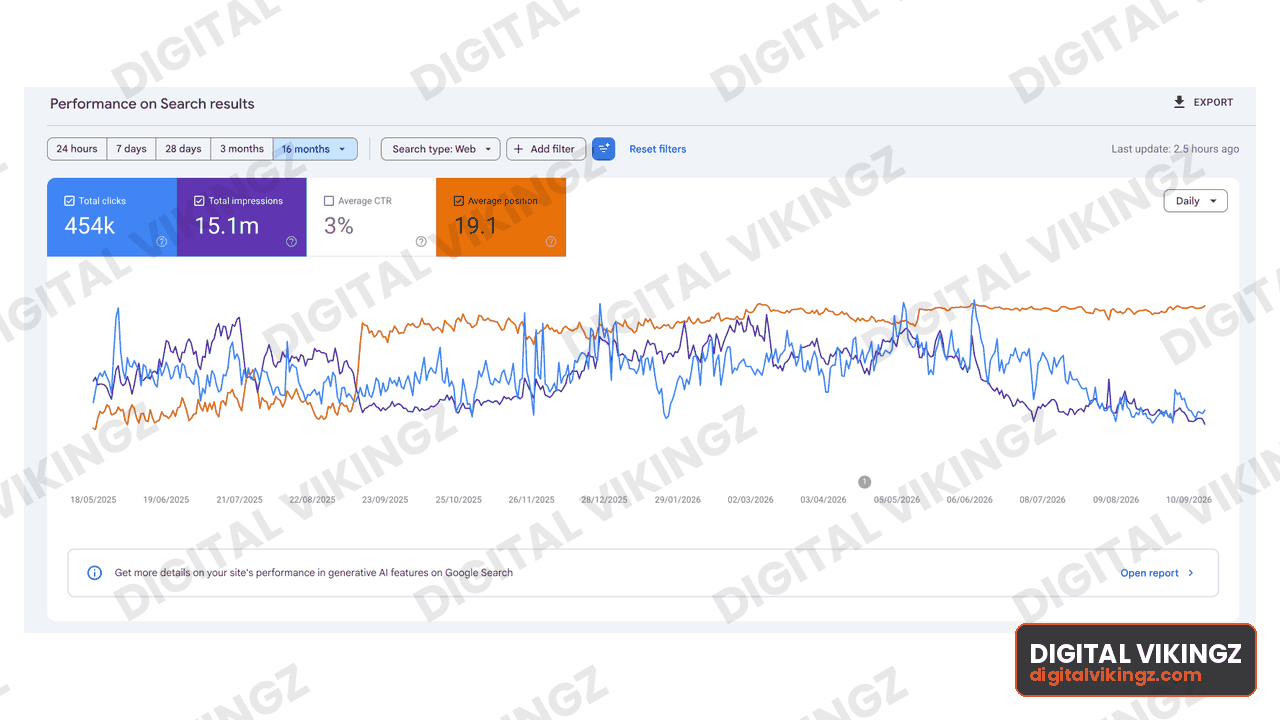
A client property from the results page

Google Search Console performance panel, Ecommerce · 16 months: 454K clicks, 15.1M impressions, 3% CTR, average position 19.1
All results

Questions about Semantic Content Writing

Who writes the pages?
The in-house editorial team under Abad Aslam, with native-language editors for German, Spanish and Italian. A named editor signs off every page.
Can our writers use your briefs and your checks?
Yes. Semantic SEO Strategy hands over the content brief format, the vocabulary and the six checks in its workshop. Content briefs alone are also available for in-house writers.
How is the keep, rewrite or merge call made at 90 days?
The page decision is revisited first. Pages that fail the Query Deserves a Page test merge into their parent, and pages that pass are rewritten against live results.
Which CMS platforms do you publish into?
WordPress, Shopify, Wix, Squarespace and Next.js with a headless CMS. The configure stage happens in your CMS, not in a document.
Do you write product descriptions and listings?
Yes, as item sets. Each item gets sentences true only of that item, and the n-gram check catches template filler across the set.
Does Semantic Content Writing rewrite existing articles on their current URLs?
Yes, when the page matches a map node. Pages with no node get a merge or prune decision.
How do we review pages before they go live?
Your named contact reviews each edited page before configuration. Fact corrections go back into the draft and through the checks again.
How are disagreements over wording handled?
Facts go to your subject-matter contact. Vocabulary follows the source term vector, so a disputed term changes there and then site-wide.
Do you translate our English pages?
No. A native-language editor writes each language version from the same content brief, with its own vocabulary.
What access does Semantic Content Writing need?
An editor-level CMS login, read access to Google Search Console and a subject-matter contact for fact questions.
Book a callWhatsApp