 Digital Vikingz
SEO
Google results
Topical map, content briefs, internal links, technical setup and authority links decide which pages rank for the searches that sell.
Digital Vikingz is a semantic SEO agency that helps B2B SaaS companies, ecommerce brands and local service businesses, including HVAC, plumbing, roofing and dental companies, win more customers from Google, Google Maps and AI answers in ChatGPT, Perplexity, Gemini and AI Overviews. AI agents do the repetitive SEO work, and a person reviews every page.
We build the whole site as a system before any page is written. It starts with one central entity and the attributes buyers ask about. Each attribute gets a value, and a topical map covers every topic the site must own. Most sites grow page by page, each page chasing a keyword, so no page says clearly what the whole site is about.
Engagements move through three layers in a fixed order: Claim, Shield and Scale. Claim defines the entity and the map. Shield confirms your authority in AI answers and on independent sites in your field. Scale produces the pages and ties each cluster to the qualified leads it brings in.
We measure Google results by Search Console clicks and leads per topic. We measure AI answers by tracked buyer questions. The AI Visibility Checker gives you a first read of your site in under a minute.
The AI Visibility Checker reads your site the way search engines and AI crawlers do and names the fix for every check that fails. It takes under a minute.
Free. Reads up to five public pages the way a crawler does, without running JavaScript. No sign-up to see the result.
Where the work is built and where it is measured
Entity-based semantic SEO builds the whole site as a system before any page is written: one central entity, the attributes buyers ask about, a value for each attribute, and a map of every topic the site must own.
Most sites are built page by page, each page chasing a keyword, so no page says clearly what the whole site is about. We define that one thing first, then map every topic around it, following the semantic SEO framework published by Koray Tugberk Gubur.
Three rules hold on every site we build:
Buyers now meet a business in four places: Google results, AI answers, Google AI Overviews and AI shopping agents. All four run on the same semantic SEO base, and the finishing work differs for each.
Topical map, content briefs, internal links, technical setup and authority links decide which pages rank for the searches that sell.
Answer-first sections, the questions buyers ask as headings, and mentions on review sites and forums decide whether an assistant names you.
Full coverage of the topic and its follow-up questions decides whether Google cites your page in the overview.
Complete structured data, accurate prices, stock and policies, and pages AI crawlers can read decide whether an agent picks you.
Topical authority looks like the panels below: clicks and impressions that rise through core updates instead of resetting at each one. Every panel is a client's own property, exported the way Google shows it, with clicks, impressions, click-through rate and average position for the full period. Hover over a card, or tap it on your phone, to read how we work on a site like that. Client names are hidden to protect them. On the strategy call we open a live property in an industry close to yours and go through the decisions behind its curve.
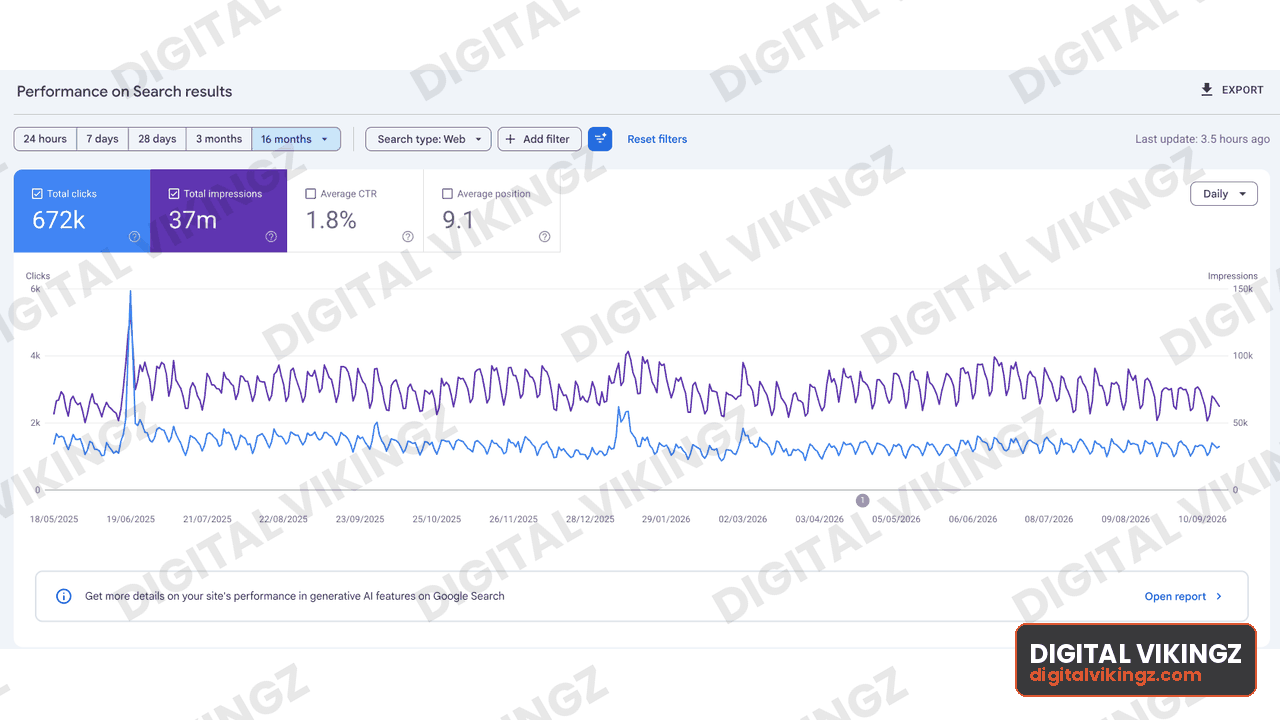
B2B SaaS16 months
672Kclicks
Software buyers search in stages: the problem, the category, the comparison, then the price. We give each stage its own page and link them in that order, so a reader always has a next step. The product is the central entity on every page. 37M impressions show how many of those searches this one site now appears for.
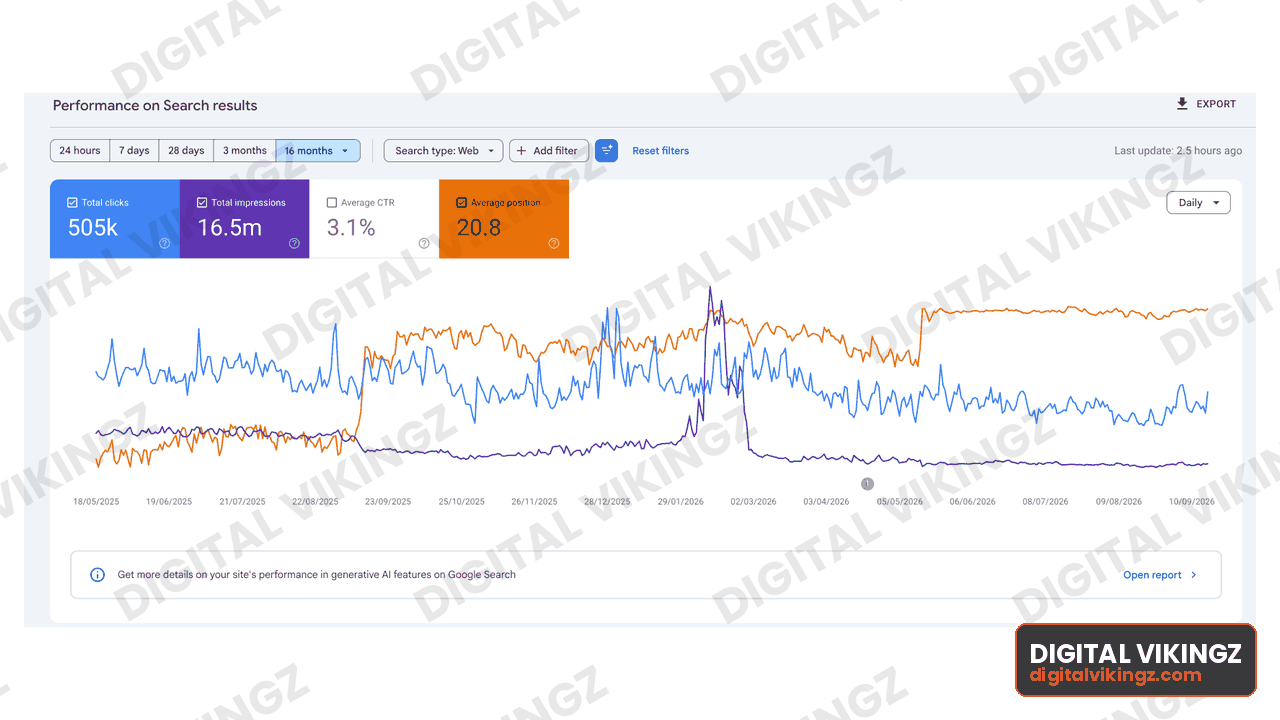
Publishing16 months
505Kclicks
A publisher covers hundreds of subjects, and Google has to know which one the site is an authority on. We pick that subject, sort the archive into core and outer sections, and refresh older articles before adding new ones. Related stories link to each other. 505K clicks came through over the 16 months on this panel.
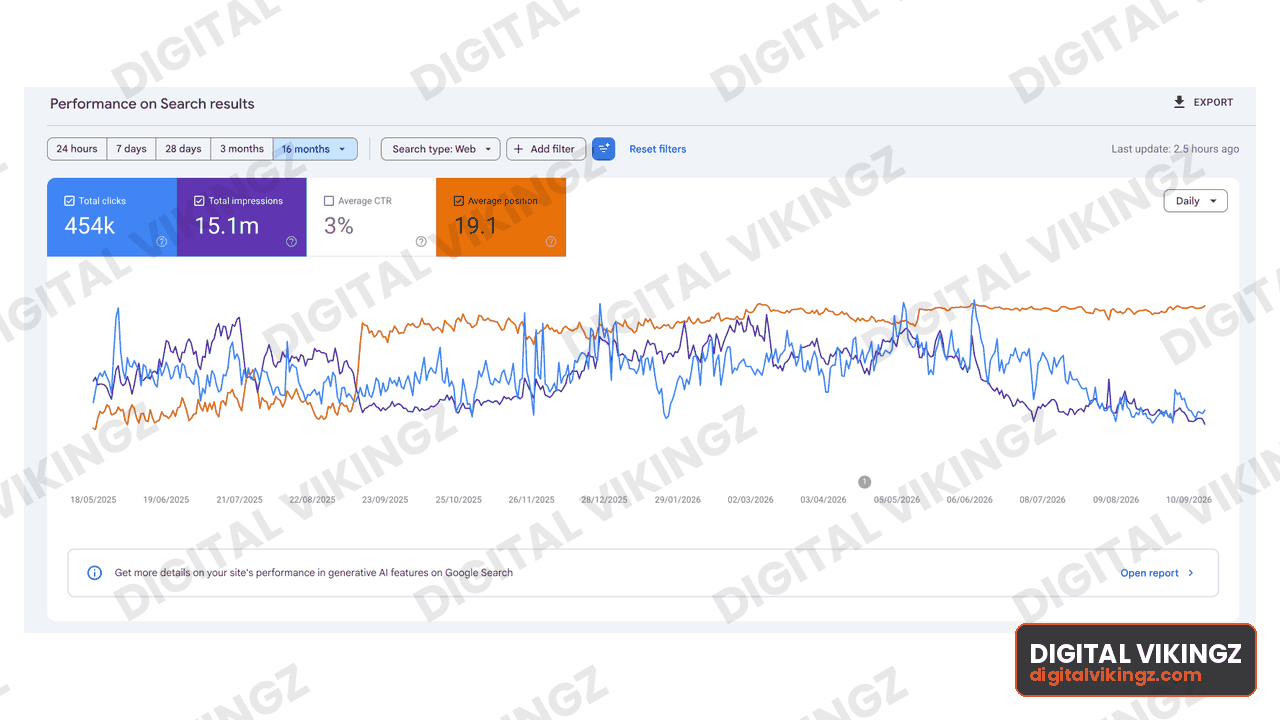
Ecommerce16 months
454Kclicks
Shoppers search by product type, size, price and brand long before they search a store name. We map those attributes to categories and collections, so two pages never chase the same search. Buying guides link back to the products they mention. The panel on this card shows 454K clicks from 15.1M impressions over 16 months.
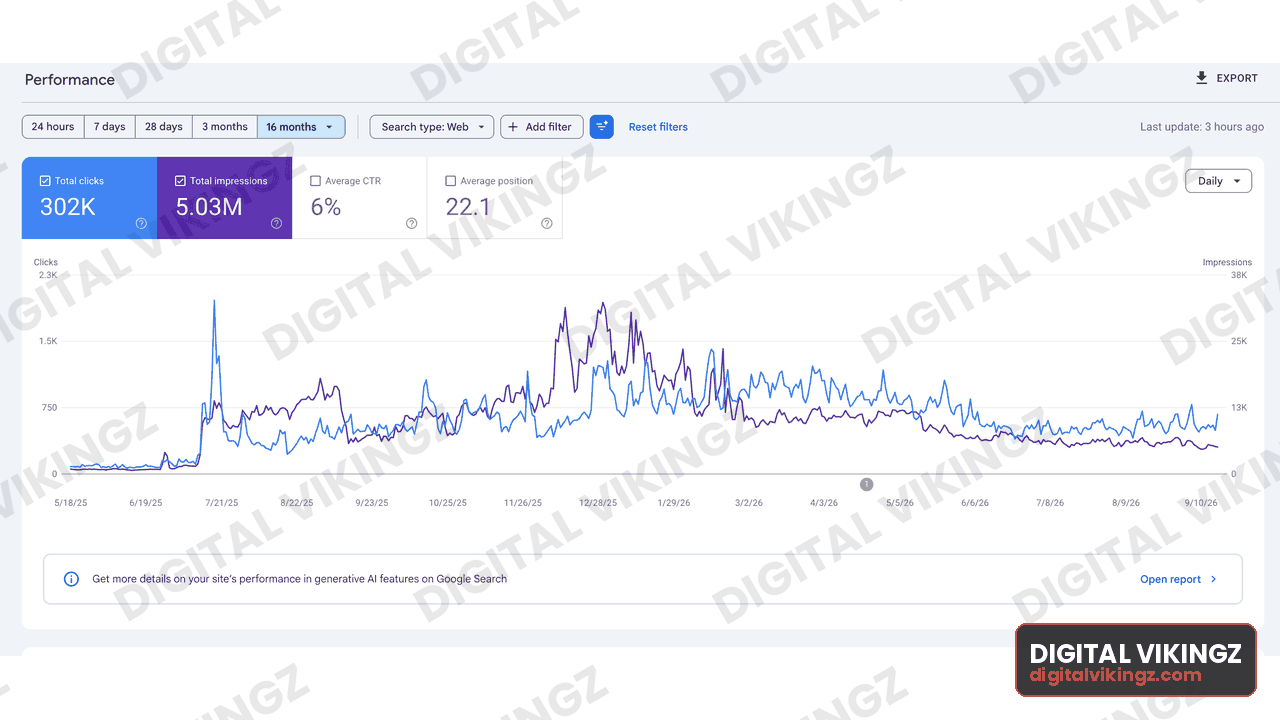
Client property16 months
302Kclicks
Six clicks for every hundred impressions is high for an average position of 22. It usually means the pages that do reach page one answer the search well. We write each page from a content brief, with the answer in the first lines, then link it to its closest related pages. That is the pattern we look for first.
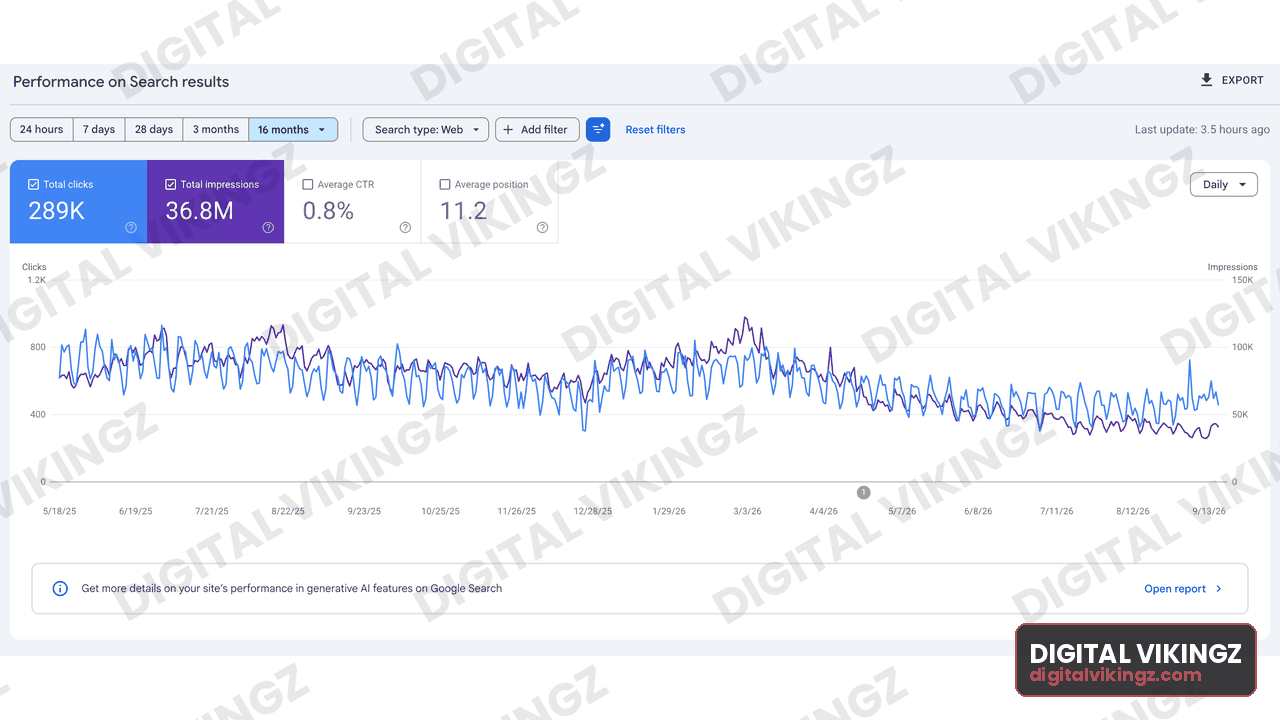
Client property16 months
289Kclicks
With 36.8M impressions, the work is less about adding pages and more about deciding what each page owns. We check which URLs appear for the same query, merge the ones that compete and give every survivor a clear role in the topical map. Average position is 11.2, right where a clearer page role starts to pay.
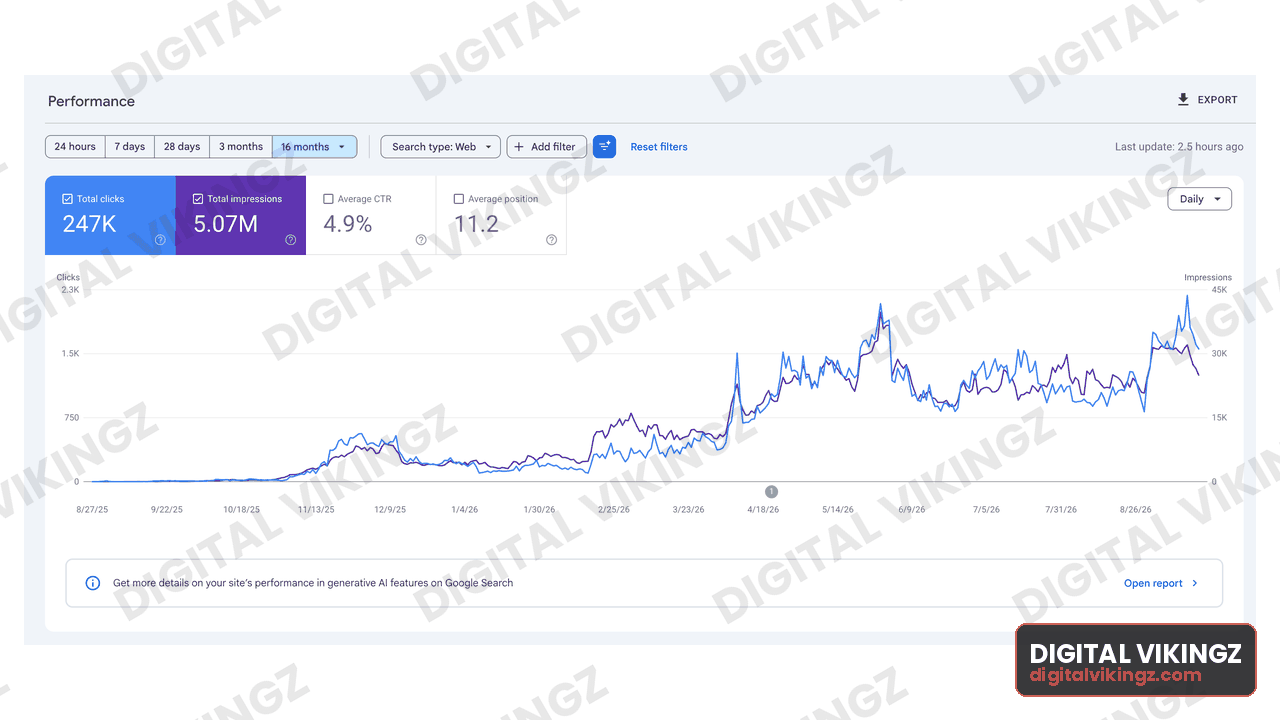
Healthcarefrom launch
247Kclicks
Patients search a symptom, then a condition, then a treatment, then someone near them who offers it. We map those four as separate page types and connect them, with the practice as the central entity. Each page says who wrote it and who it is for. This property earned 247K clicks from launch, at an average position of 11.2.
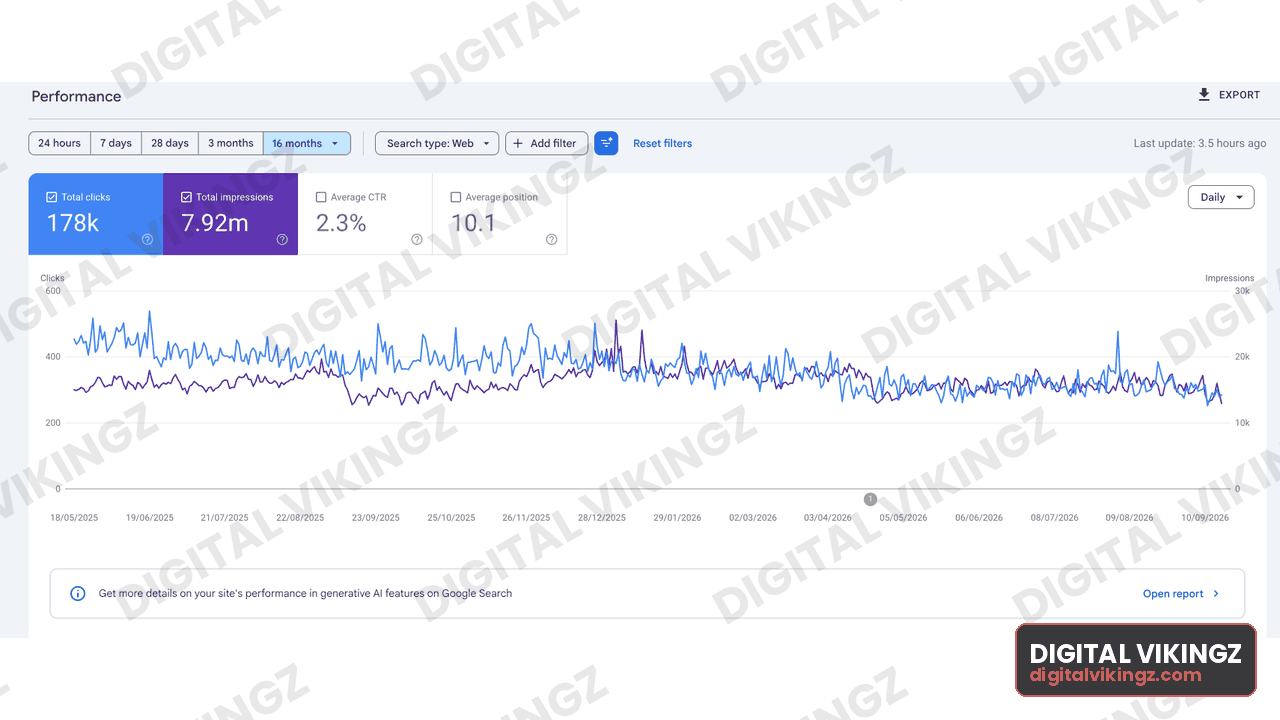
Travel and tourism16 months
178Kclicks
People plan a trip in questions: when to go, how long, what it costs, what to see. We build the map around the place, then give each question a home near the pages that sell the trip. Seasonal pages are refreshed before the season starts. The panel reads 178K clicks at an average position of 10.1.
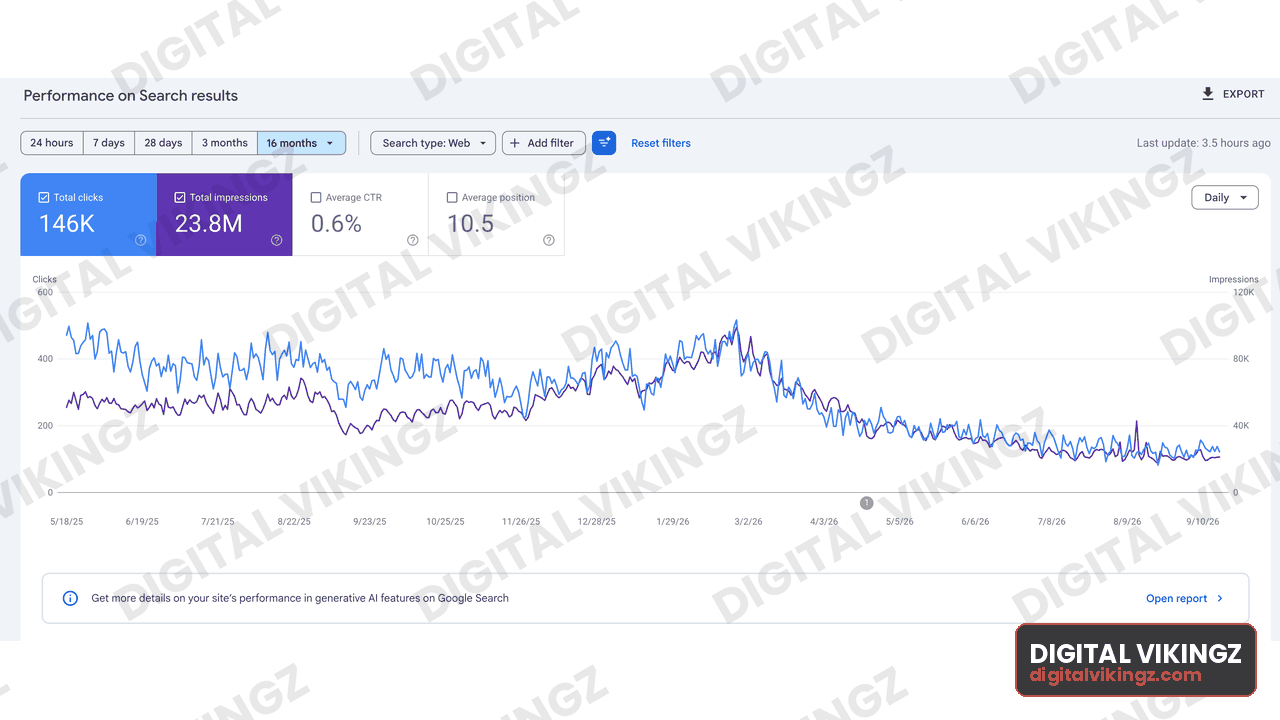
Client property16 months
146Kclicks
A large share of these 23.8M impressions are broad searches where the reader is still learning the words. We answer those in the outer section of the map and link down to the core pages that sell. The outer pages bring the reader in. The core pages earn the enquiry, so both need the same vocabulary.
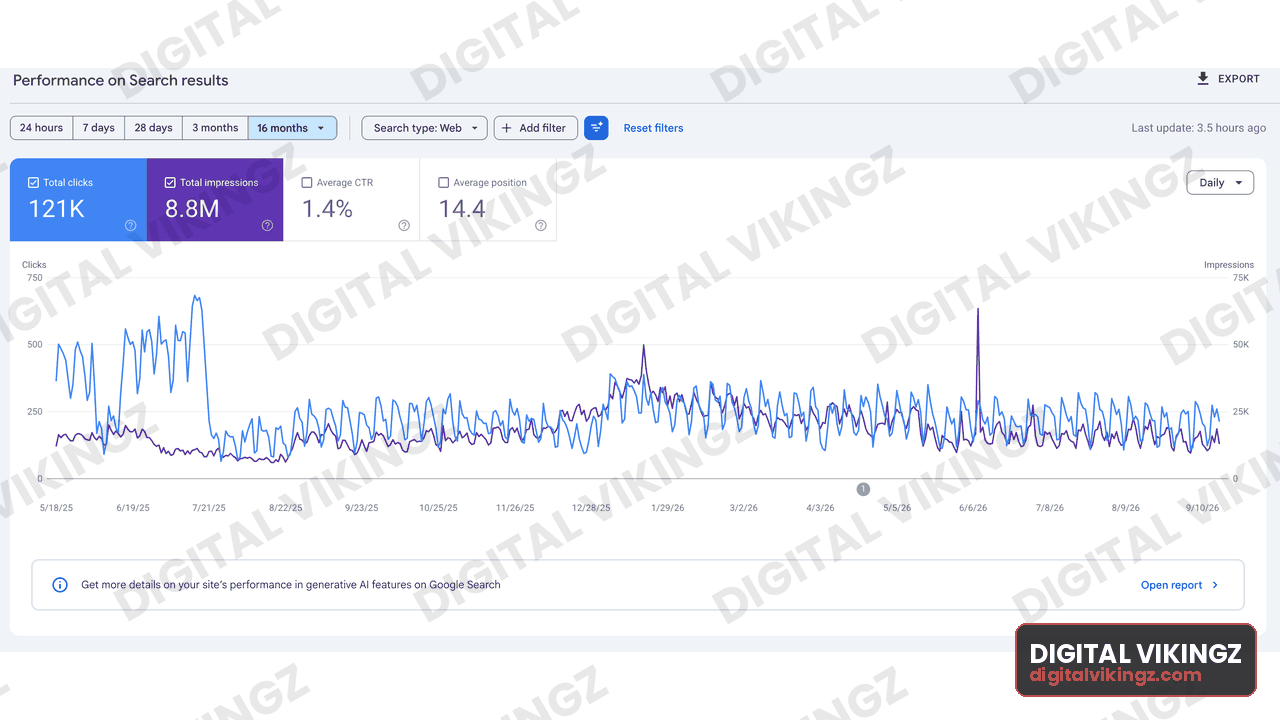
Client property16 months
121Kclicks
Before writing anything new, we read the queries a site already appears for and group them by topic. Pages sitting on page two for a whole group get rewritten first, because Google has already connected them to the subject. This panel shows 121K clicks from 8.8M impressions over 16 months, at an average position of 14.4.
Three clients answer that question themselves in the recordings below, and the written feedback sits beside them as the original screenshots. Each recording is labelled so you can place the client's situation next to yours.
Brands we have worked with, including Microsoft's Select a logo to read what we did.
The audit decides which layer comes first. The services below cover every layer from diagnosis to pipeline reporting, and each has a fixed deliverable list you read before you commit. Local SEO and Google Business Profile work joins the Shield layer for businesses that sell in a place, and SEO automation runs underneath every layer, so the repetitive work never slows the roadmap.
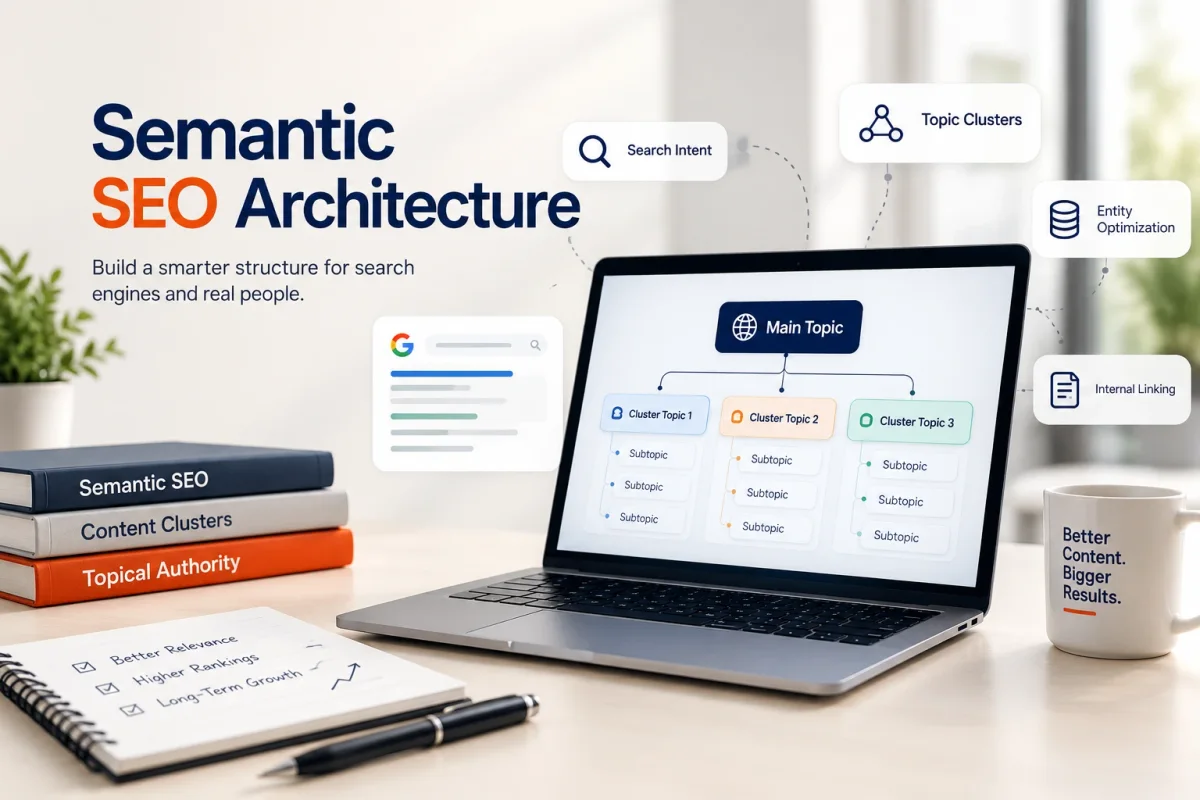
The written plan your site is built against: central entity definition, topical map, source term vector, entity-attribute matrix, internal linking architecture, 12-month publishing roadmap and the technical entity infrastructure spec. Use it when you want the plan before the production, and when you want a document your team can run without us. Fixed-scope project.
Claim, Shield and Scale are the three layers every engagement moves through, and each layer earns the next. Four steps of work run inside them.
Your business becomes a defined entity with one topic, one vocabulary and one topical map. Every page then says the same thing about what you do and for whom.
That authority is confirmed outside your site, in AI answers and on independent sites in your field. We recheck the site after each core update and track where AI answers name you.
The map is produced page by page in a planned order, and each cluster is tied to the qualified leads it brings in, reported every quarter.
AI agents do the SEO work that repeats every week. Strategy, final edits and every publish decision stay with a person, and the writer and the auditor are never the same agent.
The speed of automation, with a specialist approving every page. See SEO Automation
Semantic SEO pays off most where buyers research before they buy. These four kinds of business come to us most often.




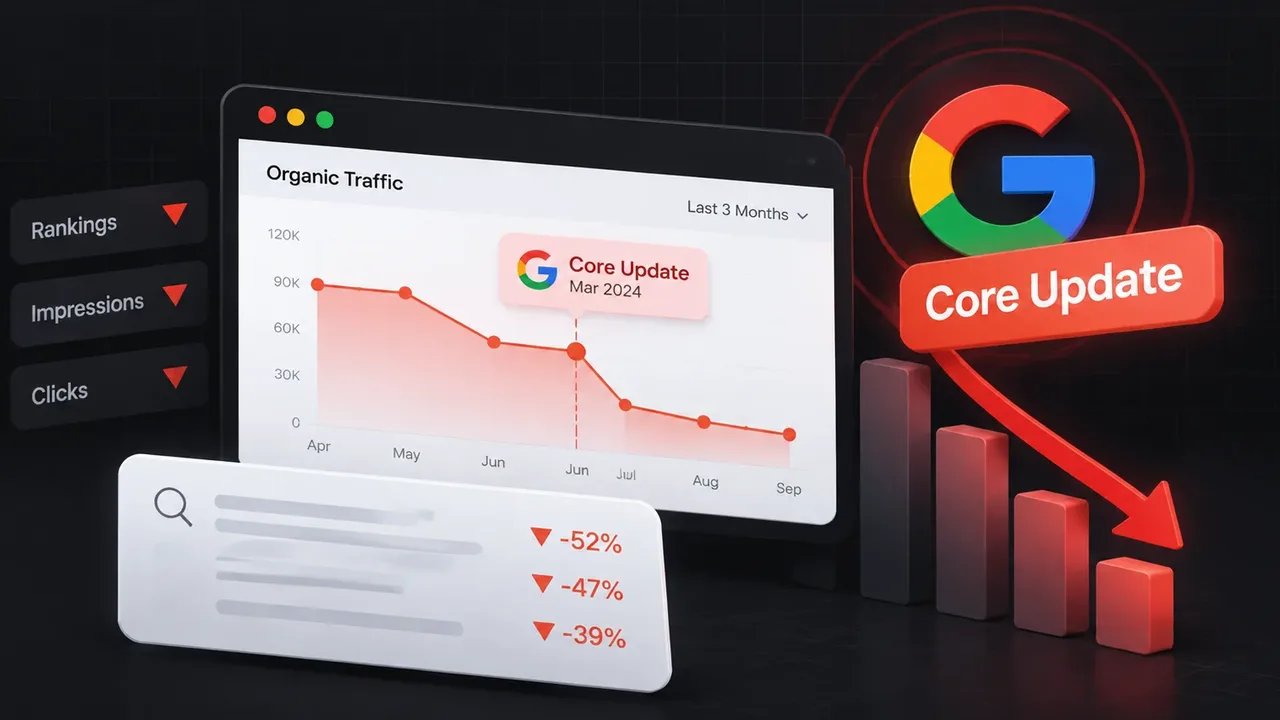
A core update recalculates relevance. The audit shows which pages lost which queries, and why.
Why it happens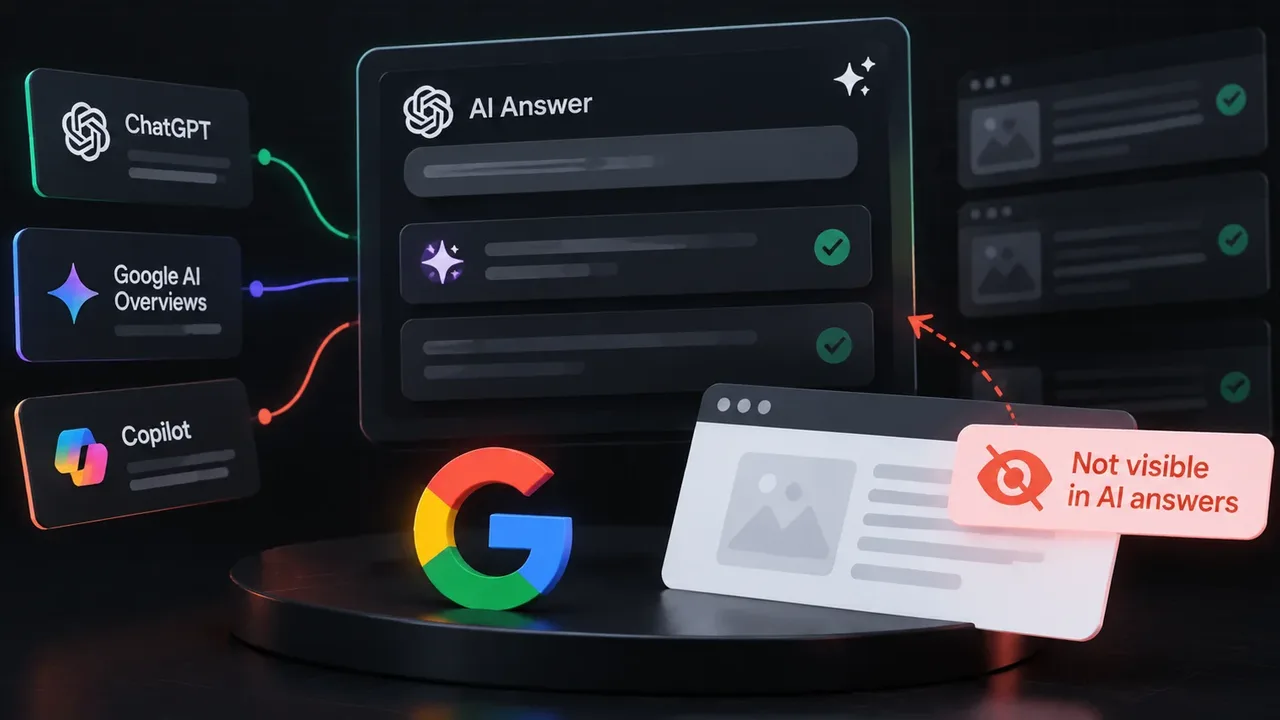
AI engines quote a passage that states one clear fact about a named business. Most business sites have no such passage yet.
How AI picks sources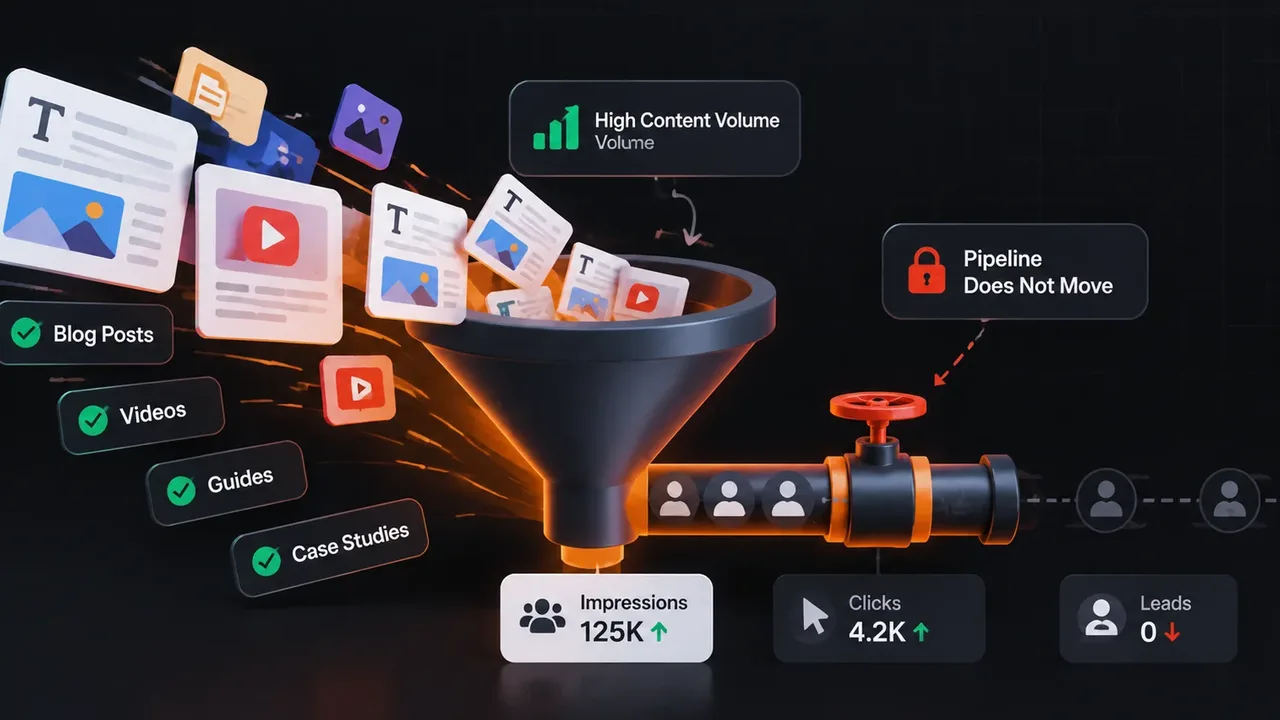
A content calendar produces pages, and a topical map produces authority. We reorder production so the clusters closest to a sale come first.
Why content fails to convert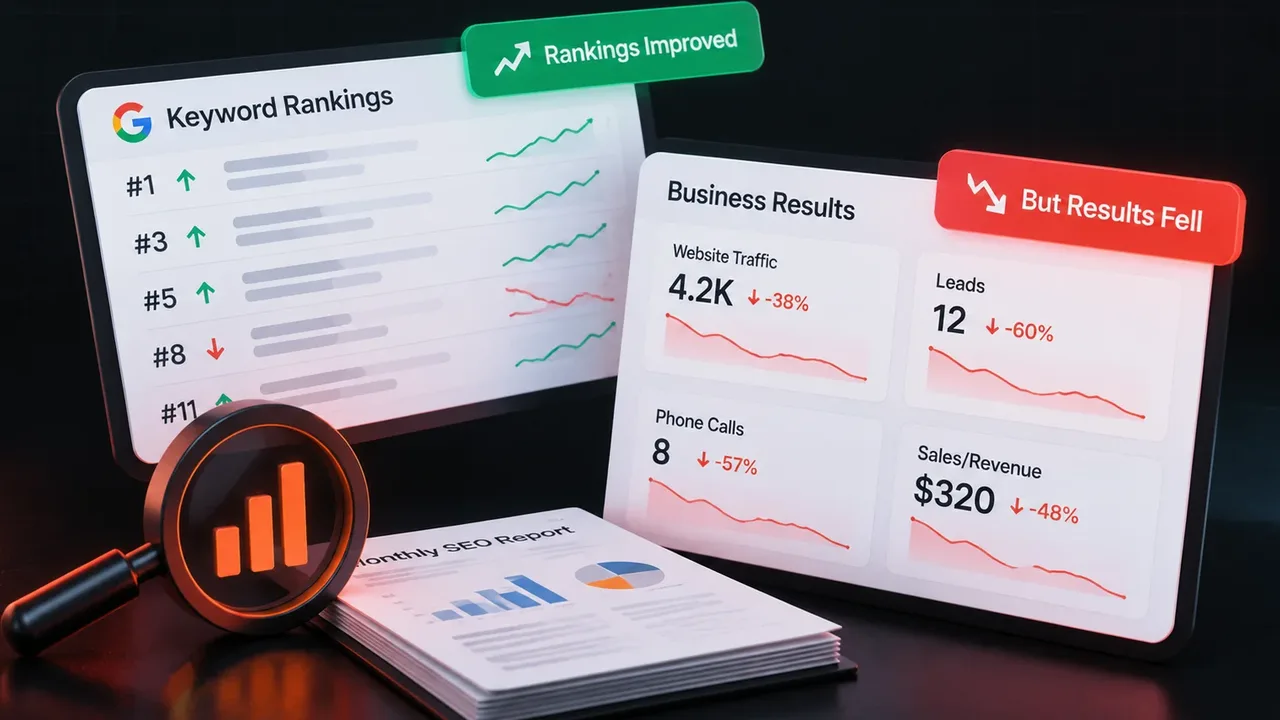
We report qualified leads by cluster each quarter, with rankings and AI citations in the appendix.
What to ask your agencyThe method stays the same in every industry, and the pages change. Each tile names the pages your industry needs.
 SaaS and B2B softwareFeature pages, comparison pages, alternatives pages, integration guides, use-case pages
 Local service businessesService pages, service-location pages, problem guides, cost guides, Google Business Profile
 Ecommerce and retailCategory pages, collection pages, buying guides, product comparisons, brand pages
 Healthcare and medicalService pages, condition guides, treatment overviews, provider profiles, location pages
 Finance and fintechProduct pages, rate comparisons, regulatory guides, calculator pages
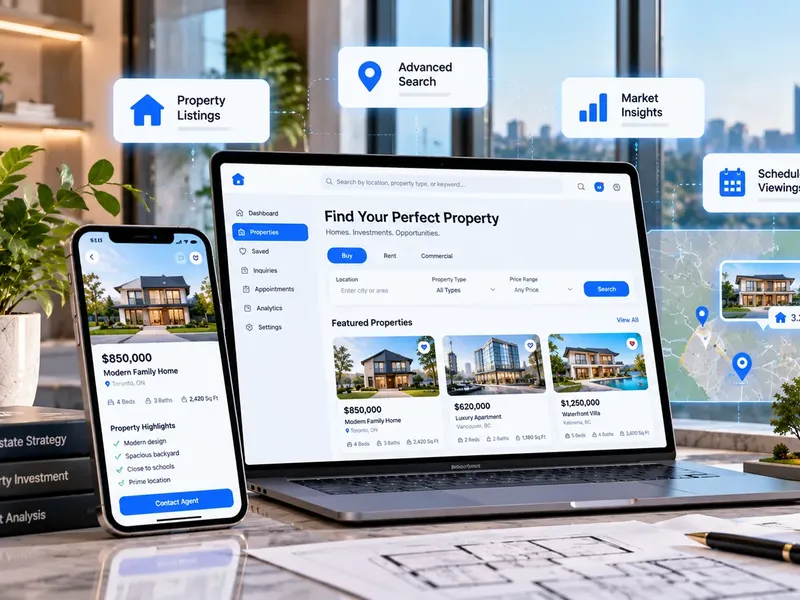 Real estate and propertyNeighbourhood guides, market reports, buyer and seller guides, location pages
The founder sets the architecture of every engagement, and a production team builds it from the same written method. You speak with both people below during the engagement.

Decides the central entity, the topical map and the vocabulary on every engagement.

Owns brief integrity, editorial standards and the publishing workflow that turns the map into pages.
Six things, and each one can be checked before any money moves.
Four terms carry the method. Each definition stands on its own, and the knowledge hub covers the rest.
The knowledge hub explains the method one concept at a time, and the three newest articles are shown here.

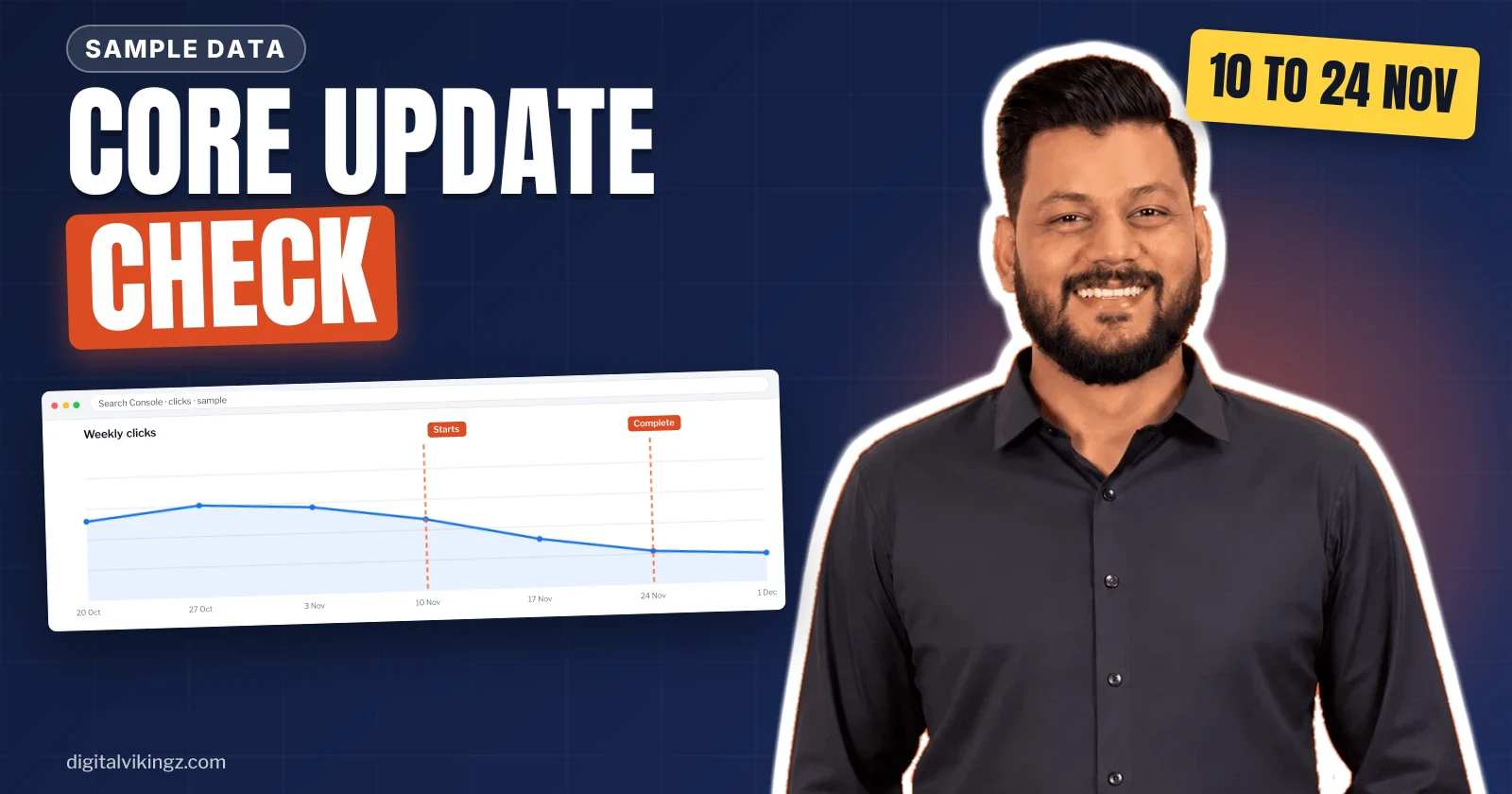
We open your site live, name its central entity and tell you which layer comes first. You keep that answer with or without an engagement, and when semantic SEO is not the fix, we say so. Calls run in your time zone for businesses in the USA, UK, Canada, Australia, UAE and Germany.
These are the questions that come up before a first call, answered the way we answer them on the call.