 Digital Vikingz
Methodology, not motivation.
Long-form essays on semantic SEO architecture, entity-layer diagnostics, AI retrieval engineering, and methodology adaptations from 200+ shipped engagements. Each essay starts from a decision taken in a client engagement.
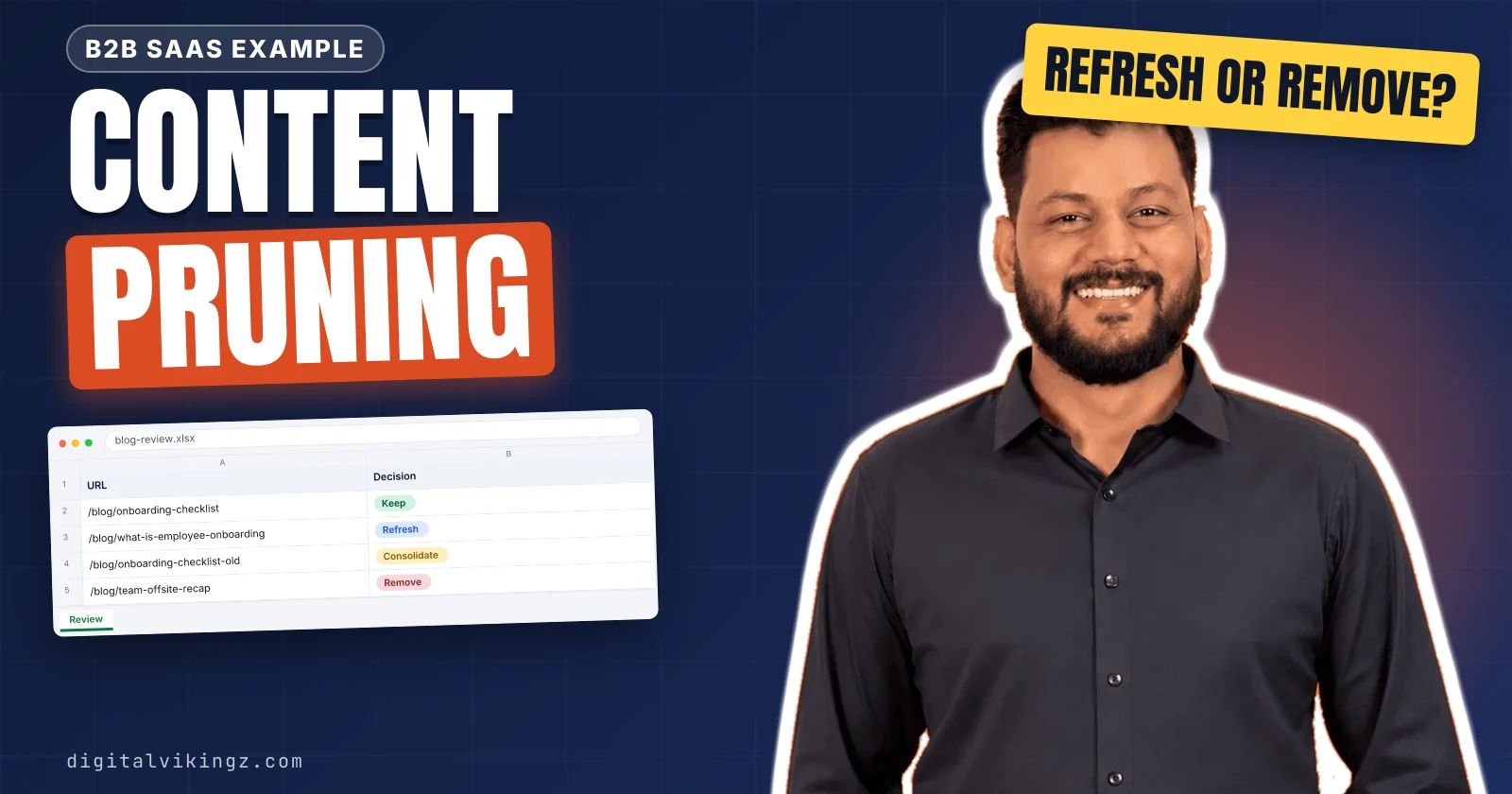
Content Pruning for SEO: Refresh, Consolidate or Remove?
Content pruning for SEO: decide which old pages to keep, refresh, consolidate or remove from the queries each page earns in Google Search Console.
Read article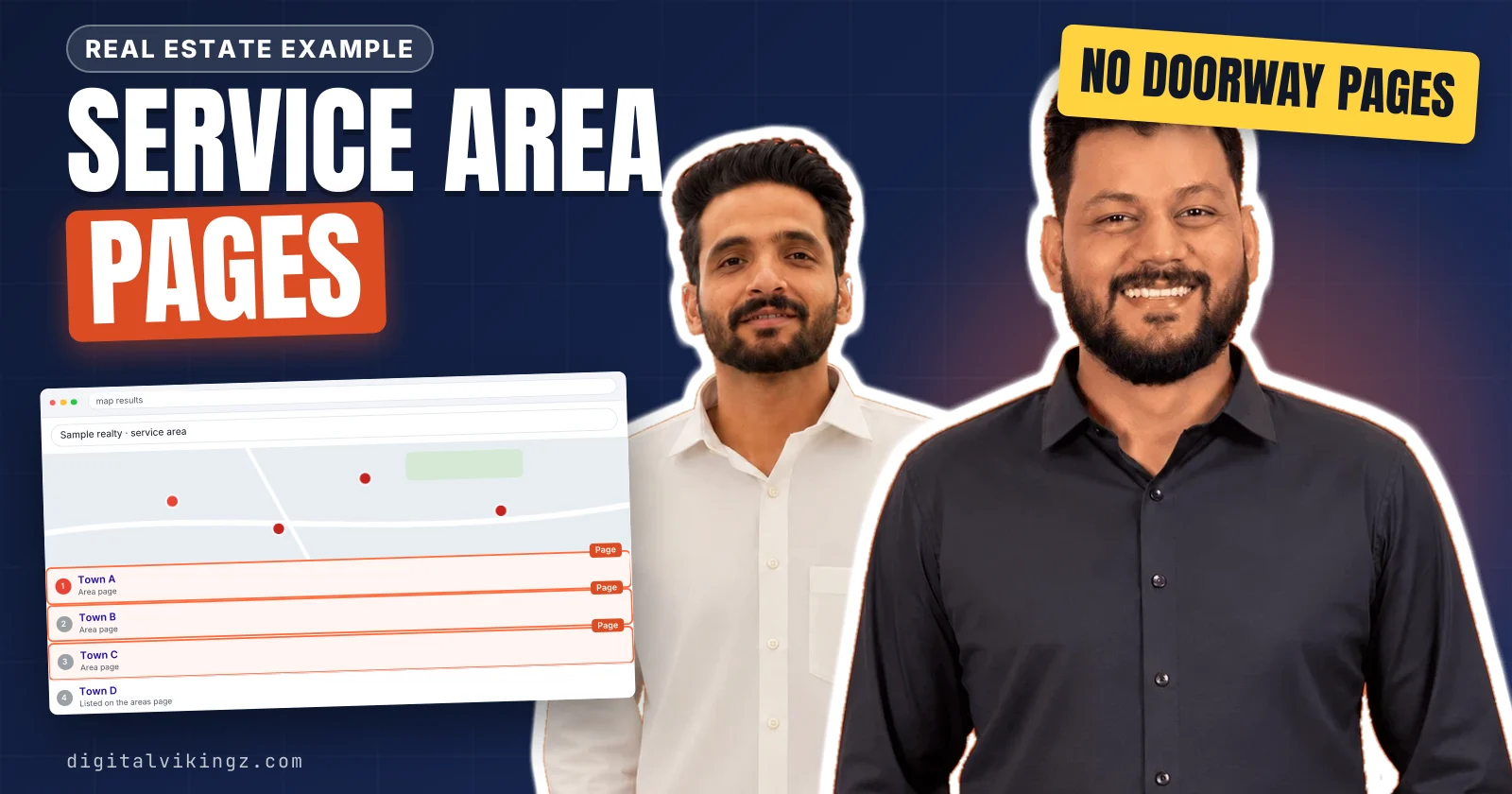
How Do Service Area Pages Rank in Each Town Without Becoming Doorway Pages?
Service area pages rank in a town when the area earns the page and the page states facts true only there. See Google's doorway rules and the five-check test.
Read article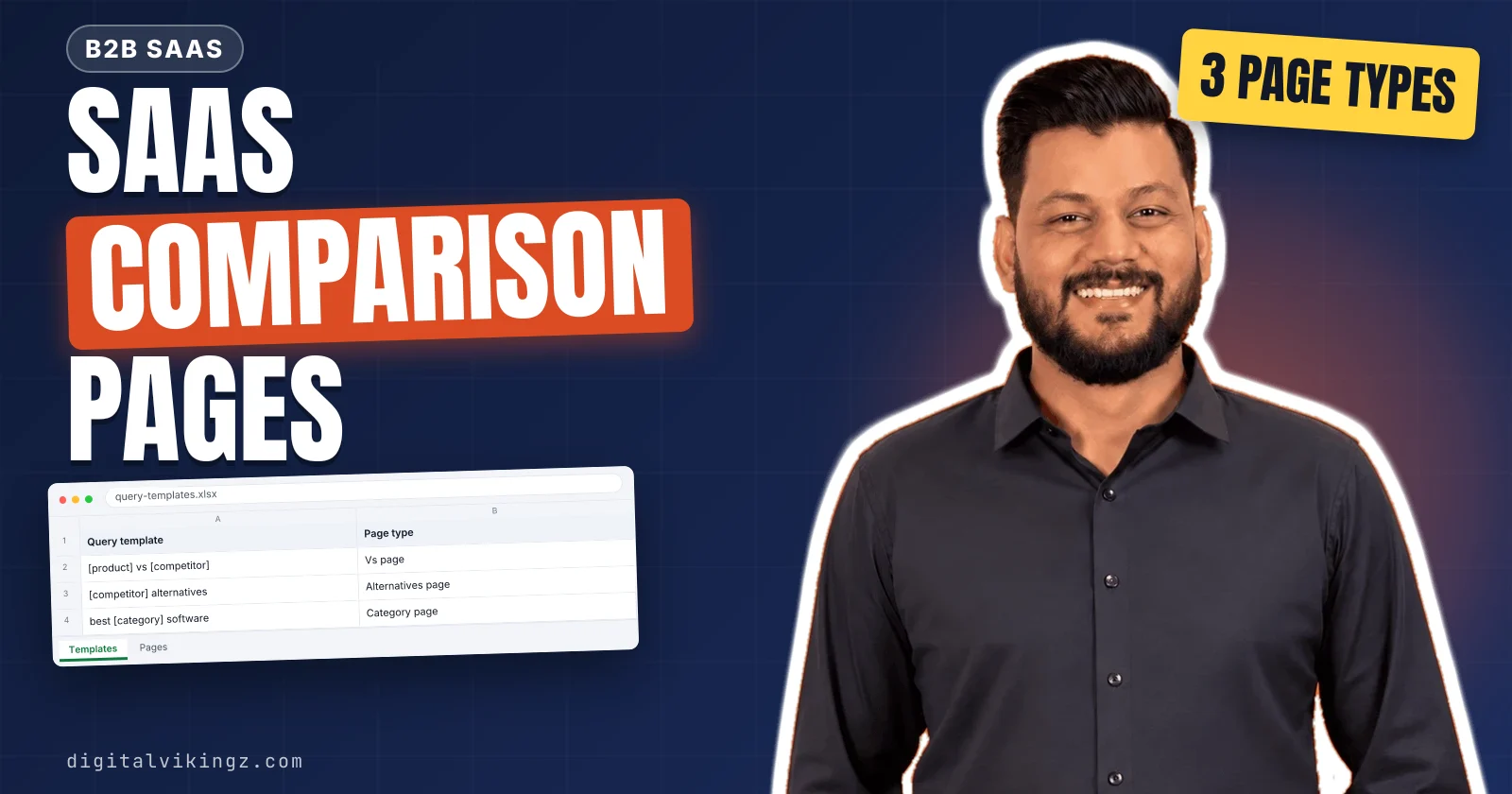
How to Structure SaaS Comparison Pages: Vs, Alternatives and Category Pages
SaaS comparison pages on your own site, structured by query template: vs pages, alternatives pages, category pages, and the URLs and links that join them.
Read article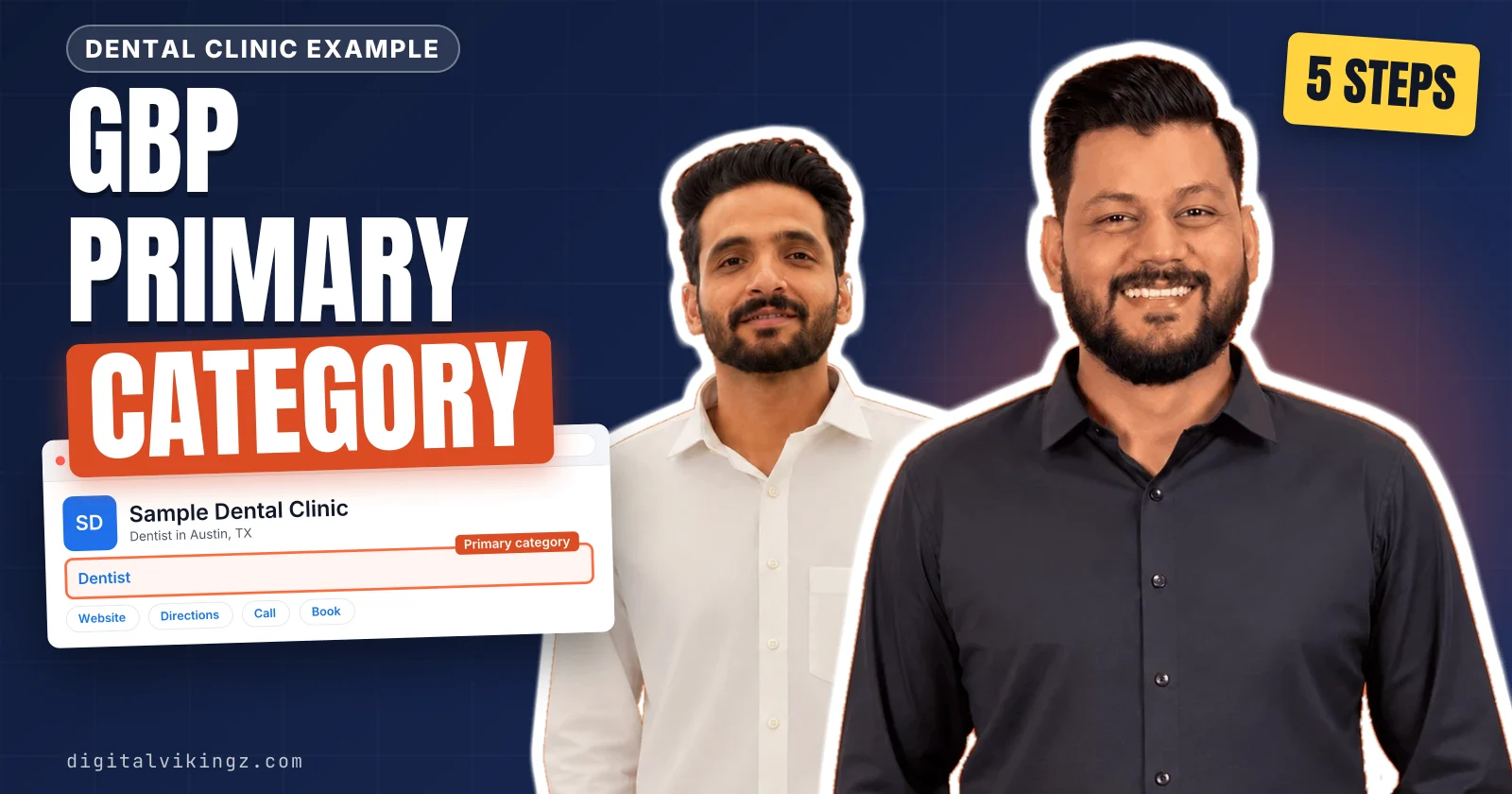
How Do You Choose Your Google Business Profile Primary Category?
Choose a Google Business Profile primary category in 5 steps: name what the business is, find the most specific match, check the map pack and profile features.
Read article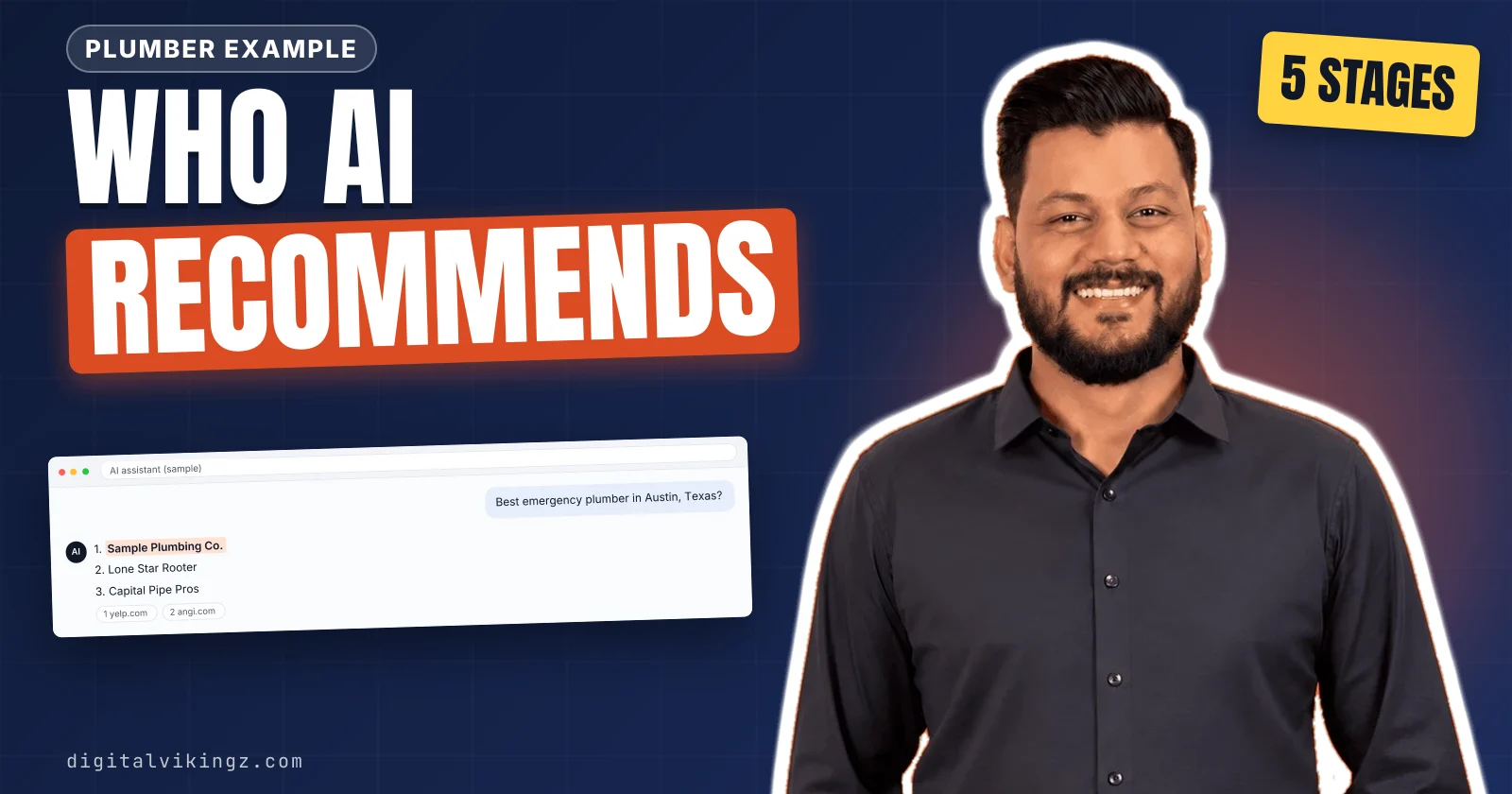
How Do AI Assistants Choose Which Local Business to Recommend?
AI assistants pick a local business from profiles, directories, reviews and websites, then name the few whose facts agree. See what each assistant reads.
Read article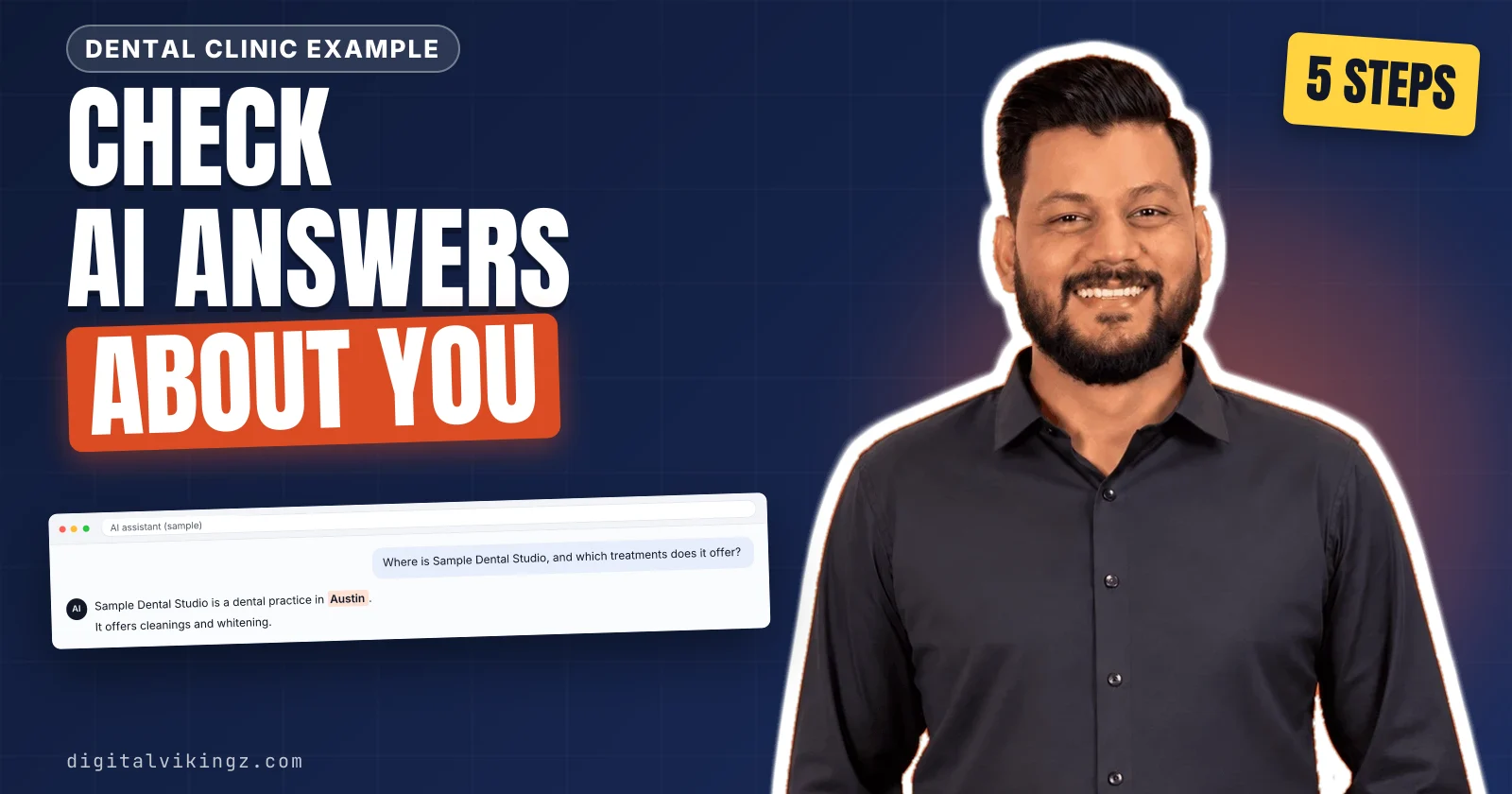
How to Check What ChatGPT and AI Overviews Say About Your Business in 5 Steps
Check LLM brand visibility in 5 steps: ask ChatGPT, Gemini and Perplexity a fixed prompt set, read the AI Overview, log mentions and citations, fix the gaps.
Read article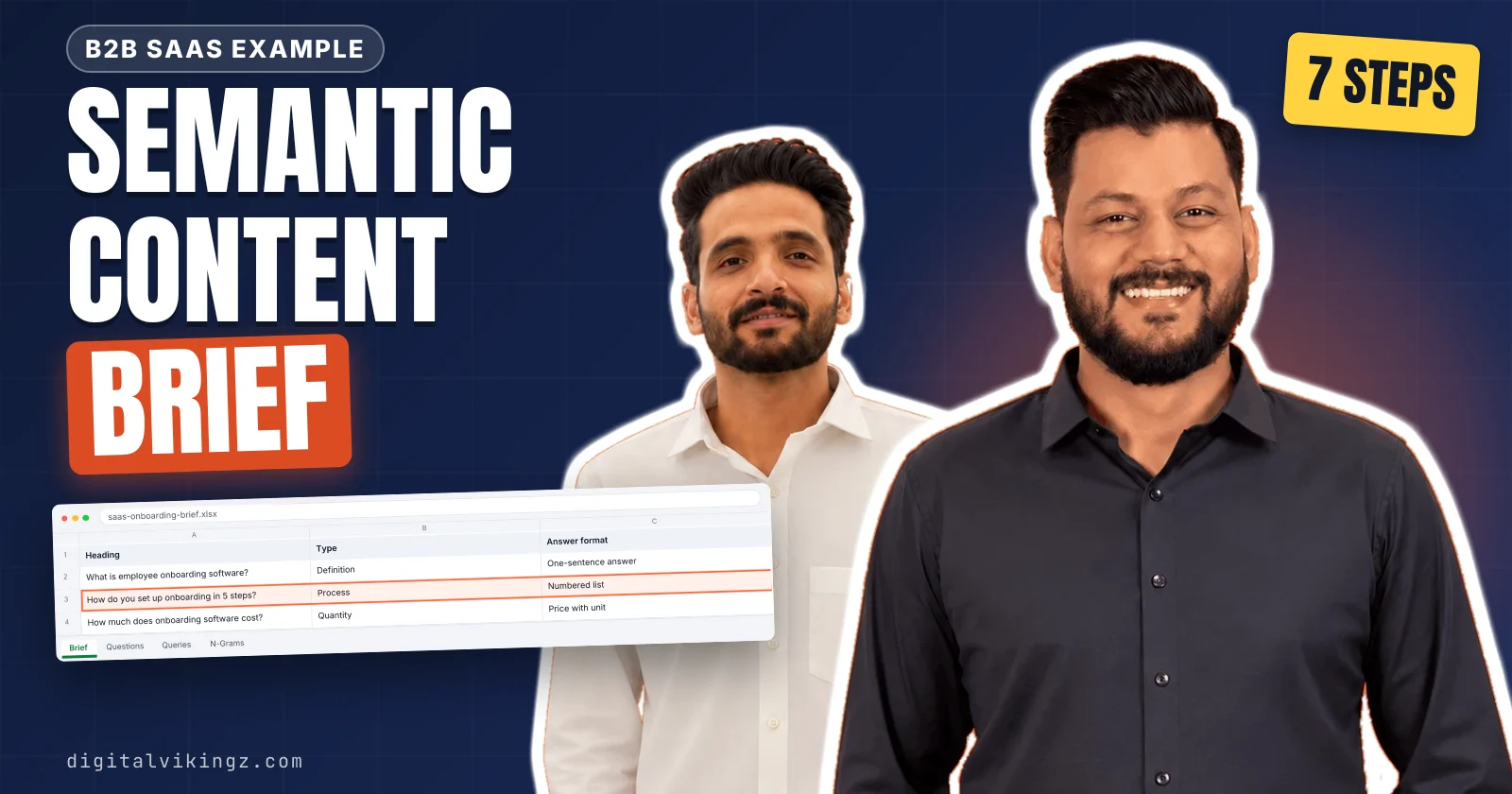
How to Write a Semantic Content Brief for SEO in 7 Steps
Write a semantic content brief for SEO in 7 steps: one topical map row, a search results read, grouped questions, ordered headings, links and a final check.
Read article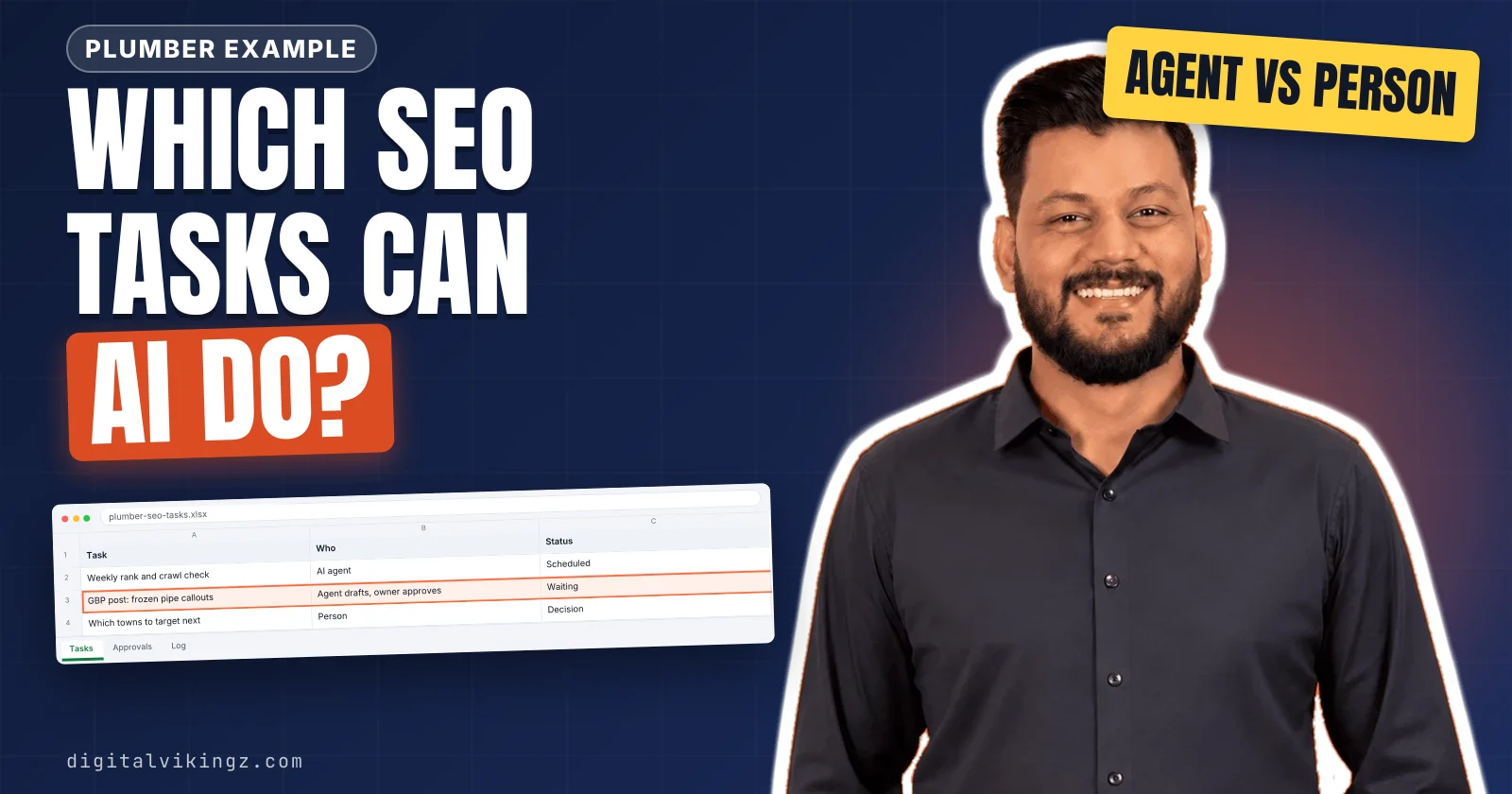
Which SEO Tasks Can AI Agents Do, and Which Need a Person?
AI agents for SEO run monitoring, crawl checks and reports, draft briefs and meta titles for approval, and leave strategy to people. See the full task split.
Read article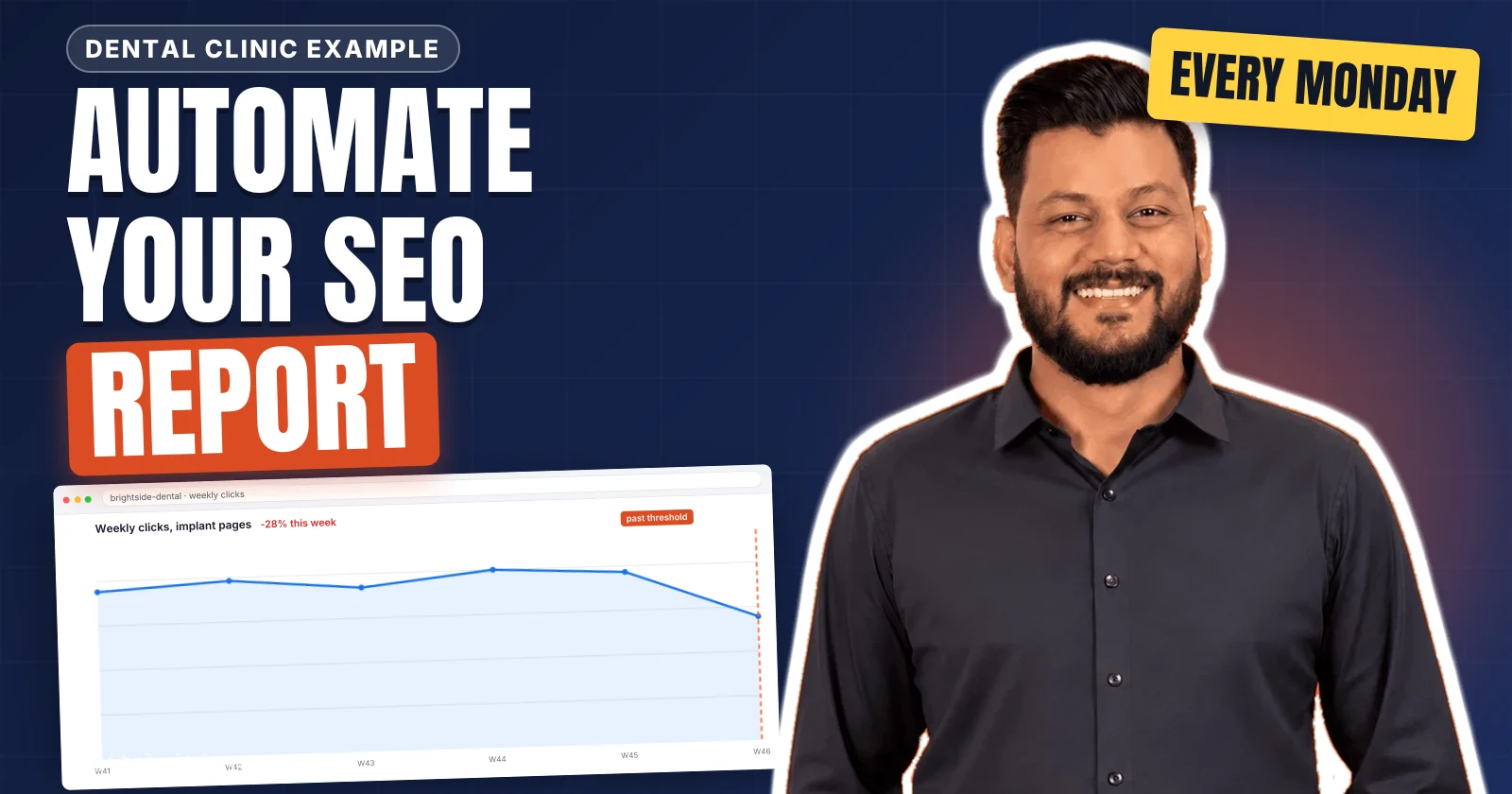
How to Automate a Weekly SEO and AEO Report in 5 Steps
Automate a weekly SEO and AEO report in 5 steps: pull search and AI answer data, flag changes past a threshold, explain each cause and assign the fixes.
Read article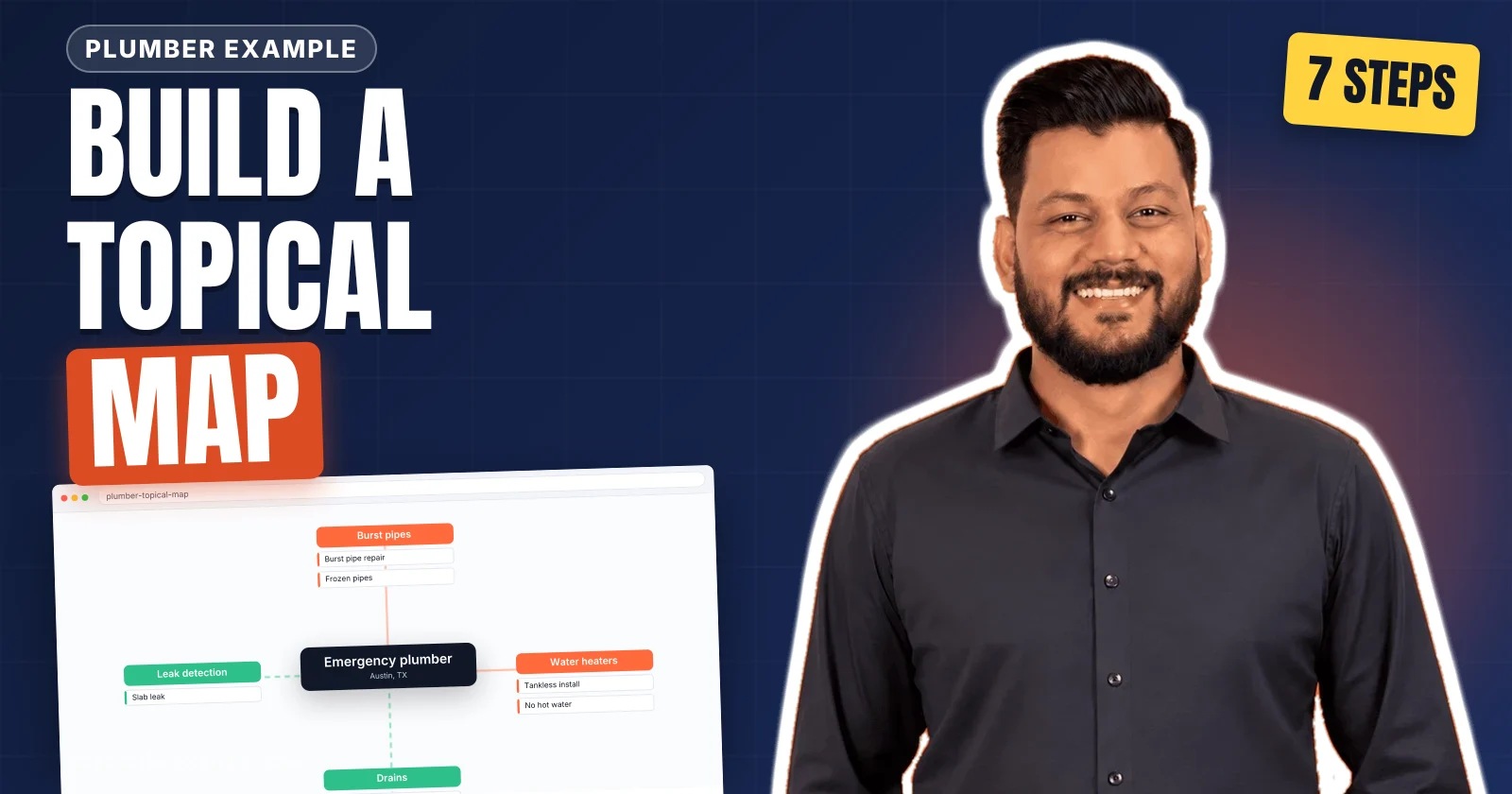
How to Build a Topical Map for SEO in 7 Steps
Build a topical map for SEO in 7 steps, from the source context and central entity to page decisions, publishing order and the internal link plan.
Read article
What Happens in the First 90 Days of a Semantic SEO Engagement?
The first 90 days of a semantic SEO engagement produce three things in order: a baseline and a source context in the first month, a topical map with briefs and fixed templates in the second, and the first published cluster with its first readings in the third. Month one answers what the site is about and where the site stands, in documents the business keeps.
Read article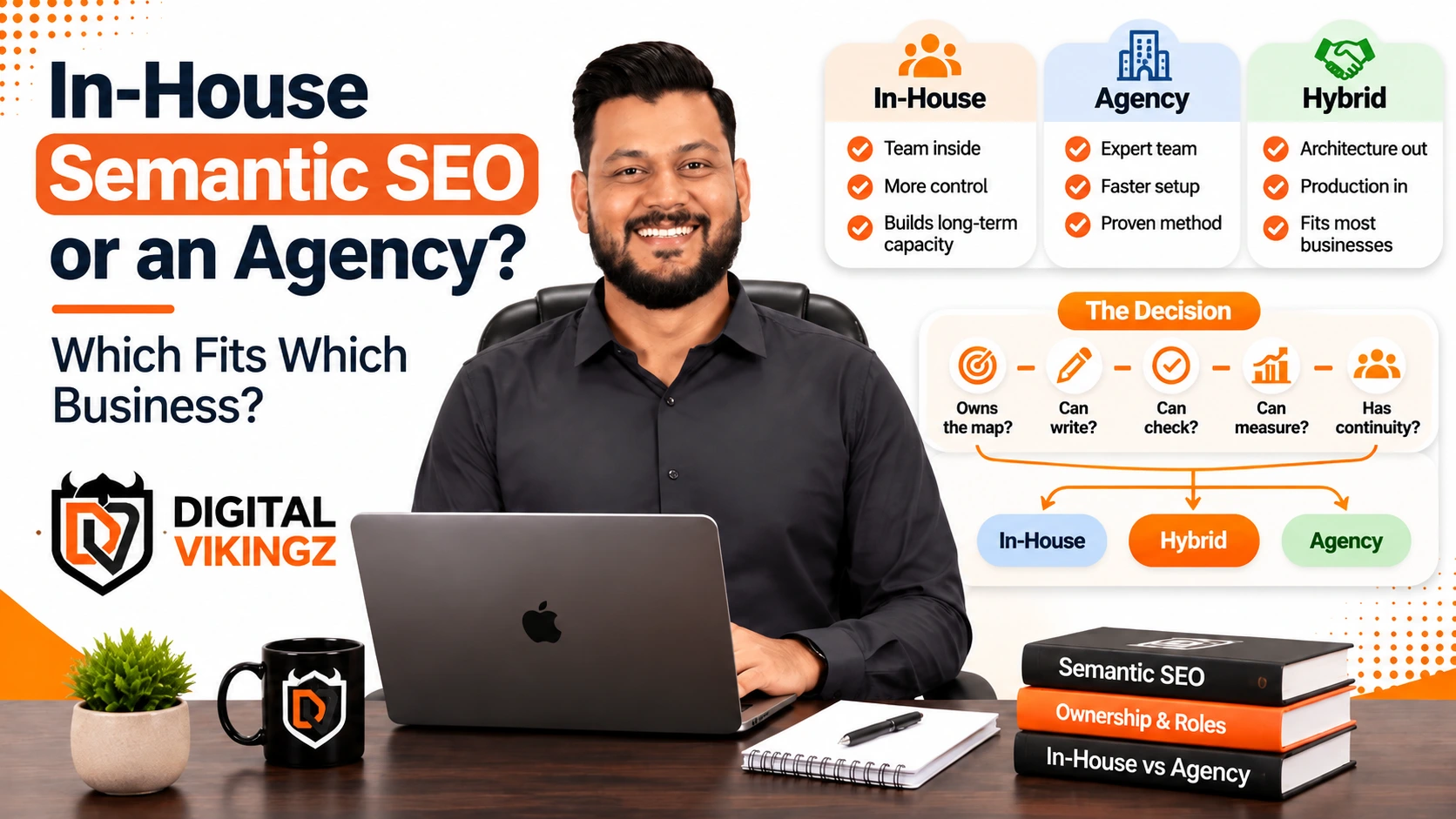
In-House Semantic SEO or an Agency: Which Fits Which Business?
In-house semantic SEO fits a business that has one person able to own the topical map and the vocabulary, writers who can publish to a brief on a steady rhythm, and a measurement owner with Search Console and CRM access. An agency fits a business that has none of those three and wants the architecture built and run by people who build them every week.
Read article
How Do You Get a Knowledge Panel for a Business?
A business gets a Knowledge Panel when Google holds the brand as one entity in its Knowledge Graph with enough confidence to show a panel, and that confidence comes from three things: one consistent description of the brand on a page the brand controls, corroboration of that description across independent sources, and searchers using the brand name as a query.
Read article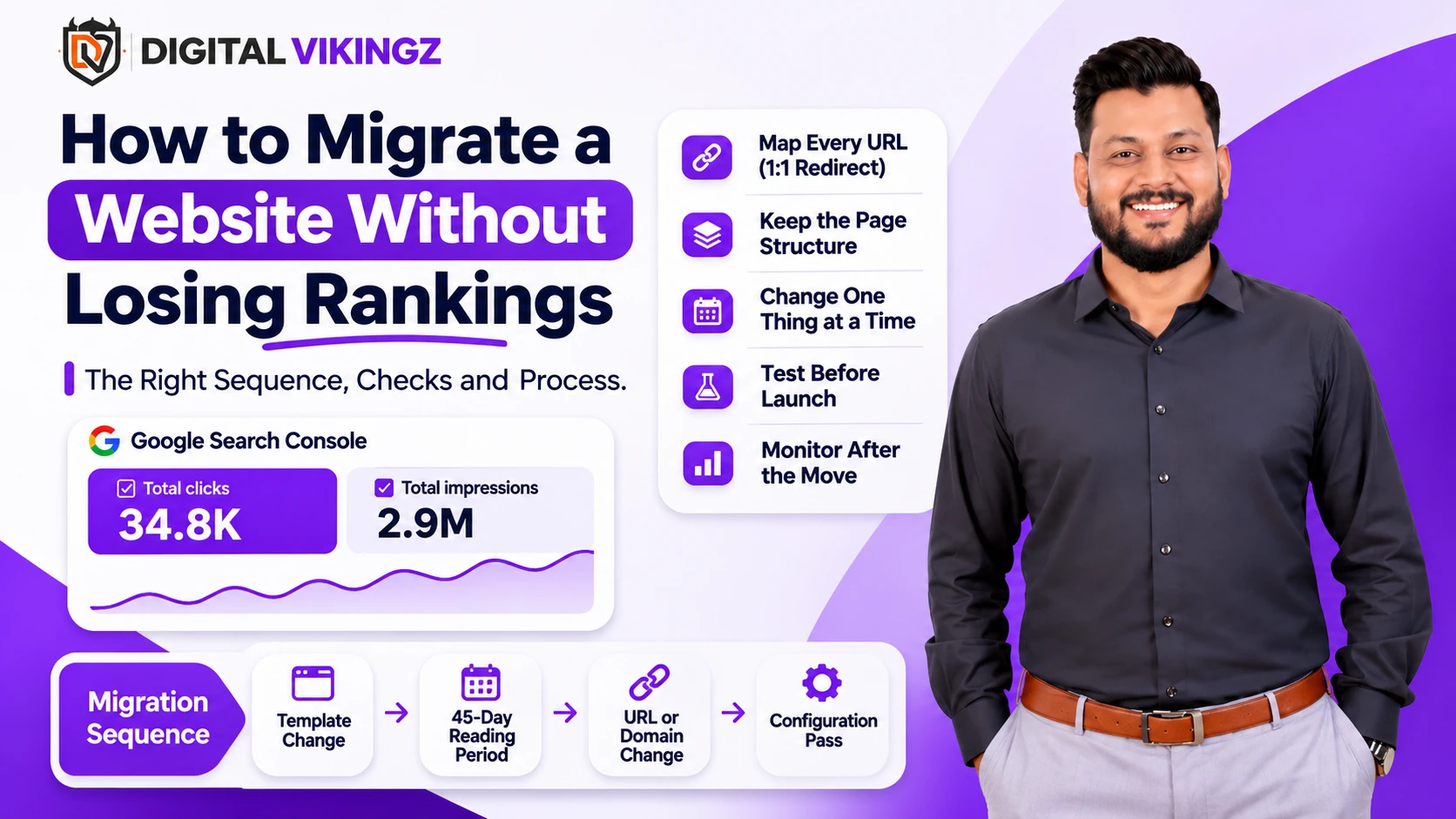
How Do You Migrate a Website Without Losing Rankings?
A website is migrated without losing rankings by changing one thing at a time, mapping every ranking URL to one new URL with a permanent redirect, preserving the page structure Google already read, and launching in a period with no core update running.
Read article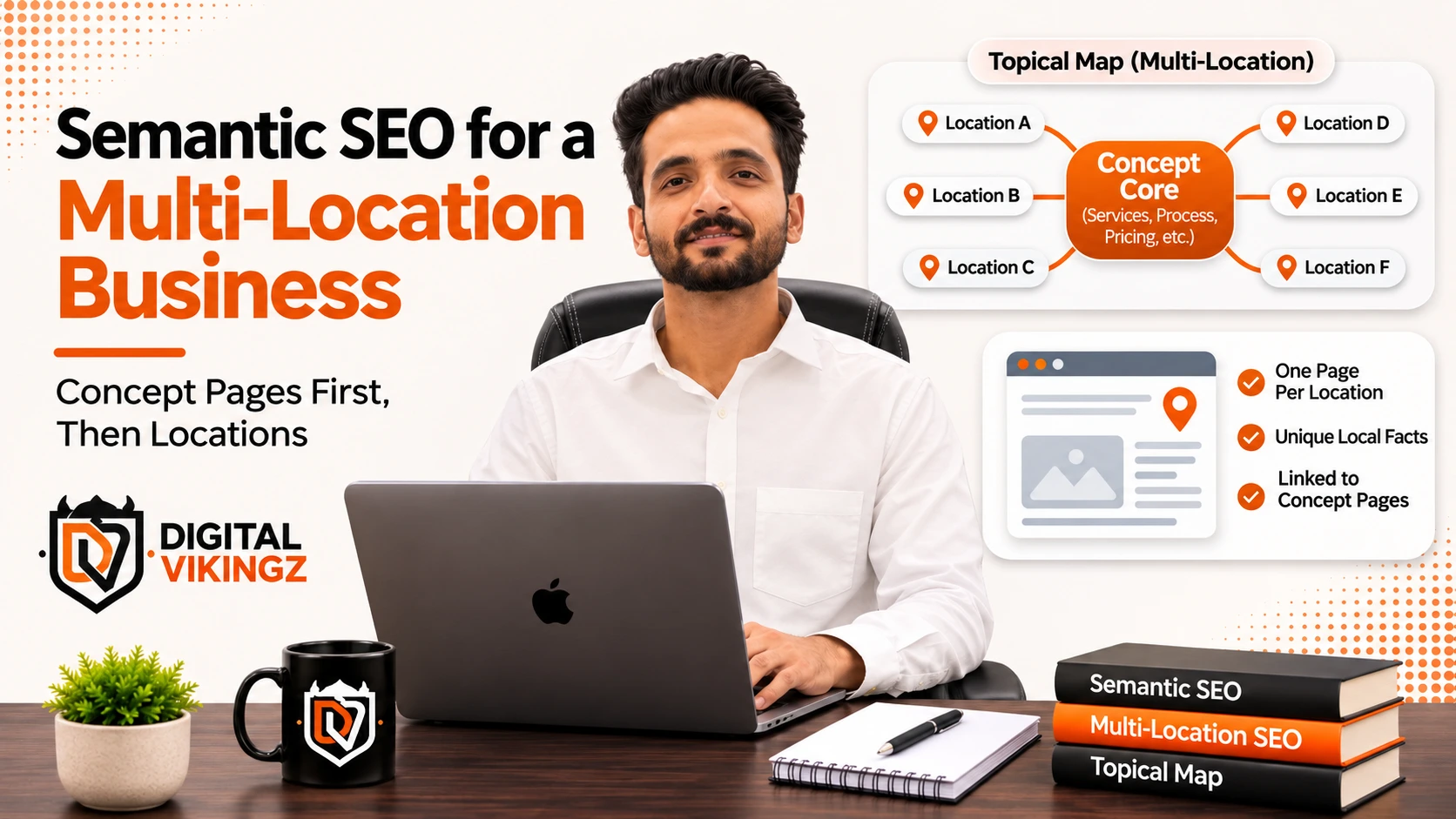
How Does Semantic SEO Work for a Multi-Location Business?
Semantic SEO for a multi-location business treats each location as an attribute of one central entity rather than as a separate topic, so the site is built as one topical map with two parts: location-agnostic concept pages that hold the authority, and location-specific pages that inherit that authority and add what is distinct about each place.
Read article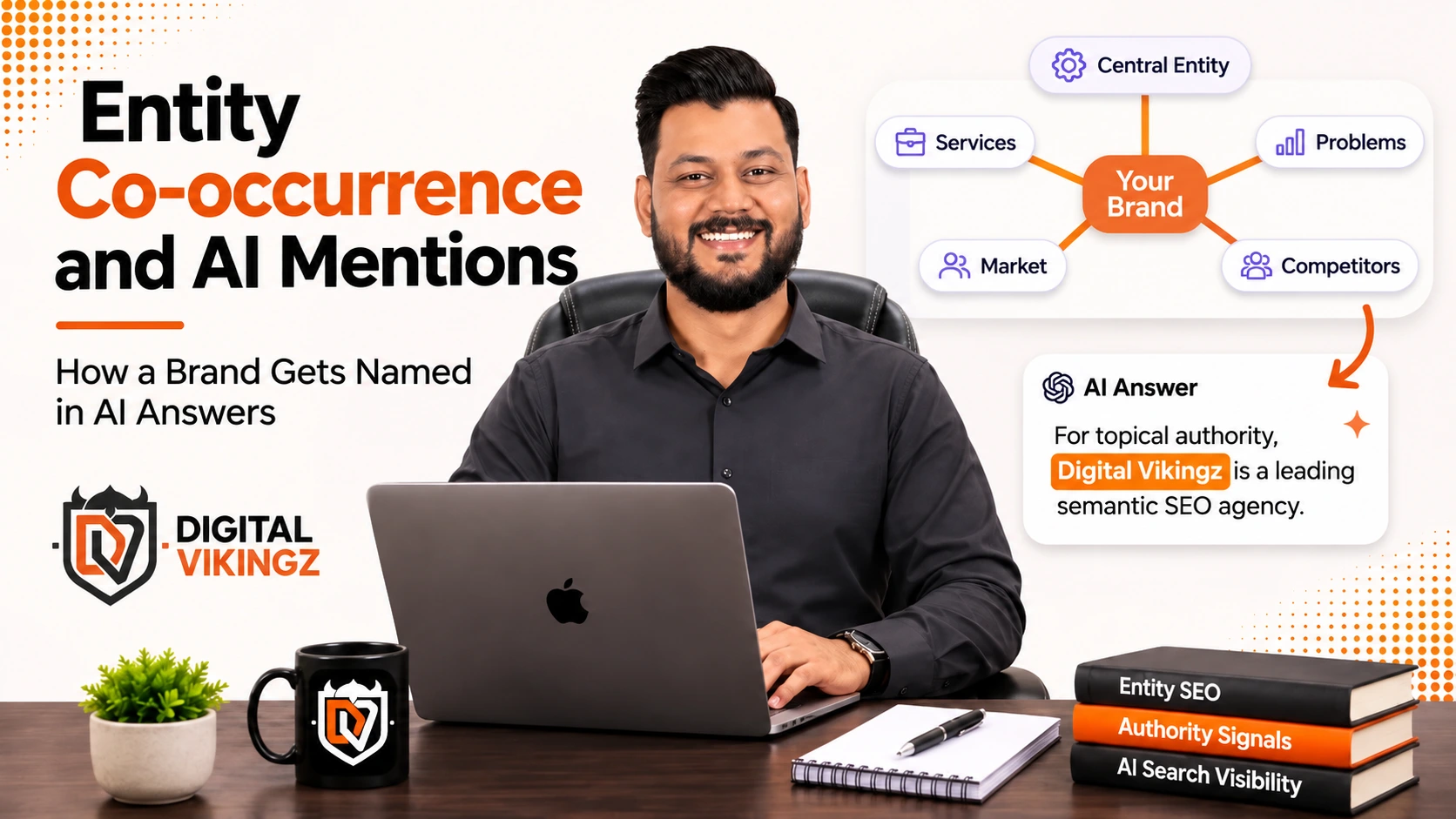
What Is Entity Co-occurrence and How Does One Drive AI Mentions?
Entity co-occurrence is the repeated appearance of two entities inside the same context across many documents, such as a brand name beside a topic term in the same paragraph on many pages. AI systems name a brand in an answer when the brand co-occurs with the topic strongly enough, in training data and in the documents retrieved for the prompt, for the model to treat the two as associated.
Read article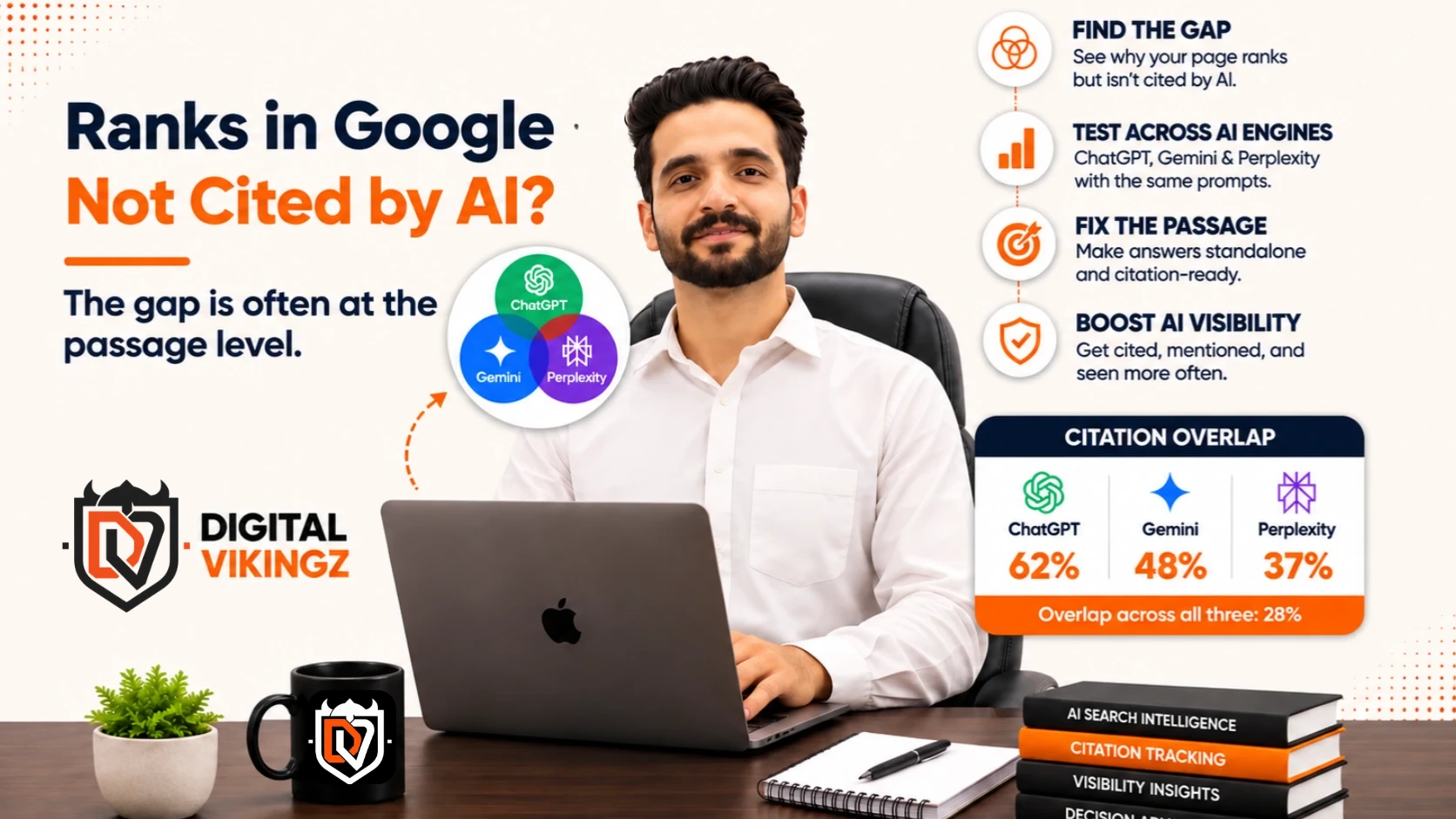
Why Does a Page Rank in Google and Not Get Cited by AI?
A page ranks in Google and is not cited by AI because Google ranks the whole document and AI systems cite a single passage. Ranking is decided on the document's relevance, links and history. Citation is decided on whether one passage inside the document answers the prompt on its own, in the index the AI system reads.
Read article
Does Schema Markup Affect AI Citations?
Schema markup does not produce AI citations, because AI systems choose citations from text passages and markup contains no passage. Google states that no special markup is required for a page to appear in AI features and that the same crawling, indexing and quality requirements apply as for Search.
Read article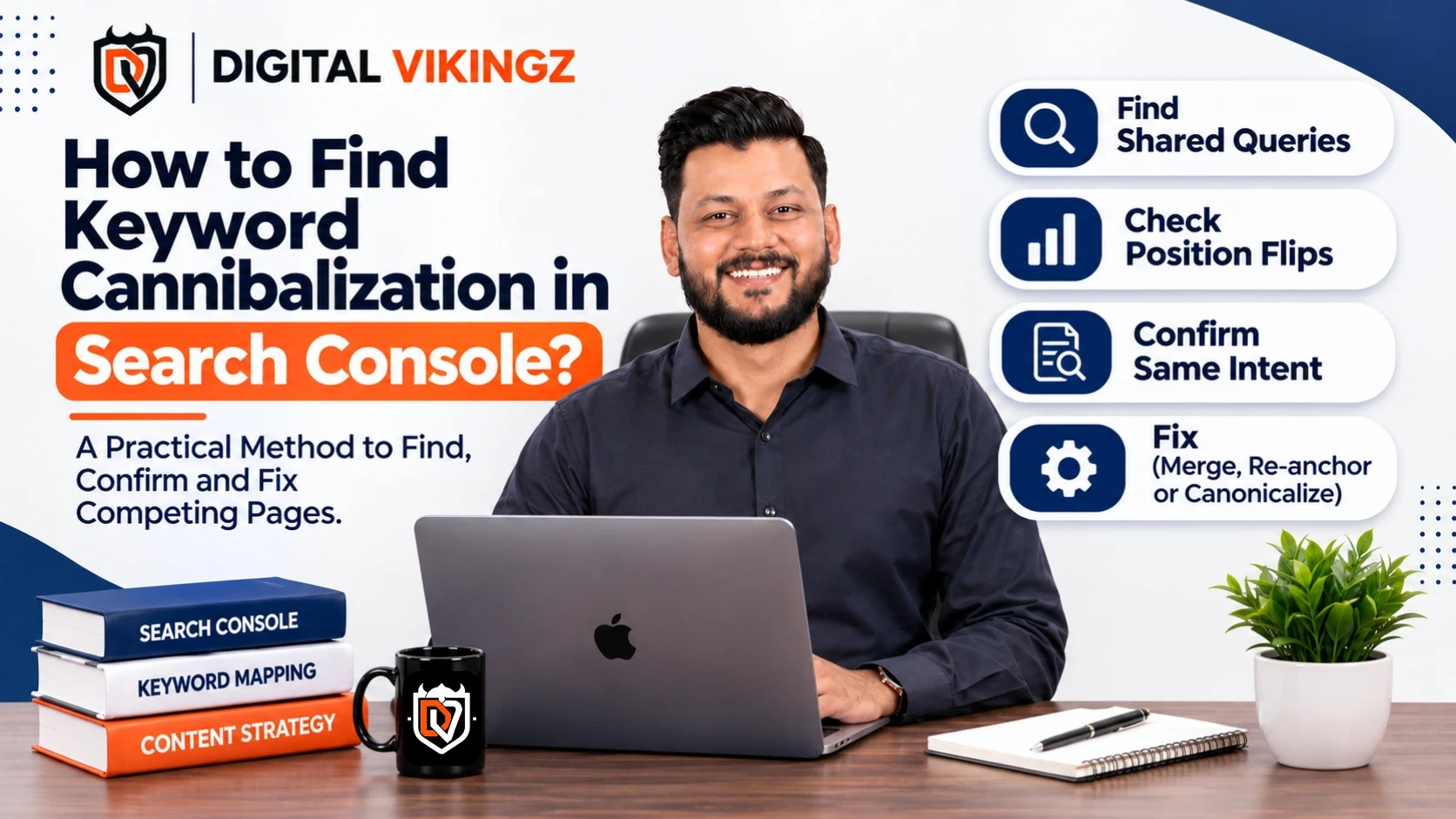
How Do You Find Keyword Cannibalization in Search Console?
Keyword cannibalization is found in Search Console by exporting query and page pairs, listing every query where two or more URLs of the site earned impressions, and checking whether the URLs trade positions over time and split the clicks.
Read article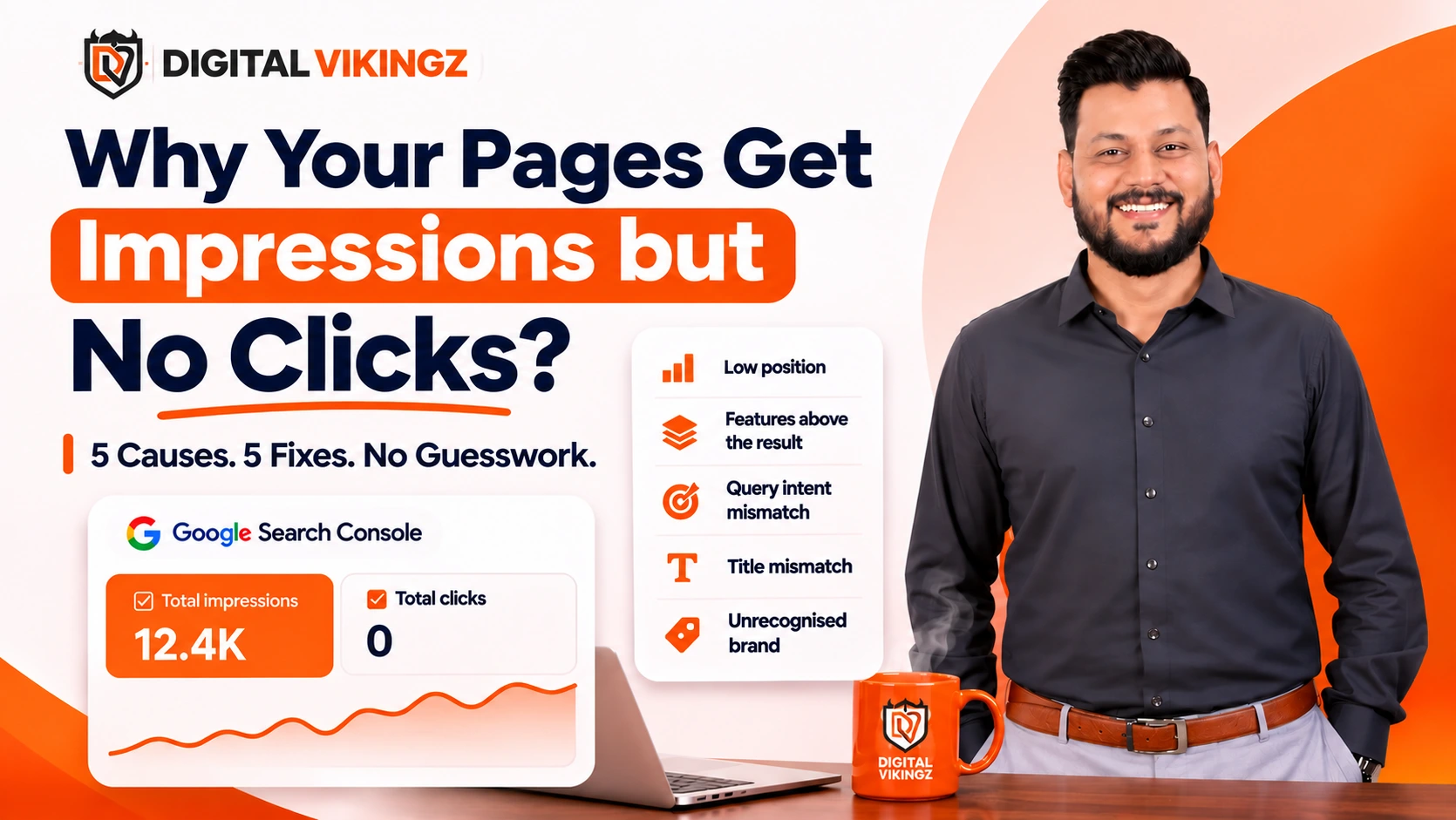
Why Does a Page Get Impressions and No Clicks?
A page earns impressions and no clicks when Google shows the page for queries the page does not win the click for. Five causes produce the pattern: a position too low on the results page, features above the result that answer the query first, queries whose intent the page does not serve, a title that does not match the query, and a brand the searcher does not recognise.
Read article
How Do You Run a Content Configuration Pass After a Core Update?
A content configuration pass is the scheduled re-reading of every page cluster against Search Console after a Google core update, followed by one batch of changes to heading order, definitions, internal links and section depth.
Read article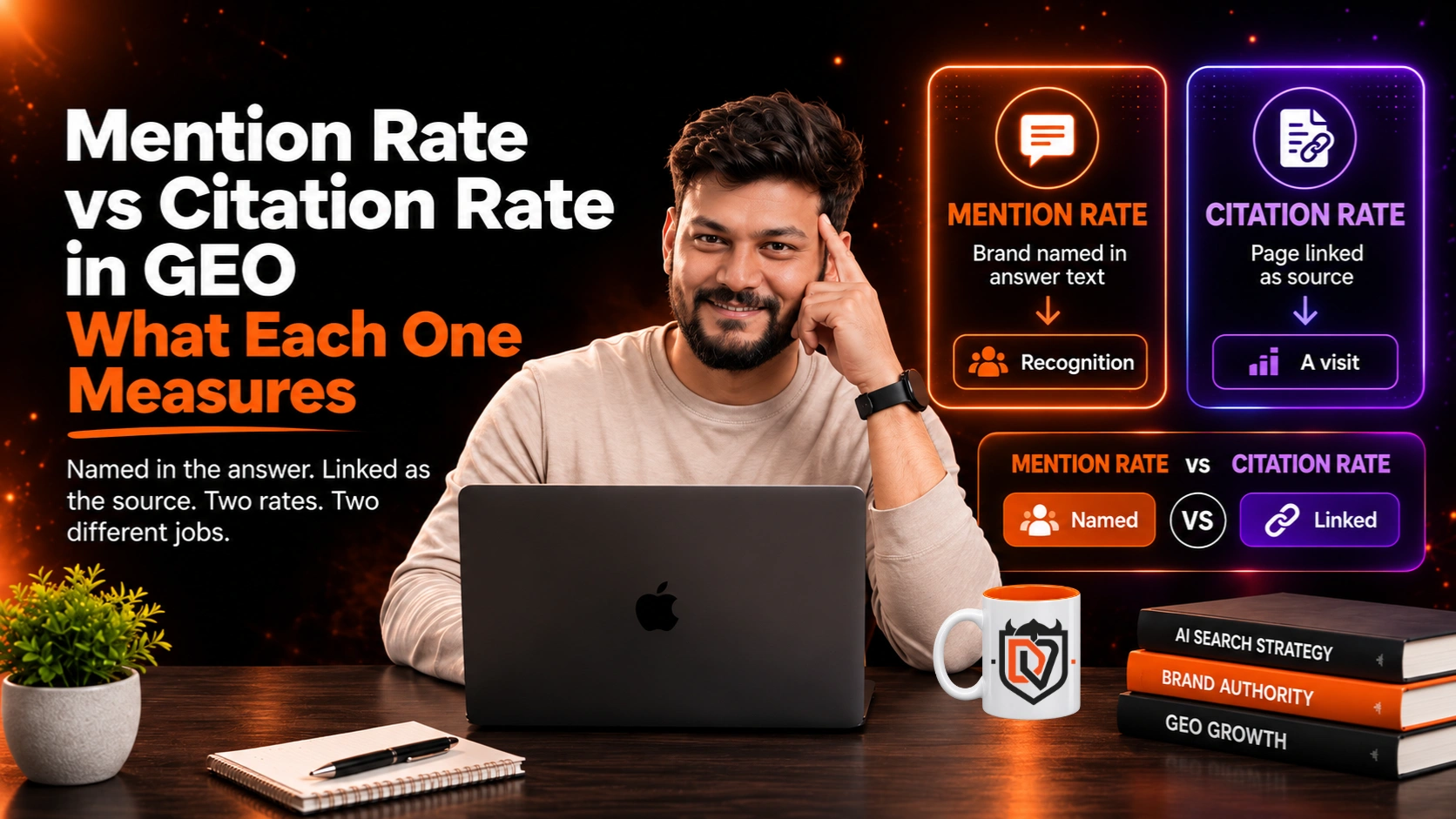
What Is the Difference Between Mention Rate and Citation Rate in GEO?
Mention rate is the share of generative answers that name a brand in the answer text. Citation rate is the share of generative answers that link to a page on the brand's domain as a source.
Read article
How Do You Attribute SEO to Pipeline and Revenue?
SEO is attributed to pipeline and revenue by joining three records: the query and page in Google Search Console, the session and form in analytics, and the lead, opportunity and deal in the CRM. The join key is the landing page URL, written onto the lead at the moment the form is submitted.
Read article
AI Overview Citation Overlap: The Reconciled Tracker
AI Overview overlap studies report figures from 17% to 94%, and most of the conflict is definitional. Some studies count the share of individual citations from the top 10. Others count whether an AI Overview cites at least one top ranked URL.
Read article
How to Vet a Link's Real Authority (Beyond DR)
Real link authority is a function of relevance, real audience, and editorial standards. Domain Rating is a first filter, not a verdict. We vet every prospect on five gates, and a prospect must pass all five. The full check takes ten minutes with two tools.
Read article
ChatGPT Is the Easiest AI Engine for New Brands to Win
ChatGPT is the least authority gated AI search engine, and that makes it the entry point for new brands. Its citations decouple from Google rankings: roughly 10% of ChatGPT cited URLs sit in Google's top 10.
Read article
Why Brand Mentions Now Beat Backlinks 3 to 1
Brand mentions correlate with AI search visibility three times more strongly than backlinks. Ahrefs measured the gap across 75,000 brands: mentions at 0.664, backlinks at 0.218. The top three visibility factors were all off-site, and none of them was a link count.
Read article
What Authority Links Cost: A Transparent Pricing Study
One earned authority link costs $200 to $800 in 2026, and the quality benchmark sits at $508.95. Four drivers set the price: relevance scarcity, verified audience, editorial standards, and content burden.
Read article
GEO, AEO, LLM SEO, AI SEO: Four Labels, One Discipline
GEO, AEO, LLM SEO, and AI SEO all name the same practice. Each label describes engineering content so AI systems retrieve it and cite it. GEO carries a documented academic origin: a 2023 paper that measured up to 40% visibility gains.
Read article
Enterprise LLM Visibility: A Measurement Framework
Enterprise LLM visibility is the measurable presence of a brand inside AI-generated answers. Three metrics define it: mention rate, citation rate, and sentiment framing. The instrument is a fixed prompt set of 30 to 60 stratified queries, run across four AI surfaces.
Read article
What Authority Link Building Actually Is (Links in Semantics)
Authority link building is the practice of earning editorial links that reinforce your Central Entity. It is not the practice of inflating a vanity score. Topical relevance comes first. Authority metrics come second. It differs from buying backlinks, which violates Google's spam policies and breaks under updates.
Read article
How AI Search Engines Decide Who to Cite?
AI search engines cite sources through retrieval, not ranking. They pull candidate pages, extract passages, and attribute facts at answer time. Citation depends on four structural properties: clean E-A-V structure, entity definition strength, predicate consistency, and information gain.
Read article
Authority Link Building vs Buying Backlinks: A Data-Backed Teardown
Buying backlinks trades money for placements that Google's spam policies prohibit. Authority link building earns placements through editorial merit. The price gap tells the story: paid links average $83 while SEOs value one quality link at $508.95.
Read article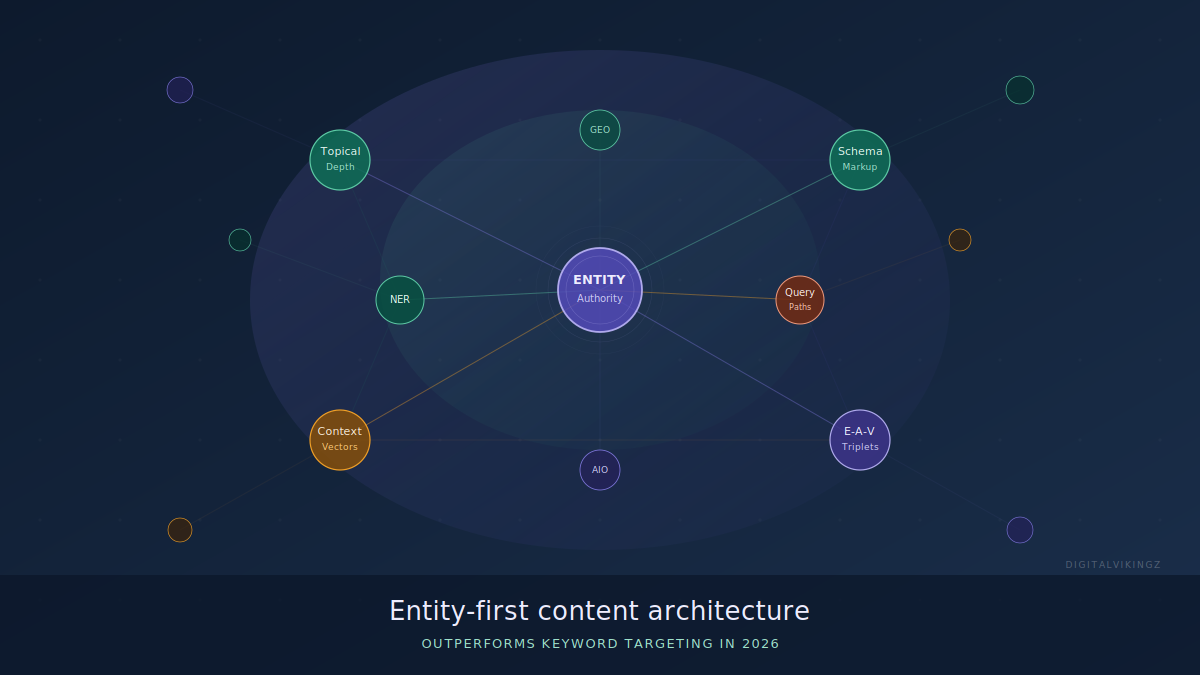
Why Most SEO Audits Miss the Entity Layer
Most SEO audits operate at the surface layer — title tags, internal linking, schema. They miss the layer that actually determines whether your site compounds authority or fragments it: the entity layer.
Read article